February 13, 2012

Monday Review: THE KNIFE AND THE BUTTERFLY by Ashley Hope Pérez

We really enjoyed Ashley Hope Pérez's debut novel What Can't Wait (reviewed here), so we're proud and excited to be a part of the blog tour for her latest novel, The Knife and the Butterfly. Tune in this Friday, February 17th, for Ashley's guest post about edgy fiction—what does it mean for fiction to have an edge? Join the discussion in just a few short days! In the meantime, we've got a review of her newest book, which plunges us straight into the intersecting stories of locked-up gang member Azael Arevalo and troubled teen-on-trial Lexi Allen.

Reader Gut Reaction: When we first meet Azael, he's just woken up in a cell—not for the first time, but something's different about this lockup. For one thing, he's got zero contact with the outside world, and for another, he can't remember anything that happened to him before he got locked up. He knows there was a fight with another gang, but after that...

The fact that Azael can't remember what got him locked up immediately creates a feeling of suspense and the need to keep reading to find out what really happened; and the more we find out, the stranger—and sadder—the story gets. Some have said that this is an "edgy" book, and it is, in the sense that it's a story about life in the world of gangs and taggers, fights and feuds, and, for Azael, the constant looming threats of arrest, foster care, and deportation. But it's also a sad story, and the author makes us feel for Azael and his tough situation, the hopeless feeling of inevitability that his life has, whether or not it's true. And the situation suffered by Lexi is no less difficult, as Azael begins to see--even though he's not sure what his jailers want him to learn from observing her. Sure, she's locked up, too, but what does that have to do with him? Solving the mystery of Lexi and the mystery of his own situation go hand in hand, of course, and the gradual revelation of clues and details kept me turning the pages.

Concerning Character: Both characters offer an equally wrenching story—and I'm using wrenching here rather than edgy because, for me, it covers the subjective emotions of the characters, where "edgy" seems like a more detached term that refers more to their environments, their situations, the quality of their lives. Because we DO get such an intimate glimpse into both Azael's and Lexi's emotions—Azael because he's got nothing else to do BUT think while he's locked in his cell, and Lexi through her journal entries—it becomes clear very quickly that there is so much depth in both teens, so much pain and sadness in their lives. They are far more than just kids who have been failed by the system or who have fallen into tough circumstances or have made bad decisions. They are kids who are lost and hurting.

Recommended for Fans Of...: Stories about young people trying their best to make do under desperate circumstances, like Coe Booth's Tyrell (reviewed here) or Lockdown and other books by Walter Dean Myers.

Themes & Things: Despite the difficult subject matter and the seemingly hopeless situations of both Azael and Lexi, this book conveys a strong message of hope and redemption. Even if we can't change what's already happened, we all have the power within ourselves to change, at the very least, how we think and act in the future, and how we think and feel about ourselves in the present. As Azael does what he can to take control of his situation, as Lexi does her best to work through what's happened, both find an inner core of strength, and this helps them grasp at a sense of meaning in what often feels like a chaotic and rocky existence. In the end, while the ending is not exactly happy, we are left with a sense of relief that our paths in life aren't necessarily fixed and unswerving, that we can shift things in a direction for the good and that it's never too late to do so.

Review Copy Source: NetGalley. This review refers to the Kindle electronic ARC.

Authorial Asides: We're honored that Ashley was able to write and send us her guest post when she could easily have been doing other awesome things from her current location in Paris, the lucky duck (see that picture there? Aren't you envious?). For those who want to keep up with her writings and happenings, she keeps her own blog at AshleyPerez.com. You can also follow her on twitter @ashleyhopeperez or find her on Facebook.


You can find The Knife and the Butterfly by Ashley Hope Pérez at an independent bookstore near you!

February 09, 2012

Toon Thursday: Ferrets' Revenge

Another brand-new toon for you guys this week--and with the return of ferrets as a topic of Twitter conversation, I thought they should make a return cameo in this week's toon, too. (You can find more toon ferrets here and here.) As always, click to view larger.


Happy Thursday!

February 07, 2012

A Few Random Notes Amid the Chaos

This week I'm just trying to put my head down and charge forward, step by lagging step, on my WIP, while attempting valiantly not to be distracted by FUN things like figuring out what I could put on a Bookprint at YouAreWhatYouRead.com (I only get to pick FIVE influential books in my life??) or indulging my organizational fetish over on Pinterest (which I've joined, but am forbidding myself from doing anything with until I finish this dang chapter).

But it is also a priority for me to let you know when I've found interesting writing- and book-related things online, and so I will take a moment to note a couple of things that have crossed my desk. First, remember early last month when I posted wondering whether there was such a thing as a Book Boxing Day or the like? Well, there IS! And I couldn't be happier. I found out via Zoe Toft of Playing by the Book that February 14th is International Book Giving Day (read about it here on Delightful Children's Books). If you could not possibly care less about yet another corporate candy-buying holiday (particularly one that advocates spending two months' salary or whatever on blood diamonds) then why not do something worthwhile instead, like giving books? Fantastic. Check Zoe's site for more book giving ideas and a lengthy list of charities--or do a quick search of ARCs Float On for teachers in your area who need books for their classrooms.

Lastly, a bit of sad news. Via Sheila at Wands and Worlds, I found out today that John Christopher, the pioneering YA sci-fi great who penned the Tripods books, has died. There's a very nice obituary and remembrance of his work over on Tor.com.

February 05, 2012

Turning Pages: Code Name Verity, by Elizabeth Wein

It's V-Day: Verity Day, the day Code Name Verity is available in the U.S. UK! (In the U.S., the book is available in May!)

For the past few days, we've focused on the history and many people's reactions to historical fiction as a genre, and we haven't spent much time on the blood-pounding excitement of espionage, spy thrillers, derring-do and unlikely escapes. But now, bombs are falling, enemy aircraft has been spotted, and I want to delve a bit more into the book in terms of theme and scope -- I'll be doing that carefully, as to avoid spoilers. In many ways, that feels like there's not much I can say -- in other ways, not talking about more than the outline of the plot still leaves plenty to discuss.

Onward!

Reader Gut Reaction: I talked before about getting this book and then sort of sitting and looking at it. I'm skinhead/supremacist phobic, and Nazis are nightmare figures right up there with the Thing Under the Bed. Five pages into my reading, I had a horrible free-falling feeling that swooped and chittered in my gut as I read. The first narrator spoke at length about what she was doing, and why she was writing, and I realized, "Oh, my goodness, she's already been caught."

The She remains unnamed until halfway through the novel... but you figure out some things about her pretty quickly... First, she was the victim of a plane crash, and it was just her rotten luck that she got caught, in France. Second, that they seem to think she knows something - she's a wireless operator after all. And third, she's trying to put a good face on it, being funny and wry and all, but she's a squealer of the first water, a quisling, a tattler, a Benedict Arnold. And she's writing as fast as she can.

Concerning Character: Maddie and "Queenie" are the two girls whose voices we hear in the two halves of the novel. Structurally, the style and the voice are different in both halves, as they're very different young women who've met by happenstance. Maddie is a sturdy middle-class Manchester girl - with dark curls and Jewish roots - who is mad about engines and likes to get her hands dirty, taking apart motorbikes and the like. She is straightforward, blunt, and tends to worry quietly to herself. Fey, fair Queenie is both a Stewart and a Wallace, a proud, proud Scottish girl who has been educated in Swiss boarding schools and has just started at University when the war breaks out. She grew up in a castle - Castle Craig, is a dreamer, a risk-taker, a play actor. In the same shelter when an air raid sounded, these two shared an umbrella, smokes, and secret fears, cementing a tentative friendship. Maggie -- who fearlessly flies planes but who shudders into tears at the sounds of gunfire and bombs -- and Queenie -- who speaks flawless German, wields her beauty like a knife, and fearlessly sasses her superior officers, but secretly worries about having to kill someone, growing old, or being alone in the dark -- come together in a solid friendship which will see them through the darkest hours of the War.

There are other characters in the novel - family members, loyal mentors, Royal Air Force airmen and Air Transport Auxiliary airwomen - but the looming, faceless evil, with meticulously clean hands and pips on his shoulder, is the SS-Hauptsturmführer von Linden, the Gestapo agent who interrogates Queenie. Though Maddie fears doing the wrong thing, letting everyone down, and court-martial, Queenie's great fears of cold and dark and bad manicures have all faded in the face of what she has truly learned to fear: who she has become -- "I'm a regular Judas," she confesses wryly in her notes to the Gestapo. She's telling secrets -- all of them that she knows -- and she's doing it for a blanket, for the dignity of clothing, and so that they will stop punching her, groping her, and burning her with cigarettes, carbolic, and electrical wires.

And, they are going to shoot her anyway.


Recommended for Fans Of...: Older teens, and adults. (The Gestapo means there's pain, not overt, but it is there.) Also recommended, oddly enough, for those who loved Anne of Green Gables and Little Women as well as What I Saw and How I Lied, by Judy Blundell; The Machine Gunners and Fathom Five, by Robert Westall, and The Last Mission, by Harry Mazer.

Themes & Things:
“A what kind of friend?” asked Marilla.
“A bosom friend–an intimate friend, you know–a really kindred spirit to whom I can confide my inmost soul.” ~ Anne of Green Gables


This is a novel about war, risks, airplanes, and espionage. Mostly, though, this is a novel about... friendship.

Despite being part of a greater organization -- the ATA, the RAF -- despite being British and part of the Allied force, in many ways, both Maddie and Queenie experience isolation. Maddie, who, as a girl is maybe a bit less feminine and a bit more masculine than she "should" be; Queenie, with her upper-class accent, long, fair hair, perfect manicure, and love of the German language and culture -- both girls are essentially squared pegs in the round holes of their culture and time, and when they are thrown together, these two unlikely opposites attract, and create "a sensational team."

With the comparison to Anne Shirley and Diana Barry we see the kind of intensely supportive friendship that Maddie and Queenie have -- the "bosom-friend" kind which figures largely into books like Pride & Prejudice -- those good sisterhood friendships which are close and tender, as well as unflinching and not allowing for self-deceit and nonsense. These aren't the types of female relationships, quite frankly, that are seen in mainstream young adult fiction novels much. Remember the Bechdel Test?

/bech·del test/ n.
1. It has to have at least two women in it
2. Who talk to each other
3. About something besides a man

Legion are the YA novels who fail this test - legion are the novels with female protagonists and tons of friend groups, but few are the female friendships depicted which are not singularly obsessed with stalking relationships (Readers: Disagree with me. List your "Nu-uh, this is ALL about female friendship!" YA novel choices in the comments). I hate to use the word "refreshing" about anything but an iced lime-and-cinnamon drenched watermelon, but seriously, it is really, really nice to see a novel that:

1. Has at least two girls in it
2. Who are concerned with hopes, fears, and dreams,
3. And survival. Despite there being plenty of men around.

If you are especially prescient, you might get a wispy hint of a romance that might someday bloom in the sweet by-and-by, but it's a hint, and isn't at all the novel's focus.

Cover Chatter: You've seen the British cover so far -- the girl's silhouette, the sepia tones highlighting the red of the rose she holds and the red circle around the name, Verity; the Lysander, billowing red-tinged smoke and falling, falling -- the crisply written tagline, "I have told the truth." But, what you might not have seen is the American cover.

The scratchy-looking ropes binding the girls' wrists together are symbolic - they're tied together by circumstance, by the war, by their friendship. Queenie is also tied - to chairs, and the ropes which loosely bind the girls here cut off her circulation. But what's more important than the ropes is that their hands are grasping on to each other... the white lettering on the black background is evocative and stark and for once, it's kind of hard to choose a favorite -- but for me, the plane and rose and the sepia tones give a feeling of the early forties to the British cover, and really works even that much better. CODE NAME VERITY is quite fortunate in covers, whichever one you happen to pick up. Lucky author!

Authorial Asides: Full disclosure - Elizabeth Wein is a friend, and though we've only gotten together once (by virtue of the fact that we are far too busy [READ: lazy] to travel the two hours between our homes), we actually chat now and again, and our paths cross in cyberspace, because the children's literature pool, with the help of the Web, is not as massive, wide, nor deep as it once was.

We at Wonderland have had the opportunity to talk with Elizabeth Wein once before during the Winter Blog Blast Tour in 2008 about her life in Perth and her writing process (please note: NOT A DEBUT NOVELIST).

As always, I am astounded when I find someone who writes primarily longhand, and transfers their work to a keyboard, chapter by chapter. Despite her tendency to downplay what she does workwise - interjecting the loads of laundry, trips to the children's school to bring lunches and glasses and homework, the pottering about in the yard, watching raptors - Elizabeth works darned hard, immersing herself in her characters, their societal mores, and their realities. I think of the tiny props she fashioned for herself - the knitted WAAF doll, the eensy matches, cigarettes and lipstick, the gorgeous lined wool coat (pictured on the left!) she made from a 1940's pattern, which caused many a naughty word and seam-ripping session; the maps, the flights, the reading and rereading of historical documents as well as diaries, letters, and other accounts of wartime Britain -- these all represent just a tremendous amount of research, time, creativity, patience -- and tears.

I asked about the tears -- this novel required a lot of heart, and with such an immense commitment of time and research with CODE NAME VERITY, the tears when it was done must have been both of regret and release. The author noted, "I even got tears on my last set of proofs!"

As this is a war story, there are dire moments, daring escapes, and staggering losses. You might have a sniff or two yourself while reading this, but for those who have asked, this novel is not too scary. It is heartfelt and true, and there are also plenty of things to smile about, and to keep you nail-bitingly on the edge of your seat!

A meticulously researched, note-perfect pair of voices; a feast of espionage, suspense, secrets, love and risk, CODE NAME VERITY is a triumph of friendship and courage and heart which will take your breath. It reminds me that though it is soldiers who fire the guns and generals who write out the peace accord, it's courage that ends wars.


You can find CODE NAME VERITY by Elizabeth Wein out today at an independent bookstore near you!

You can also download Elizabeth's interview with Clare English on BBC's Book Cafe through the month of February - I doubt it'll be downloadable long after that, as BBC podcasts seem only available for forty-five days - sorry listen quickly! If you're in the UK, you can hear a replay on BBC Radio Scotland on Sunday, 12th Feb., 3 p.m.

The CODE NAME Blog Tour marches on. Tomorrow catch author Elizabeth Wein at Bookbabblers.

WAR STORIES: Further Musings on Historical Fiction

"[O]nly the dead have seen the end of war." - George Santayana

In one of those serendipitous synchronicities of the blogosphere, Marjorie Ingall was blogging the other day about the Holocaust books which scared and distressed her as a child, and linked to her Tablet piece about the "fear factor," and when and how one introduces this bit of history to young children.

I chuckled at some of the memories she collected, while shuddering at the same time. I am still haunted by a Dutch girl named Betsie.

"Girl" is a misnomer; she was a grown woman when she died at Ravensbrück, and she didn't die in any particularly harrowing manner, except from being kept in dehumanizing conditions, from not being fed, from being kept in the cold and wet, from being forced to do horrendous manual labor and shoved and beaten and threatened instead of being told what to do and where she was to go. Sometimes, though the mind is strong, the body just gives up.

But -- I was six when someone got the bright idea to read the book The Hiding Place in our church's book group. Then they showed the film... I was six. My parents wanted me to see the life of a righteous woman, I know, but they didn't count on my imagination. I kept my eyes closed a lot of the time after the soldiers came, and I cringed back in my chair, thinking, "But, the sisters took care of the Jews and were kind and didn't fight with anyone, and they prayed, and the Nazis still shaved their heads and slapped them, and Betsie still died???"

And the penny dropped into the rather empty piggy bank of my understanding: for every choice, there is a consequence. Or, sometimes, stuff just happens ...because.

Well. I tried to put the stopper back into that particular bank, but there was nothing doing. The Holocaust - or, The War, as it is still referred to here in the UK, as if there has never been any other - figured largely in dreams and nightmares. Indeed, WWII and its horrific aftermath held an entire world in thrall for more than a generation, and now its villains - and its heroes -- are in some ways being lost. We don't like reading war stories. Remember now - I'm just repeating what almost every single (female only - hm. I wonder if this comes into it?) person has said, when responding to CODE NAME VERITY over the past week or so: we don't like war stories. We don't "normally" read them. We prefer other types of fiction. There's blood, in war stories. There are bad teeth and squalid toilets - or none at all - in history. There are often great clothes, but sometimes they're bloody. History, while a fine thing to enjoy sometimes in an esoteric sense, is maybe a little uncomfortable when we put people we can relate to into its midst.

I am, at times, thankful for the peculiarities of memory, and grateful to draw a veil over Bad Things. At the same time, the adage, "Those who cannot remember the past are condemned to repeat it," lurks in my hind brain. Perhaps it's simplistic to lay it out in this way, but it is fact: Americans, largely, have gotten on with their lives after WWII. After the Korean War. After the Vietnam War. After the Bay of Pigs Invasion. After Grenada. After the U.S. invasion of Panama. After the Gulf War. After the NATO Bosnia intervention. After the Afghanistan invasion. After the Iraq invasion. In point of fact, some young adults now can remember no other world than the one in which there has been war. It plays as a backdrop to "normal life;" like the television being on in a distant room. Never mind the machine gun fire. Turn up your iPod.

Perhaps World War II still haunts much of Britain because it leveled out the class divisions and displaced thousands and created change in a society which had been the same way for hundreds and hundreds and hundreds of years. Americans, meanwhile, are more conversant with change, because we were "newly" cast upon our country's shores, in comparison. It was easier to forget hardship and displacement; easier to compartmentalize Pearl Harbor into a tiny corner of our minds and have a moment of silence for it, easier to concentrate on commerce, on getting ahead, on the shiny and the new. The tragic and horrific events of 2011 expanded our memories, though; we will never forget now what it feels like to be fired on in one's own country, and have thousands of civilian casualties.

One would think that this would help us remember to avoid war at all costs.

And yet.

I maintain that it is especially important not to forget WWII, and not just because historians call it "a just war," but largely because of the arrogance, excess, and dangerous rhetoric of the past has returned to the present full-bore. What happened back then, people agreed, should happen not ever again. Historical fiction which examines these places and times gives voice to the millions who did their job and got on with things, gives young readers - and us older readers, too - a hook into the past, to align ourselves with its huge and epic events, and to have a place to hold onto, so we can understand. Why do you read historical fiction? For those same reasons, or others?

I leave you with some powerful bits of thought from things I've read recently on the topic:

"History gives us a pair of powerful eyeglasses with which to examine our own times. It is hard to look directly at our present reality because we are both too myopic and too faint-hearted." Katherine Paterson, from her keynote address to the annual meeting of the Vermont Historical Society, "Why Historical Fiction?" September 18, 2004.

“That may be the best that any work of historical fiction has to offer—not just to its author, but, more importantly, to its readers—a chance to grapple with the mysteries and complexities of the past, in hopes of seeing the present a little clearer.” - "The Facts of Historical Fiction," by Ron Rash, Publishers Weekly.

"This gift of the practice seems to come of its inherently solitary nature. A writer has no credential except as it is self-awarded. Despite our university graduate programs in writing there is nothing that licenses a writer to write, no equivalent of a medical degree, or a law degree or a Ph.D. in molecular biology or divinity. Writers are on their own. They are specialists in nothing. They are liberated. They can use the discoveries of science, the poetics of theology. They can ventriloquize as anthropologists, report as journalists; they can confess, philosophize, they can leer as pornographers, or become as wide-eyed as children. They are free to use legends, myths, dreams, hallucinations, and the mutterings of poor mad people in the street. All of it counts, every vocabulary, every kind of data is grist for the mill. Nothing is excluded, certainly not history." - Cory Doctorow, "Notes on the History of Fiction", August, 2006, The Atlantic.


As you can see, CODE NAME VERITY's blog tour is moving onward! Today Elizabeth is at I Want To Read That, talking about her life as a pilot. (You will never find me talking about Liz's piloting skills on this blog. Though I'm quite fond of the woman, I am NOT GETTING INTO AN AIRPLANE THAT SMALL WITH HER OR ANYONE.) Tiger Moths and Westland Lysanders, Avro Ansons and Spitfires were the planes flown in the novel, and Elizabeth can, of course, fly them all. And probably parachute out of them, too. ::shudder::

Stay tuned for more tomorrow!

February 04, 2012

I Don't Do History: The Case For Historical Fiction

Cross-posted at Fiction, Instead of Lies, and kind of a continuation of the response/discussion to the comments on this blog post.

Imagine two best friends, united against a common enemy. It is the pitch of midnight, and they are making a desperate flight across country, to deliver a package necessary to the scrappy resistance fighters desperately battling a corrupt government for their freedom. There's been a car accident, so they're the emergency fill-ins. Neither of them are supposed to be where they are. And then there's another, bigger accident. In a foreign country, neither with any business being there, the girls have to split up and vanish -- and those who are caught disappear into the night and fog -- for good.

It is the pitch of midnight. And the enemies of truth and right are playing for keeps.
~~~~ ~~~~ ~~~~ ~~~~

Wouldn't you be on the edge of your seat reading this book? I know I was...at times feeling quite hopeless and desolate upwellings of terror and the word, "Nooooooo!" pulled from deep within. I could imagine myself there -- and making a horrible mess out of all of it. If you read it, you'd imagine yourself there, too.

It's exciting. There's espionage, airplanes, parachutes, firefights, and girls hunched in dark places under umbrellas, waiting for safety in breathless silence. There's fear -- bleak terror -- great laughs, and the best friends you could ask for.

So, why'd we want to go and ruin it all by calling it historical fiction???

~~~~ ~~~~ ~~~~ ~~~~


For a long time, one of the biggest concern of the Gatekeepers in our world o' books was where to put historical fiction in the canon for young people. Was it "edutainment?" Was it fictionalizing history or historicizing fiction, sliding in a character's fears and hopes and their thoughts where students perhaps ought to be better employed with learning dates and facts? Was it, and could it ever be, authentic?

These big questions were hashed out in historical journals and literary papers and I think it's safe to say that though some historians remained uncomfortable, the majority of teachers, especially in the middle grades and junior high, where I served most of my time, felt that historical fiction was an important lamp to illuminate some darker corners. Especially with the rise of multiculturalism, some pieces of history that "we" - as in mainstream, dominant culture America - had not realized were part of "our" story needed to be dug out, rediscovered, and explored. Historical fiction was a great tool to bridge the gap with the unknown pasts of a commingled people with the commonality of the human story. Through the insertion of tiny, literal accuracies, historical fiction maintains a sturdy cover story of "true enough," and more quickly engages young minds with the history before them. For most students, blending stories into a study of history helps to recreate the past as a dynamic place.

For MOST students.

For other students -- and for many of the rest of us -- it's an automatic "No." Seriously. Go back and read the comments of the people who have talked about CODE NAME VERITY. "I don't usually read war books..." "I'm not usually a fan of wartime historical fiction..." "I don't normally do historical fiction..." Is it the war? Or is it just the past?

Author and teacher Ashley Hope Pérez responded to a post a few days ago, "I have a kind of knee-jerk recoil from the term "historical fiction," probably because I know how it would make my kiddos eyes glaze before they even tasted the prose." Jen over at Reading Rants agrees: "In my experience, most teens won’t even look at hist. fic. unless they have to read it for a school assignment. You know, stuff like My Brother Sam is SO Dead, or Johnny TREmain (as in TREmendously booorrrriiinnggg!)."

It's baffling, really -- no one characterizes, say, The Great Gatsby as historical fiction -- or, a better example, The Key to Rebecca, not really. They're listed as what they are, first - a novel of manners. An espionage thriller. Nothing to do with their setting and time period and everything to do with their plot content. In part, the sticky label of "historical fiction" is a marketing key for parents and librarians to identify the book: Here is something semi-educational to slap into the unsuspecting hands of innocent youth. Go to it!

That, mainly, explains why it doesn't work.

Oh, come on: how many of us pick up a book of fiction for the its educational aspects? Not me! When I pick up a book, I want a good story, period. Unfortunate, but the label attached to this genre can sometimes shoot even a very good book in the foot. The only thing we can really do about that is to book talk, book talk, book talk. Word of mouth will win the day! Talk up the other aspects of the story - the plot, the characterizations, the types of planes, the outfits, the guns. You can order the story bits by their importance: CODE NAME VERITY is a.) a thriller, b.) a story of the kind of friendships that start in a bomb shelter c.) a fast-paced, dangerous tale full of espionage, spies, and double agents d.) a cracking good read, which just happens to be, e.) set about sixty-some years ago.

I think we can just leave off that last one.

As an author, I can say that one of the hardest things about writing historical fiction is the tightrope walk the author has to do -- between historical accuracy and humanity. It's important not to infodump dates and names, but it's also crucial not to veer the characters - and the details of their daily lives - into obvious anachronisms by using more modern tools, language, and attitudes about social tolerance which make the historical accuracy a lie. Further, I know that writing about a war is tough because historical accuracy is a must - the dates have to match up, including when historical people die, and when troops moved in fact, they must move in fiction, too. But people's characters -- their loves and needs and fears and even their grocery lists -- are much the same, no matter what era they're in. Sure, they might swear a bit less or a bit more, wear their hair down, their pant-legs shorter; they might speak another language, but the human animal remains a constant - an important thing to know.

As a (former, now) teacher, I know that this is the saving grace of historical fiction, or any fiction, really -- the people. The characters make the story, and you just have to close your eyes to the fact that since it's history, you think you already know how it's going to end, jump in to knowing the characters, and let go --

-- you may find yourself on the edge of your seat, in the pitch of midnight, with two best friends, delivering a necessary package, having an accident, and disappearing into the night and fog...


Call it "historical fiction" or "historical suspense" or anything you'd like, the word is out: CODE NAME VERITY is a sensational novel. Don't forget to check out the other stops along the way for the blog tour.

* Chachic's buzzing about Verity; stop by and read her great review, as well as some discussion on starting an All Spoilers, All the Time discussion group so that people don't have to keep the spy secrets to themselves.

* The Scottish Bookstrust is a fab organization interesting young people in books. Visit them at BookTrust.org.uk for more from Elizabeth Wein about friendship in CODE NAME VERITY. And stay tuned for Monday's review of the novel, and links to Elizabeth's interview on the BBC's Book Cafe!

February 03, 2012

Later, Sucker

Or, rather, now, Sucker! SUCKER LITERARY MAGAZINE is the name of a new YA literary 'zine, and it's full of writers - undiscovered writers - unagented, published or no - doing their best work under the skillful guidance of Hannah Goodman, who does a lot of things, including write and teach writing, win awards and parent and all that good stuff. She also dreams big, and has launched this project on the strength of an idea she had whilst getting her MFA ...and the rock-bottom slump that comes after you get that MFA, and the Real World does not hold you close and support you with warmth and kindness and beams of light, but rather, with, you know, reality. And rejection notices.

I've read and read until I realized I was down to the last story, so I paused to save and savor it -- and write this post. Truly mesmerizing reading, the sort of addictive, read-right-on-to-the-next, the feeling you get from the most tightly written professional literary mags. There's well-edited and brilliant stuff here - plus, lovely use of white space, artistic input, and a great recurring placement of suckers. A welcome place to rest the eyes and engage the brain when you're in need of Really Good Story. An unpretentious but highly readable, quality lit 'zine, the likes of which we haven't seen since... Tallboy. Yeah. It's good like that, except online only.

Consider getting involved, because young adult aficionados, writers and readers, ought not be on the receiving end all the time of industry information. We ought to be creating the industry information, harnessing our own collective enthusiasm and interest and making news, instead of reacting to it or being dragged along in its wake. We know who YA lit bloggers, readers, and writers are, and it's when I see stuff like this that I think, "Yay! we can be both fans and creators, and producers and make our own mark in this world."

Now, all I have to do is find a few grantwriters to fund and resurrect The Edge of the Forest again, and remind us further that we don't just review and shout into a vacuum, but that what we read and think matters...

Get involved with SUCKER. Check it out. Maybe you'll have the next bright idea for changing the world.

(Also, the why behind "sucker" title - whoa. Who--a. There's a whole novel in that there little piece of history. Whew.)

February 02, 2012

Thursday Review: A SWIFT PURE CRY by Siobhan Dowd

Reader Gut Reaction: Every time I read another of Siobhan Dowd's books—there aren't many—I'm reminded anew of the tragedy that her loss constitutes. Her writing is amazing, and so is her own personal history. This novel is her first, and while I don't want to give too much away, I will say that I don't necessarily gravitate toward serious, weighty stories about family scandal and the limitations of small-town life. But I will read everything she writes, because her prose is so clear, perfect and striking, regardless of theme. She brings out the exquisite pain and beauty even in difficult, ugly situations. And, in the end, I couldn't put this one down.

Concerning Character: The main character, Shell Talent, is fifteen years old, but she's the woman of the house now, mothering her little brother and sister and keeping a wide berth around her father, who has slipped into alcoholism since her mother died. School and church hardly seem relevant when she has dinner to cook, laundry to do, and an unpredictable father to avoid. She's got a tough exterior, but inside she's still hurting, and she's got more questions than answers. When the young, handsome new priest Father Rose moves to their tiny Ireland town and provides a sympathetic ear for Shell and her troubles, he also inadvertently provokes gossip, and things start getting even more complicated. Then comes the scandal, and the mystery...

Recommended for Fans Of...: Stories about coming to terms with the death of a family member, and books with quiet but vivid and lyrical writing, like Nothing But Ghosts by Beth Kephart (reviewed here), The Piper's Son by Melina Marchetta (reviewed here and Deadville by Ron Koertge.

Themes & Things: I would be remiss if I didn't note that this one owes a great debt to the work of James Joyce, the Quintessential Irish Writer in the minds of many. Though the two writers share a national identity and other profound similarities with respect to growing up Irish, this is not the story of a young man struggling with intangible issues of faith and identity, but that of a young woman grappling with all-too-harsh realities. While Shell's story isn't always an easy one to read, it's testament to the human spirit's ability to endure and heal.

Authorial Asides: A Swift Pure Cry is Siobhan Dowd's first novel. I also reviewed Bog Child (here) and hope to read A Monster Calls soon—her posthumously published work written with Patrick Ness. Siobhan Dowd won the 2008 Cybils Award in Middle Grade Fiction for her novel The London Eye Mystery.

Review Copy Source: Library.


You can find A Swift Pure Cry by Siobhan Dowd at an independent bookstore near you!

January 30, 2012

A Few Notes on Inspiration

Whether you prefer to tap into a sense of inspiration, motivation, or just plain old perspiration (aka Butt In Chair), sometimes it's hard to get started on whatever it is you're supposed to be writing. Excuses flow much more easily than the words of the story you're trying to write, and procrastination becomes a shining beacon, a siren song.

Distraction can take a lot of different forms, but so can inspiration (as these two blog posts by Kate Messner--Part 1 and Part 2--attest). I found a combination of both in this week's announcement of the various YALSA Book Awards.

There were some surprises--such as the fact that I hadn't heard of this year's Printz winner at all (probably because I spent several months of last year in a study cave). Also surprising, but gratifying, was finding out that Susan Cooper won an Edwards Award for her contribution to teen literature in the form of The Dark Is Rising sequence.

I find it hard to put into words the influence these books had on me when I was growing up. I was about 11 or 12 when I first read them, and they both fascinated and scared the pants off me. I was kind of shocked, when I read the press release, to see that they were written in the 1960s and 1970s, because they felt modern when I read them circa 1988-ish. I suppose a better description would be that they had a timeless quality.

I was already interested in things English and Celtic and Arthurian when I read them, but The Dark Is Rising books hooked me, and kind of made me obsessed. (They also gave me more than a few scary nightmares.) Among other things, they were a very large stepping stone on my path to eventually learning Welsh language (which I learned here and here). Also, when I think about iconic children's fantasy, when I think about books that hooked both my heart and my head, that made me believe in magic--the magic of words--I think about these. And I hope someday I'm able to write something that has just a tiny fraction of that magic.

Cheers, Susan Cooper!

January 27, 2012

February Book Lovin'


This year's Cybil's reading had the unexpected reaction of causing a bit of brain atrophy. I was reading frantically right up to the last day, and anxiously pestering the postman, waiting for my next book. I feel like I did only a "meh" job of reading, in the end being unable to gain access to forty of the contenders. Because we have such a doughty crew, though, the books ALL got read by at least two people, but still! I wanted to have done better than I did.

January I took to just relearn to look at words on a page without them swimming around; meanwhile, AF got all thoughty and started rereading Plato's Republic (And today's UNSHELVED is also just for her!!). Now that February is on the horizon, complete with flying dragons, the books are calling us back. February brings with it the read-a-bration that is 28 Days Later, and two blog tours. Look for things to be a little busier around here in the coming days. It's time to set aside the winter blahs and get back to the books!

As I'd thought, Elizabeth Wein's novel Code Name Verity is really, really good... review coming up shortly.

It's always a nail-biter, reviewing a book of someone you know and like, and you just end up doing Liz Burns' patented Hope It Doesn't Suck dance while you read it - fingers tapping, crossed legs swinging, anxiety pouring from every pore.

Of course it didn't suck.

One thing Elizabeth knows how to do (well, she knows how to do more than one thing, but please - this is big) is RESEARCH, research, research. She makes the past come alive, no matter what piece of the past she happens to be into. She immerses herself into her topic - she visited Africa to write her last books -- and she pretty well stayed in WWII era - complete with outfits (dolls!!!), old planes, music, etc. -- to get into character for writing these. (I'd actually like to see what she would do to write a novel set in modern times -- how does one prepare for that?) She is an impeccable historian and her plotting is tight, and ... ah. As I said: review to come.

But, I had to say this: whilst snooping around the web, I found a couple of things that made me laugh -- one was a blog post by someone waiting for their copy of Code Name Verity. They used the 'd' word -- as in debut.

People, people, people.

Google is our friend, all right?
Elizabeth Wein has written SEVERAL other books; please take a moment to check them out, yes? Meanwhile, check THIS out!!

January 26, 2012

Toon Thursday: NEVER Gonna Happen.

This cartoon's not writing-related, really, but I woke up yesterday morning with this one taking shape in my half-awake brain. (So if it's goofy and makes little sense, you can blame it on that. Unfortunately, I have no such handy excuse for the goofiness of any OTHER cartoons.)

Geek Bonus Points if you get the ironic math joke. Happy Thursday!

January 23, 2012

Monday Randomness

After spending much of the weekend reading Plato's Republic, I find my brain has decided to retreat into a tiny corner of my skull and refuses to work any more. And, I'm again pondering blog-related what's-the-point-itis and rethinking what I want to do in my blogging life. So...here are a few links for your amusement while I return to normal. Enjoy.

  • If you're interested in writing for educational publishers and live in...er...Central California, there's a seminar by writer Christine Peterson on March 3rd in Bakersfield. Why Bakersfield? I dunno. I liked the sound of it until I saw it would be a 3-hour drive (each way), so I am unlikely to attend, but for those who live a little closer, check out this link. For those of you on the opposite side of the country, in April our blog bud Mitali Perkins is leading a Highlights workshop on Creating an Authentic Cultural Voice.
  • Also, in an e-mail to the Kidlitosphere Yahoo Group, author Martha Brockenbrough says: "YALSA reached out to authors, asking us to sign a petition that asks for school libraries for every child in America. They are in need of almost 15,000 more signatures. If you feel so inclined, might you write a blog post about what school libraries meant to you, to your kids, or to kids you know?" Here's the petition--they still need signatures, but I agree with Martha that a heartfelt blog post might also be in order. I know I spent a ton of time in the school library, not just browsing books, but studying and being a tutor. (Weirdly, I was a chemistry tutor. Go figure.) My middle school library was where I first checked out and read Ursula LeGuin's A Wizard of Earthsea. I even remember the two librarians there: Mrs. DeLeon, who was the mom of a girl in my class, and Mrs. Y, who had a long and unpronounceable last name. As an adult and as a writer I've had some amazing school library experiences, too, talking to kids in book clubs and creative writing clubs and just regular kids. I can't imagine a world without school libraries. If you feel the same, go sign the petition! And if you write a blog post, let Martha know for her roundup.
  • Lastly, I'm proud to say that my advice, such as it is, has been included in Katie Davis's new e-book, How to Promote Your Children's Book. Katie does the podcast Brain Burps About Books and her book is an amazing collection of first-hand marketing information from the likes of Our Jane, Cynthia Leitich Smith, Liz Garton Scanlon, and plenty of others. I know I'm going to find it useful, and I'm happy to give it a plug!

January 19, 2012

Thursday Review: PLEASE IGNORE VERA DIETZ by A.S. King

What really happened to Charlie Kahn? He was Vera Dietz' best friend, but now he's dead, and Vera knows more than she's telling. Please Ignore Vera Dietz by A.S. King (author of Dust of 100 Dogs, reviewed here) was a 2010 Cybils nominee.

Reader Gut Reaction: This one was gripping as well as heartbreaking. What do you do when your best friend is in trouble? What if he's your EX-best friend? Alternating between past and present, eventually the two strands of the story come together in a way that's both shocking and satisfying. This one had me thinking about the story long after I was done; had me wondering what I'd do if someone close to me was in a terrifying situation and I had to make a tough choice about whether to try to help or take the seemingly simpler route of putting my head in the sand.

Concerning Character: Vera Dietz is a relatable character with multiple issues to deal with—not only her betrayal by Charlie, but also the absence of her mother and the fact that she's trying to live down an embarrassing secret about her family. She WANTS to be ignored. Especially after what happened to Charlie. But the side characters are well developed, too—most notably Charlie, shown to us in flashbacks, who suffers from even more horrifying and emotionally damaging issues; and Vera's father, who has struggles of his own. All of the main figures in this book are hurting in some way or another. Those who are able to reach out to others when they can't cope alone, the ones who stop ignoring their own pain and their own damaged selves, are the ones who can finally move forward and grow. But if you ignore the warning signs, it might take a shocking wake-up call to provide enough impetus to make a real change.

Recommended for Fans Of...: Stories about coping with changing relationships and overcoming the baggage of the past, like Melina Marchetta's The Piper's Son (reviewed here) and The Freak Observer by Blythe Woolston (reviewed here).

Themes & Things: Growth as a human being, of course, is one of the overarching themes of the book. A part of that growth is learning to deal with one's conscience, one's regrets, and coming to terms with what you know you should do even when it seems impossibly hard. This is also a book about what happens when abuse is allowed to become a pattern and take its toll unchecked. The idea of closure is also an important one in the story—when less tangible wounds go unhealed, that too takes its toll.

Review Copy Source: Library.

Authorial Asides: A.S. King keeps a blog here, and she also tweets.

Cover Chatter: I think this one has a really awesome cover. Just sayin'.


You can find Please Ignore Vera Dietz at an independent bookstore near you!

January 17, 2012

Glad-Making Bits of News...

Welcome to the third week in the first month of the new year!

And welcome, all 156+ of you who have delurked and are participating in the Comment Challenge with Lee Wind & Mother Reader this month. I have to admit that I don't particulate in the Comment Challenge - mainly because I'm a regular Chatty Catrina in terms of blogs, and I routinely comment more than five times a day. (I have more than a hundred blogs I visit regularly on my Reader.) I am a person who's not on FB or any other social media, though, so it's easier for me to read what people are writing, and comment there. (I think blogging will always be Just About My Speed. Just don't ask me to talk to five people in a room in public.)

It's always nice to get comments from new people. We have a dedicated group of "followers" on our Blogger site, but we also know that beyond those hundred plus folks are those who follow on Readers, those who pop up when others direct them this way, and those who never comment at all, but who are a part of our silent friend group. We're glad to hang with all of you in a Shrinking Violet-y sort of quiet, holding-up-the-walls way, or in a chatty, we-know-you're-there fashion.

Greg Pincus, blogging at social media blog The Happy Accident, has as primer on commenting, to help with the challenge this month. And we must give full props to Lee for the hilarious Blogging Vacuum Diva. I laugh every time I see her. (Randomly: I found a link to a most hilarious Ed DeCaria poem, Who Is This Woman, And Why Is She Trying to Kiss Me whilst reading the comments from Greg's post. I laughed right out loud - it's so my entire childhood in a few short stanzas. See what commenting can do for you?)


Last week, I got THIS BOOK in the mail. (Why, yes, I AM special!) I know that many of my friends in the U.S. have been awaiting this snippet of historical fiction eagerly, and would have dived right in.

It's a book written by a friend - ample reason again to dive right in!

Instead, I sat and sort of looked at it with horrified fascination. It is Going To Be Scary. I knew this because I knew the topic of the book...

I read the first chapter and hyperventilated. Bargaining! For the return of clothing!!! SCARYNAZIS.

Yes. I am a scaredy-cat. Five words in, you know our heroine has already been captured by the Axis in WWII and Further Bad Things Will Commence.

This book is KILLING ME. And yet, I keep picking it up and reading chunks, when I fully intend to just move it to another spot on my desk. Yikes. It's addictive.

Out Feb. 6 - Stay tuned for the review.

(Also: I LOVE this cover. But the other cover, with the hands tied together... oh. Oh, oh, oh... poignant and scary and gorgeous. Must have been so hard to choose.)


CONNIE WILLIS, author of fifteen novels and over fifty short stories and novellas, is the Grand Master of science fiction. We knew that. But, she's just been awarded this officially, as winner of the 2011 Damon Knight Memorial Grand Master Award from Science Fiction & Fantasy Writers of America. You'll recall our 2007 interview with her. Or, maybe you won't. Maybe you've never yet read a Willis book. Well - do. Her hallmark talent is writing on brilliant science fiction topics, and bringing the reader along so that they, too, feel smart, and in on the joke and all the brainy stuff. She writes strong, smart female characters who don't take themselves too seriously; there's a touch of humor in her stories, and she's very, very good indeed. She's also gracious to answer questions from random bloggers. Well done, Grand Master Connie!


The Brown Bookshelf has officially announced their line-up for this year's 28 Days Later campaign, highlighting the books of African American authors, in honor of Black History Month. I always like to peruse the names - and note how many of them are utterly new to me. I did a happy dance for Malorie Blackman -- I've enjoyed discovering her books here in the UK. But, Debbi Chocolate? Really? I am ENVIOUS of that name for all kinds of reasons. As spokeswoman Paula says, "The Brown Bookshelf is the place to hit for any reader, parent, teacher or librarian looking for great books by and about people of color. Tell a friend to tell a friend to come back every single day in February..." Please support the work of these five doughty bloggers who do their best to shine a light on African American literature each year.


Please go over and join the discussion on YA speculative fiction, featuring our blogosphere babes Tarie Sabado, Gwenda Bond, and one of our fave YA spec fic authors, Malinda Lo, too.

The conversation at SF Signal tends to be dominated by ...science fiction aficionados. Obviously. They tend to be male and perhaps not as informed on YA stuff as we tend to be in our blogosphere, so please, please, please go over and show your support and welcome some fresh new ideas as our 'spheres overlap. (I'm thinking of the thread on appreciating the place of romance in YA spec fic for young girls - it's not all Twilight, my peoples! I don't care for Twilight especially myself, but I will throw elbows and hip-check you across the room so that others get to read it if they want to, all right???) I'm so excited that a mainstream SF site is talking about the great big elephant in the room: specifically marketed young adult lit in the subgenre of science fiction, fantasy, and speculative fiction, and I hope that hearing from such intelligent and cool people will help to sort of ease the "Ugh!" factor that a lot of the aficinado set feels when faced with the whole YA SFF thing (I mean, we have UN-IRONIC nail polish that goes with our books and movies now. How scary-cool are we??).

Also: new blog alert! I'm a big fan of The Enchanted Inkpot but am glad to hear about The League of Extraordinary Writers, which is focused on dystopia, and The Interagalactic Academy which is hopefully going to fill the space that The Spectacle used to fill for me.


O, life is a glorious cycle of song,
A medley of extemporanea!
And love is a thing that can never go wrong,
And it's Tuesday already!

Have a happy week.

With apologies to Dorothy Parker.

January 16, 2012

Bits and Bobs: The Power of Words, The Art of Books

Holly Cupala is one of our longtime author friends and blog buds, as well as a kindred spirit, so we're happy to help plug her newest book, Don't Breathe A Word, which is already getting some great buzz. Not only that, ten percent of the author proceeds go toward Hope for Sexually Exploited Girls. All of those are reasons why I was happy to do my part to help get the word out, along with numerous other amazing (far more amazing than me!) YA authors, as part of this YouTube video on how Words Have Power:


I can only wish I was less dorktacular in this video, but I hope my words and everyone's still ring true. I was thrilled to be a part of it and join Justina Chen, Melissa Walker, Stephanie Kuehnert, Beth Kephart, Denise Jaden, Lish McBride, Lisa Schroeder, Cynthia Jaynes, Tara Kelly, Joelle Anthony, Stasia Ward Kehoe, Janet S. Fox, Tina Ferraro, and Janet Lee Carey in such a worthwhile endeavor. Thanks, Holly, and congrats on your latest!


Need motivation, but the shoulds and the expectations keep bogging you down? Dear Sugar says, don't write "like a man." Don't write "like a woman." Write like a motherfucker. (I would say Pardon my French, but it isn't MY French. I'm just quoting. Plus Tanita sent it to me in the first place.)


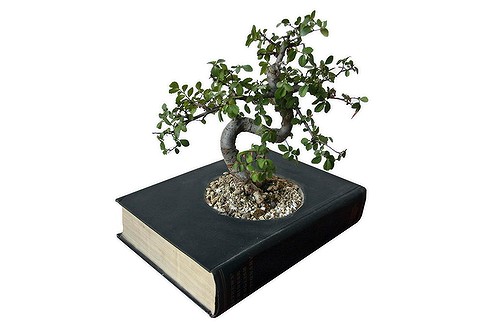
If that's not working for you, here are some pretty pictures.


More wild, gorgeous repurposed books are in the slideshow accompanying this Sydney Morning Herald article. (Link via Jim at This Into That, whose work is mentioned in the article.)

January 13, 2012

Writers' Rites: On Motivation

"BIC. Butt In Chair. There is no other single thing that will help you more to become a writer. William Faulkner said: 'I write only when I’m inspired. Fortunately I’m inspired at 9 o’clock every morning.' BIC." ~ Our Lady Jane


Happy New Year, again - I took a little hiatus from having a brain for awhile, but it's mostly back in working order, so here I am.


I don't remember who said it, but it's one of those jokes of which I can only remember the punchline - or the sort-of punchline. Basically what the joke was saying is that it's a bullpuckey kind of job that we have, where we can check out of it because we lack motivation. That's just not an excuse that anyone else can have.

Judge: I'm sorry, this case is going to have to go back on the docket. I'm just not feeling moved to pass sentence right now.

Obstetrician: Chica, you're gonna have to just hold all that in, because I am so not motivated to deliver your child today.

Policeman (over the crackling of the radio): Meh. Another call. Whatever. The Muse of the law enforcement just isn't whispering to me today.

Teachers: I'm not feeling it today, kids. Just color for awhile or whatever. I'm going to stretch out and read.


(Oh, wait. That last one did happen a couple of times while I was teaching. Never to me, of course.)

You see what I mean? It's kind of ...well, bull, as I said. You're a writer if you write, and if you don't write... well, you're kind of like those knitters who still call themselves that, and haven't picked up a pair of needles in ten years, yet still have skeins of yarn in a box somewhere. We call those folks people who need to declutter and donate some stuff. (And if this is you, please: don't make the scary people from Clean House have to come and see you, all right?)

Wait - I saw that flinch. Don't think I'm coming at you with judgment -- Oh, my goodness, I am not. I am coming at you from a seat on the couch next to you, wherein I have whined to myself that I am not motivated and this doesn't feel like anything but the most grinding of work, and what was I thinking, hoping I could come up with anything sharp and fresh and new, but which is turning out to be stupid nattering, and shouldn't I get a real job, one which will help pay for the roof and put my metaphorical kids through college, and one which will allow me to respect myself, and not be at the mercy of strangers and -- gah! -- critics for the rest of my life. I am coming at you from the place of being a writer in a funk, but we both know that if we stay here for too long, that "unmotivated" thing will twist us into someone we are not meant to be.


'Cause, here's the thing. We have the motivation. We do. Without motivation and will and the ability to put sentences on paper, we wouldn't be writers. And we are.

What we're lacking isn't motivation and the murmuring of the muse.
What is lacking is the courage to just get on with it.

How easy is it to say that we're too tired, too busy, too stressed to finish a story? How simple are the distractions of Dancing With the Stars or the Food Channel, or the sudden need to have a clean house or to pet the cat so you can get started with work?

...How hard is it to actually look at what we're writing, and know that it's not working, not one word of it, and to delete the whole file and start again?

Yeah. Sometimes, it's like that.

The thing is, nobody is going to give the time or attention span to do the work that you want to do. No one is going to give you the clarity and the focus and the plot. You have to really work for it. You're going to have to sweat and sit down and say things out loud and mutter to yourself; stand up and shadowbox or shuffle your feet to make sure you've got the movements right. You're going to have to suffer and bite down and maybe bleed.

Writing is sometimes work - more work than any of us want to admit. It's a pain. It's singing this writing song louder than the other little neurotic tunes playing in your head. It's bouncing in your chair when your butt-glue (thank you, Yat Yee) comes unstuck, and having to hold yourself there by bracing your feet.

And then, after all of that, your end result might be mediocre or even awful. You might find your creation laughable. You might be shocked. You might be deeply disappointed, as the wonderful Ira Glass says, but you'll have proven something -- to yourself, and to the watching world. You can write. You can finish. You did it once. You'll do it again. And, as your good taste and your love of story will still exist, you'll do it better the next time.

So, from my position next to you on the couch - perhaps let's call it the Whining Couch - I'm not telling you anything you don't already know. What I'm telling you is this: we're all on the same couch. The springs poke into our bums and the stuffing is leaking out, and we're all here, at one time or another. I'm sitting here, looking over at you, and deciding that I'm going to stop looking at the output or plot brilliance of other writers, and mind my own keyboard. I'm going to stop waiting for lightning to strike, and I'm going to strap down my own cold, unwieldy prose, and hit the switch and make my own magic. I'm going to let loose the leash on my motivation, let go of the tether to caution and safety and --

jump -

January 12, 2012

Toon Thursday: Revenge of the Pie Chart

It's the first shiny new Toon Thursday of the New Year. How 'bout them apples? (Um, no pie-related pun intended there...)


There are certainly myriad others I haven't listed here, such as the all-important "so you'll have something to show for all those hours you spent sitting at the computer surfing Twitter" and "so you'll have something to tell your nosy relatives during holiday get-togethers," but I particularly like these. May we all find our sources of writerly motivation during the new year...

January 09, 2012

Monday PREview: FRIENDS WITH BOYS by Faith Erin Hicks

Liked 2011 Cybils nominee Anya's Ghost (reviewed here)? Then I highly recommend checking out First Second's new title Friends With Boys. It's also a story about fitting in at school and in your own family, and, hey—it's also got a ghost! Friends With Boys will be available at the end of next month, and I was thrilled to get to read an advance copy and give it a little buzz. I'm happy to see First Second and other GN publishers stepping in to fill the niche that I'd hoped DC's short-lived Minx imprint would fulfill: graphic novels that appeal to teen girls but aren't "girly."

Reader Gut Reaction: With a quick, engaging storytelling style that's well-suited to a manga-influenced page format, Faith Erin Hicks has created a story that highlights classic themes like fitting in at a new school, making friends, appreciating your family for who they are, and learning that you don't have to struggle through life alone. The great balance of laugh-out-loud humor and relatable high-school angst, along with a fun cast of characters and just a touch of mystery and hijinks, made this one hard to put down.

Concerning Character: The main character, Maggie, lives in a house full of boys—three older brothers and her dad—but things are about to get even crazier. After being homeschooled for years, she's about to start (GASP) high school. She doesn't know anyone at school or have much contact with people besides her brothers, but despite being nervous, she meets friendly, endearingly goofy punky chick Lucy and her brother Alistair, and they quickly become friends. But they've got a few secrets, especially Alistair—and, of course, there are plenty of pre-existing tensions and social dramas that Maggie has no inkling of, having been homeschooled until now. Even her brothers have their own issues. But so does Maggie...and that's where the ghost comes in.

Quiet and thoughtful, I found Maggie an easy character to relate to, even though my experience with homeschooling is pretty limited. After all, we've all (mostly) faced the first day of high school, and whether you're new or not, it's nervewracking even if you're excited. She's also a really good-hearted person--she tries her best to be open and friendly, and she doesn't judge people by appearance alone.

Recommended for Fans Of...: School stories with plenty of humor, like Anya's Ghost by Vera Brosgol (reviewed here), The Plain Janes by Cecil Castellucci (reviewed here), Americus by MK Reed and Jonathan Hill (reviewed here), and Skim by Mariko Tamaki and Jillian Tamaki (reviewed here).

Themes & Things: The more general theme of fitting in at the beginning of high school is nicely underscored by Maggie's more unusual story of starting public school after being homeschooled by her mother for all of her school career prior. I like the fact that this is a story homeschooled kids will relate to, as well as kids with a more traditional school experience. Family, too, forms a big part of this story—coping with the loss of a family member and the complex and ever-changing sibling relationships that occur when you're a girl with three older brothers. Friendships—looking beyond appearances to the person inside—always a good theme. Also, forgiveness comes up again and again, in big ways as well as little ones; sometimes people act like doofuses and you have to learn when it's better to forgive and let go than to hold a grudge.

Authorial Asides: Friends With Boys was released as a webcomic, too, and you can read parts of it online there.

Review Copy Source: First Second (publisher)


You can pre-order Friends With Boys at an independent bookstore near you!

January 05, 2012

A New Year's Link Roundup and A Bright Idea

While Tanita braces herself against a brisk Scottish wind, and while I wait for my library holds to come in (Cybils graphic novels shortlist; woo hoo!) I've been accumulating a small collection of interesting links and tidbits from around the Kidlitosphere. Hope you enjoy!
  • First, are you ready for the 2012 Comment Challenge? MotherReader and Lee Wind are once again encouraging all of us to spend a month trying to leave five comments per day on blogs around the kidlitosphere and beyond. The jump-starting of our good blogger habits kicks off tomorrow. I'm not sure yet whether, or to what extent, I'll be able to commit to participating, but I know I've already been trying to poke my head up a bit more than usual, and I do plan to continue that good behavior. :) Anyway, if you want to officially sign up, check MotherReader tomorrow.
  • Via Leila at Bookshelves of Doom, I found a link to Lizzie Stark's hilarious post on If Famous Writers Had Written Twilight. For instance, Annie Proulx might've written a story that went something like this: "Edward and Jacob defy society’s expectations up in the mountains." OODLES more in the comments to the original post.
  • On Fuse #8, Betsy Bird speculates on which children's literary conferences she'd attend If She Were a Rich Girl, and I sulk, having discovered several more new conferences I won't be able to afford to go to. 
  • Of course you all know this already, but Walter Dean Myers has been named the next Ambassador for Young People's Literature and has chosen the platform "Reading Is Not Optional." Not much to say other than bravo!
  • AbeBooks highlights major literary events of 2011, including the death of Ms. Diana Wynne Jones and the demise of Borders.
  • And, last but not least, a fascinating story from the intersection of literature and science--after 150 years, a Penn State anthropologist may have deciphered the mysterious cause of death of poet Elizabeth Barrett Browning.
Oh, one more thing--and this is especially for all you Cybils Round 1 folks wondering what to do with the ARCs or review copies you might not have space for: the ARCs Float On effort is a searchable database that helps match bloggers with teachers looking to augment their classroom libraries. Why not send your post-Cybils stash to a needy teacher? If that doesn't work out, ARCs Float On's host site Reach A Reader has a great list of links to other ways to help and places to donate. Think of it as Boxing Day for books!

*Bright Idea Time* In fact, maybe that's something the Kidlitosphere should institute...Book Boxing Day, during which bloggers commit to boxing up one average-sized file box of books and donating it to their chosen location--a library, a teacher, even some lucky reader! Look, we get LOTS of books in the mail, and we BUY lots of books on top of that (c'mon, you know you do). Filling (or nearly-filling) a file box per year, or even every other year, shouldn't be a problem, should it? And it would make a fun blogosphere-wide event. What do you all think? Let me know in the comments. Or let me know if my bright idea is already being implemented somewhere by someone, so I can slink off in embarrassed silence. Thank you kindly!

January 04, 2012

Why, yes. It is windy in Scotland.

But, I'm still alive. Thanks to those of you who asked.

January 02, 2012

Drum Roll...

It's a New Year, and you all should know what that means by now.

Yep, the Cybils shortlists have been announced! After all of the amazingly hard work reading, rehashing, and winnowing, the Round 1 judges (including our own Tanita) have come up with their picks for the most kid-friendly and blogger-approved titles of 2011 in a dizzying array of genres. Go check it out.

And now, my work as a Round 2 judge will begin. (I can hardly wait. I already read two of the finalists earlier in the year, and I know the rest will be just as awesome.)

Happy New Year, everyone!