Showing posts with label Wicked Cool Overlooked Books. Show all posts

April 13, 2016

Wicked Cool Overlooked Books: Non-Pink Jean

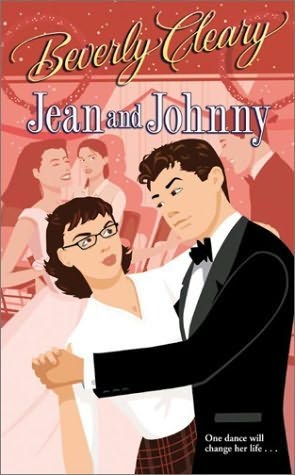
Welcome to the first Monday of the month, and another episode of Wicked Cool Overlooked Books! I completely missed September somehow -- but I'm back! In honor of Beverly Cleary's 36,526th day on Earth (we have to count the Leap Years, people, come on), I'm reprising my review from 2008, showcasing my VERY favorite Cleary book... and no, it's not a Quimby book. This is one of Cleary's working-class girl novels, portraying a white, middle-class family as "ordinary Americans." It's charming.

♦♦♦♦♦♦♦♦♦♦♦♦♦♦♦♦♦♦♦♦
Even now, if I sit down and just read the first few pages of a Beverly Cleary book, I'm hard pressed to set the book down. There is something about the tone and setting that make even the most dated of her books seem as alive and real as they must have been when the first readers opened them ages ago. So, when I saw an old copy of a Cleary I'd never read at a used book sale, I immediately picked it up.

I wish you could see my copy of the book. Harper Collins has done a reissue, and so all of the new editions are bound either in sort of girly-pink with party dresses or sort of random pink with hamburgers and telephones and other stereotypical sixties teen era detailing. Now I love the pink and I love the sixties, don't get me wrong, but this is an atypical YA romance, and I prefer my cover. My library bound, 1965 edition of Jean and Johnny, which was first published in 1959, is a distinct brick red and has a beige and black drawing on the front of a boy in a plaid shirt walking with a shy-looking girl with horn-rimmed glasses and a realistically slightly terrified expression. It's adorable.

And so is the story. Jean Jarrett is fifteen, and enjoying the first day of a two week Christmas break. She's a terrible dreamer sometimes, which shows up in her work -- though she's made her own skirt, it's plaid, and none of the lines match because she forgot to leave enough material for the skirt to gather, which is kind of a disaster. She's a decent girl who admires her older sister, Sue, as being the smart one and the pretty one -- though it's worth noting that she admires her without angst, which is refreshing. Both girls wish for something exciting to happen, to maybe meet a nice boy. When Jean, wearing her horrible skirt, goes down the street to her friend Elaine Mundy's house to write to her pen pal, they take an unexpected trip to Mrs. Mundy's club, to drop off some Christmas decorations. A holiday party is in progress, where gorgeously attired dancers spin in a room of candlelight and flowers. The girls stop to watch the dancers -- and Jean gets asked to dance.

In her hideous skirt.

It's both deeply embarrassing, and completely magical, as Jean realizes that dreaming about a boy is vastly different from the reality of trying to dance with one, and make small talk. Jean is quickly obsessed with finding out more about this boy, Johnny. He's a senior at her own high school. Why did he even notice her?

The late fifties setting of this novel gives it a really fun feel. The television commercials are described with Cleary's drolly sardonic touch. Jean's contest entering mother, competing for appliances by writing why she likes specific products (in twenty-five words or less), and her newspaper-rattling sarcastic father who makes disparaging comments about Jean's choice of television shows, are perfect. At school, the band kids and the dramatics of the modern dance girls give a humorous, realistic touch and remind the reader how little high school has changed in some ways in the last fifty years.

The Jarretts are definitely working class, and certainly aren't rich -- the sisters sew and only splurge occasionally on Cokes because they know the value of a dime (which is what a bottle - glass, of course - cost back then). However, the girls also know when to buy a store-bought dress, and their father knows when to give them a little spending money. In subtle ways, Beverly Cleary has constructed a loving, functional, balanced, frugal family, who sometimes quarrel but always make up. They're not perfect, but they're real.

I read this book the first time, expecting Mrs. Cleary to have written a traditional girl-crushes-on-boy YA romance -- and to have earned that pink cover -- but it in fact, this story isn't routine or predictable, especially for its time period; Jeans likes Johnny, sure, but once she figures out why... you'll be surprised at her thought processes, which is why I am so glad I took a gamble and bought this book. Jean learns a thing or two about relating to boys which are still relevant to this time, and more than that, Jean learns a thing or three about thinking for and relating to herself -- and comes out definitely ahead of the game. This is one wicked cool book, and should you see it in your library, by all means, pick it up!

More Wicked Cool Overlooked Books today at Chasing Ray! Read more about Cleary's YA novels at Slate.com

August 31, 2014

A Little Amusement for a Long Weekend...

...drum roll, please: THUG NOTES does THE GIVER and THE HUNGER GAMES.

What I love about these is that they're not just summary, but literary criticism as well - good, often deeper-than-I'd-thought-of litcrit, which makes me extremely cheerful.

Best digital use of that PhD in English, EVER.

February 19, 2014

WCOL Wednesday: THE HOUSE ON PARCHMENT STREET, by Patricia A. McKillip

Sometimes I get on a tear and read ALLLLLL The Things from one particular writer. I've been on a McKillip tear, so I have been re-reading all of the old favorites I can find, like THE FORGOTTEN BEASTS OF ELD and THE ALPHABET OF THORN and all of those lovely, ethereal and particularly McKillip-y books, when I ran across one I hadn't seen before. THE HOUSE ON PARCHMENT STREET? I wondered to myself. It had that sort of hideous cover that always says 70's Children's Book to me... and sure enough, that's what it was.

A little research, and I found three covers - one the original lavender library binding, one the original shrieking yellow paperback, and one a paperback re-issue from Aladdin in 1978, which makes the main characters look like they're all about six years old, which is a shame. The earliest covers focus on the historical characters in the novel; on the back cover of the hardback is depicted an elderly woman cleaning a gravestone - taken straight from the text, but a potentially odd choice for the cover of a MG book. However, it was originally published in 1973 - well before we were reading around here - and very much explains the writing style, the prevalence of mustard yellow, and the design choices.

A new-old find, and a particularly toothsome little morsel for Wicked Cool Overlooked Books Wednesday.

CONCERNING CHARACTER:: Honestly, there's just something ABOUT these old-school middle grade novels. There's mystery -- sometimes to the point where the reader is scratching their head, going, "Eh?"

The tale opens with a tall, thin, red-haired girl arriving in a poky English village, on foot. Her hair is a mess, she's barefoot, and she's lugging a suitcase. She stops in front of a large, walled house which is across the road from an old-fashioned cemetery. Abruptly, she is surrounded by catcalling boys on bicycles, circling her, staring insolently, and calling names. When she speaks, it is apparent that she is American, which makes her even more an object of interest.

The tall girl swings her suitcase around and knocks the catcalling boys away (leaving one protesting, and trying to speak) and goes through the gate, into the house - and nearly runs over another boy who is inside, fixing a bike. Still no shoes. Still big hair. Still no real explanation for what's going on.

And, yet, the scene more than sets up the out-of-place, uncomfortable and distasteful emotions in the character. Carol is a California hippie-type who's really not at all sure about this "month abroad to expand your mind" thing she's been sold on. Between the stupid boys, staring at her hair and her height and her thinness - and the glowering boy inside the house, Carol feels like an imbecile. She feels stupider still to realize that she wasn't supposed to pick herself up from the airport - her aunt and uncle are even now searching for her. It's going to be a horrible summer.

Bruce meets his cousin, and is grudgingly sorry for her, mixed together with his annoyance that she's going to be in his way four a month. He suspects he should do a better job of being nice and polite, but as far as he's concerned, once he shows her to her room, he's out. Interestingly, the novel gives us a lot of insight into Bruce's emotional state without giving anything away - but it's clear from his prickly demeanor that something is going on with him - but what?

Bruce is a brat, his friends are imbeciles, and she's not keen on graveyards, even if she is nearly fifteen. Carol would like to go home now, please.

Bruce would like her to go -- or, no, stay. Stay and distract his parents, with her wild red hair and clumsy American awkwardness. His parents right now are driving him nuts anyway - his Dad is harping on his smoking (!) and implies he's a bully, when he's just hanging out with his friends...and bothering people until they sometimes break down and cry (And, this is why to me the image of Bruce on the 1978 cover is ludicrous). However, his friends are driving him nuts, too - following him around, demanding his time, harping on him for not hanging out more. He's fighting with his father, he's fighting with his friends, he's fighting with himself. Everything is annoying, and Bruce hates the house their renting. It's freezing, it's too dark, and his father hasn't listened to anything he's told him about it, at all. And, most of all, Bruce does need someone to listen...

Misadventure seems to follow Carol - she nearly brains her cousin and breaks her elbow messing with an ancient weapon, she breaks things, she stumbles around. After nearly burning down the house the night before - and her bed - Carol finds the English summertime damp and cold - she's left at a loose end, since Bruce seems to be hiding from her,and her aunt and uncle are busy. Glumly, Carol climbs a tree, visits a lady who lives by the graveyard, and wanders the big, cold house behind its gates and high stone wall. It's kind of an adventure - until she sees a man with a sword walk into the wall. Yes, into the wall. She mistook it for a shadow, until it happened again when she was alone... Great. Now, on top of every other misery in trying to fit in with a cousin who doesn't like you, in a country you've never been, Carol is seeing ghosts. Of course, she can't actually tell anyone - it's clear they already think she's crazy...

Both Bruce and Carol feel sure that it's going to be a dreadful summer. As it turns out, on some level, they're both right - and both completely wrong.

This is decidedly no romance in this novel - except the romance of history, and the quiet beginnings of a friendship which maybe-perhaps-someday-a-ways-off could become something else. A quirky, charming tale, this doesn't have the typical McKillip feel quite - but given that it's probably her first or second book ever written for publication, she definitely worked her way into her current style. While I'm not generally that big a fan of the traditional "ghost" story, this is a fairly good one. This book skews younger, and is perfect for younger middle grade - 10 - 12 - who like a dose of old-fashioned mystery in the feel of HARRIET THE SPY. It's a quick read for a cloudy Wednesday afternoon.


My copy is an old library selection. Much to my chagrin, I realized just now that Charlotte reviewed this book last summer. Oh, well! Great minds, and all of that.

You can dig around in old bookstores or your public library and find THE HOUSE ON PARCHMENT STREET by Patricia McKillip. It is otherwise a rare find, and not readily available for purchase. Do check Powell's, Alibris, and Amazon.

January 08, 2014

WCOL WEDNESDAY: Lois McMasters Bujold's THE SPIRIT RING

One of my goals for the year is to read more books that are older. I love new books as much as anyone, but some of the VERY best library finds are from times past, and just because they don't have a kicky new cover (READ: headless fit torso, or Pretty Caucasian Girl In Gown) or a publication date within the last five or ten years doesn't mean they're not good books, or even diverse books. This book was first published in 1992, went out of print, and was picked up again in 2000.

I've been a fan of The Bujold, ever since the Vorkosigan sagas and after I wept my way through her CHALION trilogy (the second of which won a Mythopoeic Fantasy Award for Adult Literature and was nominated for the Hugo, World Fantasy, and Locus Fantasy Awards in 2002), this one-off fantasy was a nice surprise. This book wasn't marketed as YA literature, but the teen protagonist says teen enough for me, and I know my fifteen-year-old self would have loved the adventure and the drama and the quest for True Love (yes, DO imagine the priest from The Princess Bride movie, thank you).

As always with Sword and Sorcery books from the 80's/90's... the covers... oy. The covers. The hardback of this book is dire, with its dark background and scowling ring - but you can't say it's not straightforward. It's called THE SPIRIT RING, and look - a ring. End of story. The flying ring on the backdrop of somewhat melty looking stone buildings on the paperback - and the evil, toothy frog? Demon? Thingy? - is just as bad. Neither of them evokes the beauty and artistry of medieval Italy or seems to be about jewelry smithing or diverse characters, and neither of them says, "pick this up, younger readers! There are teen characters!" No... the cover shrieks something else entirely... but, never mind. It's what's between the covers that counts.

Concerning Character: Fiametta is a girl disregarded on all sides. It's bad enough that since she's "only a girl," her father barks at her, orders her to do, unpaid, twice the work of his apprentice, yet can't be bothered to teacher her any magic, despite his being a mage of some strength. Good thing she can get into his notes and books and figure it out for herself. In this medieval, parallel-universe-Italy setting, Fiametta is socially in a fragile position. As a girl whose barely remembered mother was a Moorish woman, or possibly Ethiopian, Fiametta only has her clothes and jewelry to remembers her, she's been left with a legacy of dark skin, wild black curls, and a sharp and curious mind. Uri, the soldier she likes, doesn't take her seriously as a woman, and won't even put on the magical ring she casts and enchants to reveal to her her true love. Her father, Master Beneforte, an impatient, perfectionist and proud man, knows his daughter's dreams, and disregards them in favor of criticizing her and dismissing her hopes. Fiametta despairs of ever having the life she wants...

Meanwhile in a tiny village in the hills, Swiss copper miner Thur Ochs plods along in his father's footsteps, doing the work for which some think his God perfected him. His wide shoulders, big hands, and stong-as-an-ox constitution make him a natural for dirty work, hard work, and work that doesn't require wit. Thur wants to be more than a miner - desperately. He'd love to do anything else, but his brother's offers to find him a place as a soldier don't appeal - though a big man, Thur is gentle. Their father died in the mines, but Thur can't think of another way to support his mother in their tiny cottage, and she's so lonely, he doesn't want to leave her to find something else. However, Thur has just made a startling discovery -- the kobolds in the mines, which every miner fears, not only see him, but they talk to him. They warn him that if he stays down in the cold and dark, he'll die. An accident in the mines convinces him of this, and the wheel of destiny turns...

As a master mage and metal smith, Master Beneforte is entitled to pride in his position - he's worked hard for what he has, and though he's come to the attention of the Inquisition for past...indiscretions, for now, his magic is fully white, and approved of by the Church. Fiametta is proud of him - but his swelled ego blinds him to much, including the brilliant daughter right in front of him, and the dicey political situation in the ducal household, who is his patron.

With a wedding gift of a magical salt cellar in hand, expecting gold and loud acclaim, Master Beneforte and Fiametta crash a dinner party meant to celebrate the Duke's daughter's betrothal to the wealthy and powerful Lord Ferrante, a Lord from another city-state who brings with him an honor guard of beautifully dressed troops and attendants, who look a bit like bravos to Fiametta. Ignored in favor of higher class guests, the Benefortes are seated far away from the Duke. Unfortunately they're perfectly placed, however, to witnesses his murder. As the guards cry treachery, all hell breaks loose. Swords are flying, guests are fleeing, and an overturned table reveals the evidence of black magic at work. Having seen too much, the Benefortes are fleeing for their lives. Too late, Fiametta finds out just how much of a mage her father used to be...

With her hometown invaded and its citizens on the run, Fiametta and her destiny collide. Of course, who ever recognizes destiny when they see it? And, enough with the woo-woo stuff -- when there's real work to be done, it takes heart, faith, bravery, and, yes, True Love, to win the day. As sword-and-sorcery tales go, this one is a solid and entertaining read, and while it won't change your world, it will certainly make you smile.

WARNING: Offer void across time lines. Be Careful What You Wish For. Any magic rings you put on may have an adverse effect on your fingers, your life, or the lives of others. Your mileage may vary. This novel contains people of color in a medieval setting. This is not an anomoly; people of color were not invented during slavery, but were free merchants, traders, teachers and doctors, minding their own business throughout the world. No, really. Any attempt to read books while operating heavy machinery will end in tears.


I picked this book up at our public library. You can find your copy of THE SPIRIT RING by Lois McMasters Bujold online, or at an independent bookstore near you!

May 01, 2013

WCOL Wednesday: FLEDGLING, by Sharon Lee & Steve Miller

First Wednesday of the Month, kids! Once upon a time we at Wonderland dubbed these find days Wicked Cool Wednesday!

In the name of full disclosure, that these things come together in this posting is a total accident, but hey: it's the first Wednesday of the month, is it not? And, this is, indeed, a Wicked Cool Overlooked Book. Happy Wednesday, and let the games begin!


Stumbled-upon books are the ABSOLUTE best. Stumbled upon SFF is even better.

Tech Boy enjoys Baen Books but they aren't always my cuppa tea, as they seem to specialize primarily in military SF, and how many endless wars with aliens, wars back in time on parallel Earths and wars in space can you read without them all running together? This novel is not strictly YA - it merely is about a young main character - but it works as a great crossover because it's character-driven, and you will love at least two of the characters a great deal, if not all three.

To be sure, I have NOT been in favor of Baen's latest attempts to get on the YA bandwagon; for the most part their efforts have been just painful and arrgh. However, Baen is still such a familiar go-to for a lot of libraries for crowd-friendly SFF that there's always plenty of volumes from which to choose, and I always try to give them a shot when I see an interesting-looking novel. This time I picked up Fledgling first because it was published in 2009, and #1 in a series -- which means there's a darn good chance that any sequels have already been published - but it also #15 in a series? Intrigued, I read on...

Reader Gut Reaction: Some people might argue this wasn't the best book to start with, but for me, coming fresh to the Liaden universe, it was just fine. The Liadens have apparently been going on for those previous 15 books, but Fledgling is, as the word suggests, a newbie. It's a good jumping off place - you don't have the history and the back story, but really, neither does the main character. She's running into things, tripping over her own feet, and getting sick of it... You'll find you're right with her.

Eons after evacuating a collapsing universe, what's left of Earth humanity is split into at least three sub-races: Terrans, Liadens, and Yxtrangi. The galaxy is still very much a wild frontier, and Pilots are a highly-respected cross between long-haul truck driver and samurai. For the sake of Fledgling, we only deal with Terrans and Liadens and touch only briefly on Pilots.

Delgado is a Safety World, where all the corners have been rounded off, all of the hard edges have been softened. Everyone and everything is designed to keep children and adults safe. No bad experiences. No anti-social peers. Everyone is at the same level - no one held back, no one forced forward. Everyone learns the same things, lives in the same clean, white housing in the Wall of Delgado University; eats from the same lists of foods in the Wall's kaf. Every student learns teamwork and "advertent" purposefulness, as opposed to inadvertent randomness; every adult in this city is a scholar, and the pursuit of scholarship is a fiercely desired, fiercely protected practice. Tenured professors are treated as demigods. On the surface of things, Delgado is a good place to grow up.

Efraim is the name of the town just outside the Wall where mostly non-academics live; its citizenship is a little more varied. While conformity, a strong police force and uniformity are the hallmarks of Delgado's safety, Efraim is about contrast, artisans, and uniqueness. It can be a place where you jostle against people who give you Looks and mutter things about you. It's definitely not Safe, but it is colorful and real. And, for a long time, it was home to one Theo Waitley, daughter of Kamele Waitley. It's not anymore.

Concerning Character: Theo is slightly piteous at the beginning of this novel. She is often on the verge of tears, barely holding it together for reasons which become immediately apparent - her family has split up. For all practical purposes, there aren't "married" couples as there were on old-school Terra. Women contract with an onagata, and can move between partners their whole lives. Women make choices to further their careers, and eventually apply for the right to have an IVF, when their career is at a good stopping point. Men are mainly superfluous - pleasant coworkers, but ultimately unnecessary, except as sperm donors. Theo knows all of this, but ... she's gotten rather fond of Jen Sar Kiladi, and is considered socially awkward because she can't give him up. He's been her mother's onagata for her whole life. They've lived outside of the Wall, in Efraim, though both her parents work within Delgado at the University, but now that they've moved out, Theo, at fourteen, is a graceless, gasping fish out of water.

She's lost her cat -- realistically, Wall scholars have everything they need, and people simply don't need cats -- she's left with calling Jen Sar not "Father" but "Professor Kiladi," and the worst thing is that her clumsiness - which has been remarked upon and written up since she started growing - is getting worse. The Safeties in Delgado are always watching her, and have judged her a danger to herself and others. Theo's under tremendous pressure at school as well, for pulling down her team's score in physical activities, and some of them are becoming openly resentful. She's under pressure at home, as Kamele is distracted and seems angry, and she and Theo are clashing at every turn. It seems Theo's not good at anything. Her assigned mentor, Marjorie, is supposed to be there to make her life easier, but has been uncomfortably pushy lately, and has suggested that there's a cure for her clumsiness... but that her mother has been keeping it from her.

Not all is well in Kamele's world, either. She is a proud Scholar of Delgado - in an enviable position in her department. She's worked and studied hard for it, but living outside of the Wall has put a crimp in things. Her University department is under scrutiny; it seems there's a major issue of scholarship in its library. Some of the literature there - which students of every race from all over the galaxy come to study - has been altered. Academic dishonesty at that level has the power to disrupt the entire University, leaving reputations irrevocably shattered. Who would do something like that? And, why? Someone is out to discredit everything Delgado stands for -- and Kamele isn't willing to stand for it. But, to save her University and its reputation for scholarship, she has to leave the safety of Delgado to do forensic document research - and remove Theo from both her beloved Professor Kiladi, and from anything remotely resembling a "safe" place.

Kamele and Theo leave the planet together, and together and separately have new and scary experiences which push them beyond the people that they were, into the people they need to become. Meanwhile, "Professor Kiladi," the calm, logical and lovely man they thought they knew is someone a lot more than expected...

Recommended for Fans Of...: SFF with strong female characters, such as SNOW CRASH, by Neal Stephenson; SASSINAK and CRYSTAL SINGER by Anne MccCaffery; THE PRIDE OF CHANUR, C.J. Cherryh; INSIDE OUT, Maria V. Snyder; MUTINEER by Mike Shepherd, and more, which aren't strictly YA, but YA-friendly.

Cover Chatter: Oh, Baen. Can we talk about the covers, here?

There's a definite SFF "look" from some publishers - early Tor, a lot of Baen, some Del Rey -- it's a sort of sameness. Look! Interior starship! Look, people in skin-tight onesies, which we will ostensibly all wear in The Future! Look! Random details like a cat, which was never on the main concourse of the space ship, and a ball, which with the cat never played! Look! Generic Covers With Nothing To Make Them Stand Out!

While I appreciate that the point of a book is the story, such a GOOD story has great pieces to pull from it for a striking cover. Instead of serving up another female - young or older - in a skin-tight space suit to, in sociological terms, simply stand open to the male gaze, why not have the cover model doing something? Theo does tons of stuff - some of it badly - but she's one of the more active characters in space opera who isn't toting a gun. One of the more fascinating things she does is learn to play with a bowli ball. She also dances, skulks around, discovers things, rides in a fast, fast car with her father, and plays with her cat. She is more than a mainly gawky, flat-chested body in a space suit and deserves better than the cover she got.

Authorial Asides: Sharon Lee and Steve Miller started publishing Liaden books in the science-fiction, space-opera, fantasy, romance, espionage, military, and wild west style genres when I was in junior high/high school in the eighties ... and then after three books, the publisher lost interest. Which happens. They got together with another publisher... and they went under, still owing them royalties! Yikes. Thus, they kind of crowd-sourced the funding for a few books, which is kind of a neat thing, and is getting fairly common in many SFF circles -- on a kind of subscription basis, they got through what they thought was going to be a short-ish draft, and soon had the money to put forth nice 42 chapter novel. So, there are fourteen books in the Liaden universe BEFORE this current spin-off, and there's a sequel to Theo's tale, which kind of ties up this "episode" of her life, but ends just when things are getting good. There's a new Liaden novel coming out in a few weeks, too!

Baen is reprinting these books in omnibus form, and already offers “e-omnibus” bundles of all the novels prior to Fledgling and most of the related short stories.


This is a library book. You can find your copy of FLEDGLING by Sharon Lee and Steve Miller online, or at an independent bookstore near you!

February 12, 2013

WCOB: Through the Hidden Door, Rosemary Wells

Well, sure we all know who Rosemary Wells is. She's the one who does the bunnies! The adorable bunnies! The cuddly bunnies! The fabulous Ruby and Max! Oh, and Nora, Yoko, and McDuff, too, but mostly we know her from Ruby and Max.

So, how did we go from cuddly Bunnycakes and other cutenesses to a novel which, nominated for the 1988 Edgar, gives Cormier's THE CHOCOLATE WAR a run for its money in the dark and vicious category? An author whose skill encompasses both bunnies and psychological torment - for middle graders? I was intrigued... It's another Wicked Cool Overlooked Book!

Reader Gut Reaction: This book was first published in 1987, and for the first few pages, you know it. Good grief, Sperry Topsiders. Polo cologne. The names of the students are also a little dated - I don't know the last time I've met a Barney, do you? I mean, at least one under seventy or so. But, names and name brands fall away after the first few pages of this novel. You're very much grounded in time at The Winchester School for Boys, with the operative word being grounded. Our main character has never been able to get up off the ground, and an opportunity to eat yet more dirt comes within the first few pages...

Concerning Character: Poor Barney Penniman is never going to achieve greatness. To hear his father tell it, greatness is all about going to the Right School in the Right part of the country, graduating with Honors and going on to do what you want, and the world is your oyster. Unfortunately, oysters are kind of like gobs of snot to Barney, and there's a lot of doing what other people want before you ever get to do as you please. At thirteen, Barney fears a future of ordinariness, so he falls in with his father's plan, leaving his life in the West, and going back East for polish and class, as once was the tradition. Unfortunately, along with polish, Barney is gaining tarnish. He fears being diliked, being tormented about his lisp, being the bottom of the heap and being alone, so once he's at Winchester, where old money and snobbery prevail, he does what others do - which is to side with the bullies and do what it takes to stay off the receiving end of their pranks.

While Barney has a good heart, he's occasionally really dense. What it means to be a friend, and what it means to be a total TOOL are confused concepts for him. He's one big, sweaty, anxious ball of reaction, instead of action. Tell him to eat a random mushroom in the woods - he'll do it, and then have to go to the ER to have his stomach pumped. Bullied into a "study" session the next test, he not only gives away his notes, but teaches his so-called friends to write the answers on the insoles of their shoes. But, when his so-called friends sadistically attack a helpless dog, Barney can't keep silent. The headmaster finds out, and it's over: Barney can either save himself, or everyone else. He tries to take the blame for what he hasn't done, knowing what's coming to him, but a wise headmaster knows his students. To his horror, he tells the truth - and that's it, game over. The life of a snitch at Winchester is one big bruise.

Meanwhile, there's Snowy Cobb. He's only a sixth-grader, and without his coke-bottle thick glasses, he's legally blind. He's secretive, weird, and has skulls all over the bookshelves in his room. Barney isn't inclined to seek him out, but he's the only one Barney feels safe with, secreted in the back of the library. It turns out that Snowy knows things - more than anyone suspects. He's willing to share what he knows of a secret, magical place, if Barney is willing to be brave, get cold, filthy, and blindfolded... and keep his mouth shut. So far, Barney's not batting a thousand with choice of friends. Is it worthwhile to trust anyone...?

Recommended for Fans Of...: brutal boarding school novels, like The Chocolate War, by Robert Cormier, Looking for Alaska, John Green, and Black Boy, White School, by Brian F. Walker; moody bad-friend novels like Tangerine by Edward Bloor; mysterious books, like The Westing Game, by Ellen Raskin, and archaeology books like the Theodosia novels, by Robin LaFevers, Blossom Culp, And the Sleep of Death, by Richard Peck, The Serpent's Shadow, by Rick Riordan, and more. Adventure and peril for the win!

Themes & Things: I find it amusing that so many of the novels of the 80's were about how CRAPTACULAR the boarding-school experience can be. "The more expensive a school is, the more crooks it has - I'm not kidding," says Holden Caufield of Pency Prep, in The Catcher in the Rye. Clearly, by the Potter years, the American public had forgotten how much they used to hate boarding schools, but man, for awhile there, every boarding school was Pure Evil - at least for the boys. (LORD OF THE FLIES, anyone? They were a boarding school not boarding.) Before there were Mean Girls, there were mean boys, and they are comprehensively more brutal and more frightening this time around. There's a real sense of menace from both Mr. Silks - the new headmaster, who has tormented Barney from the start - and from the boys - top of their fields in whatever sport, with well-moneyed parents who donate this and that to the school to keep their wee darlings out of trouble. There's a pivot point in the book where Barney is so unjustly treated, on top of being bruised and battered, when he's offered an out - a clean slate - and a chance to go on to the high school his father longs for him to attend. It's dirty pool, however; he knows he's being offered a bribe. Politics, old money, and viciousness are the watchwords of boarding school - and there's a clear division between people from Out West and Back East deal. Aside from being an archaeological mystery is also an interesting study of class in America in the early 80's.

Cover Chatter: Oh, 80's Covers, how loathsome you can be - but surprisingly, not this time. The Spanish language cover is fabbity-fab - a crazy-eighties pastiche of detail. Snowy is not quite blonde enough for his nickname, but still - there's those coke-bottle glasses, there's the blindfold, and aha, a cobra! The original Puffin cover isn't bad, either - two boys with flashlights and indeterminate brownish darkness. The more modern Kindle cover featuring a silhouette in a cave tall enough to stand in with light behind are a little misleading, as it's kind of a scramble to get INTO the cave, but the silhouette kind of gives a vague feeling of menace - you don't know who they are, or what you'll find down there. The most generic is the 2002 paperback cover - someone running in the woods. While at Winchester there were woods outside/around the hidden door, the cover doesn't really lend much to the story. Still, it works as blandly mysterious, and might make older readers pick this up.


You can find THROUGH THE HIDDEN DOOR by Rosemary Wells in any library, or at an independent bookstore near you!

September 05, 2012

WCOB Wednesday: WBI: Witches Bureau of Investigation

Oh, serendipitous books, you give me such joy. This book you might have missed, as it's a quietly self-published book available only on Amazon. It needs a bigger audience.

Reader Gut Reaction: There is NOTHING, and I mean NOTHING like just picking up a random library book or buying a cheap paperback, just to see what it's about, and hitting literary GOLD. From feeling a faint cautious distaste about these books, I am again becoming a BIG BELIEVER in the self-pubbed/indie, if the writer has a writing group, mad revision skills, and can write a story that isn't thinly veiled Mary Sue autobiography in the first place. I will say it clearly: this book is one I'd like to see nominated for the Cybils Award in MG SFF. It will be well able to compete with the others.

You Have Been Told.

Why did I pick this up? I liked the title - the WBI. Kind of like the MIB, only... not. I expected it to be slightly silly - and it is. It's also slightly hilarious, and will be a perfect autumn read for middle grade fantasy enthusiasts, and the older readers who read to them. The only teensy flaw in this book is that it stumbles into the "one twin is The Dumb One and the other is The Smart One" trope. However! Our savvy author ensures that the "dumb" twin saves the day, and more than makes up for his moments of lesser brilliance.

Concerning Character: Really, there are two main characters - Nate and Herman. When our story begins, they're already not doing what they're supposed to, which is not Come Straight Home After School. No, they're in front of a comic book shop. From the coffee shop next door comes a sharply dressed old woman in a heavy coat, balancing her cup of coffee and searching for her car. She's knocked over by a grumpy yuppie on a cellphone. As the boys hurry to help her, what happens next widens their eyes. Could that chair really have moved... and tripped that man, causing him to pour coffee all over himself?

If Mrs. Weatherby can do that, maybe she can do other things...

As it turns out Mrs. Weatherby is both more help and less than the boys envision. Stepping into her world leads the twins into meeting strange people with alter egos - or insects - sleuthing, betrayal, and lots of new vocabulary. Nate and Herman are smart and tech savvy and the technology and the details of this book are smart as well. They don't have Stupid Kiditis, which happens when authors create characters who do dumb things and you have to shout at the book, "NO, DON'T GO IN THERE ALONE!" They know when to duck authority, and when to ask for help -- usually just moments before the situation spirals ENTIRELY out of control.

Inasmuch as the twins are realistically drawn and quite funny, the adults, though funny, avoid caricature. There's a lot of respect given to older ladies in this book, because the post-AARP set kick buns and take names. It's satisfying, and occasionally surprising to the boys - which is as it should be.

Recommended for Fans Of...: adventure stories, stories with strong older women, and fast-paced, funny mysteries. Think Kiki Strike by Kirsten Miller, Artemis Fowl, by Eoin Colfer; Louis Sachar's Holes, The Time Warp Trio, by Jon Szcieska and more.

Cover Chatter: Let's just take a moment to talk about the cover, here. The two main characters are boys who live near Hollywood. The pearl-wearing black cat on the cover is on a shield - a representative symbol of the witches. Does this look like a book marketed toward either boys or girls? The strong colors of red, black, and gray seem reasonably gender-neutral -- and I think either boys or girls would be eager to pick it up.

I admit that the cat gave me a feeling of quirky, funny, and sly humor - and, okay, it is reminiscent of the cat on the cover of Michele Jaffe's BAD KITTY, which is still one of my fave silly books. Pick this one up! It will really amuse you.


You can find WBI: WITCHES BUREAU OF INVESTIGATION by Richard Capwell at Amazon's ebook page. You don't need a Kindle to read it.

September 07, 2011

WCOB Wednesday: THE SHIFTER

It's Wicked Cool Wednesday already. This book is "overlooked" in that it was released in 2009 - and its sequel released in October of 2010, so I'm way behind the curve. Happily, it's sometimes more fun to catch up this way -- no pauses in between finding the next episode of the story!

Reader Gut Reaction: Y'know, I saw this book, oh, months and months ago, but the US cover had the word "shifter" on it, and I didn't look very closely except to say, "Meh," and go on. Upon more recent and closer inspection, I saw a variety of covers and titles - the UK title is The Pain Merchant. Once I saw the subtitle, "The healing wars," more of my interest piqued. A good thing, I now see - this series gallops forward with lots of action, heart, and though, with crossover potential. I am eager for the next thing from author Janice Hardy.

Concerning Character: Nya from first blush appears to be a typical orphan - ratty clothes, desperate straits, thievery. It soon quickly becomes apparent that those are only the side details -- she's a child of a nation that has been at war for years, and she has a skill that is both strangely valuable and makes her anathema. She is a Taker - she can shift pain from a person, but unlike the League healers, or healers-in-training like her sister, Tali -- Nya's unable to truly heal. She just takes the pain into herself, and passes it to her sister to secretly dispense it into The Slab - a big piece of magically enhanced metallic rock called pynvium. Takers are considered flawed - The Healer's League shuns them, and the Duke wants them hunted down. Between the wars and the poverty and the Ducal edict, no wonder Nya's life is a mess.

On a Very Bad Morning when a theft for food has gone badly awry, Nya discovers that she can quiet her conscience enough to shove Taken pain into someone else, instead of giving it to Tali to give to The Slab. She's in trouble when she does it -- both because she's broken her own internal rules, and also because people talk, but once she's done it... well. What's done is done, right? Nya needs her freedom - and her life. She'll do it again, if she has to...

There are pain merchants in Nya's city who pay people to give them pain, so that they can sell it to the enchanters, who enchant it into the weapons used for war. It's a nasty, unhappy business, and keeps the healers -- and some shadier Takers -- busy. It's necessary, though; people have to put the pain somewhere, and from what Tali tells Nya, there are more and more horrible cases to deal with lately. The healers are being worked off of their feet. Some poorer folk can't afford real healers, and weaken and die, even after pain is gone. And there are whispers that the Takers in the whole city are being used for something darker, something the Duke wants. When Nya's sister Tali disappears, rumors of war abound, and Nya finds that there may be more evil truths in store...

Recommended for Fans Of...: The novels of Tamara Pierce, specifically the Immortals series, and the Circle of Magic books (Briar's book, especially); the Jackaroo novels by Cynthia Voight, Graceling by Kristin Cashore, and The Blue Sword by Robin McKinley -- if you like your novels with strong female leads, and enjoy reading about resourceful people in a time of national conflict, this is your kind of book.

Themes & Things:At first blush, this book is pure fantasy, but there are deeper layers - politics, identity, and the idea of what makes up a family. I loved the camaraderie, trust, and teamwork the principle characters find, and Nya's ethical struggles deepen this beyond just a good story. Can a single individual take on the ever-warring state - so clearly in the wrong - and win? This series aims to find out.

Authorial Asides: Janice Hardy blogs at The Other Side of the Story, and offers up writing advice, amusing commentary on the writing life, and book information, including the fact that the THIRD sequel to this series is coming out October 4, 2011!


You can find THE SHIFTER in its American incarnation or under its British title, THE PAIN MERCHANTS at an independent bookstore near you!

January 10, 2011

WCOB: A Hint of Deception

As numerology buffs (and, frankly, straight out nutters) are preparing for the Day of Significance that will be tomorrow - Tuesday, the eleventh day of 2011 at 11 a.m. (or p.m., unless you like military time) -- we lesser mortals will start our celebration of significance today. The first Monday of the month..., erm, no...

Let's try again: The first non-holiday Monday of the year -- technically.

Okay, fine. You've got me. I'm late, which is typical, but what the heck.

Because I say so, it's time once again for book talking. It's Wicked Cool Overlooked Books (The Late Edition)!

Reader Gut Reaction: DECEPTION by Joan Aiken = SO. MUCH. FUN.
Now, I admit that I am a Aiken fan of the first water. Many a great love of Gothic art was born of the marriage of Aiken's books and Edward Gorey's book jackets. Her books were deliciously spooky, the adults crooked and evil and mean -- which we all at some age suspect that they truly are. (And we're not half wrong on that.) Because of my early (- okay, I read her in college, but I was eighteen, that counts) love of her delectably dark books, I will read ALL THINGS Joan Aiken. This, while surprisingly different than what I've read of hers previously, is to date one of my favorites, and I still have REAMS of her books to go. (YAY!)

Published in the UK in 1987, it followed her series of Austen-esque fiction, and still keeps kind of the flavor of ridiculousness those books have. No, seriously - Jane Austen wrote the big-time humor. Her novels poked sly fun at the manners of society in that day, and Aiken keeps up the good work in this novel. It features a typical storytelling trope of trading places, and adds spice to the brew by throwing in a.) a girl with a mission to save souls, b.) a penniless girl with little interest in making the switch, who wants to be left alone to write and c.) British/American differences. Could a girl from Massachusetts actually trade places with a British girl, and no one see any difference? Welll.... no, actually...

Concerning Character: Because Aiken was herself a mix of American and Britishness(her father was the American poet, Conrad Aiken, and her mother was apparently no one special and British; in her books it is noted who her father is, and her mother is not named at all. Nice, huh?) the characterization of the American girl, Alvey, really works. She is at once observant and inobservant; seeing at first only the gloriously huge, old home in which the Brits live, and their servants and their dependents in the village, and not seeing the people themselves at all. I have been guilty of this, in the UK -- everything is so simply infused with venerable old history that it's easy to make the mistake of looking at everything -- and seeing nothing. Eventually, Alvey sees that not only are the family to which she is pretending to belong real -- they are people with their own problems and issues. There are no gilded, gentried British families; there are only people, and they are flawed, flawed, flawed. And she's stuck in the middle.

Recommended for Fans Of...: Lovers of period novels and school stories will enjoy this, though the action doesn't take place at a school, and it's not written IN 1815, but Aiken did her research, and the novel has a good feel. Readers who like Dodie Smith will enjoy this, too -- there's a lot of melodrama and an insufficiently caring family. Fans of Jane Austen, who enjoy the way her characters stand on the fringes and peer into the human psyche, and writers -- this book is dedicated to us, and will make writers who think themselves observant laugh most of all. It is funny and witty - and frothy enough to read happily in a short afternoon.

Themes & Things: The major themes of switching stories are always things like Appearance vs. Reality, and/or Image and Identity. The book is seriously about identity -- once you've been playing a role, who are you? When you are writing, and filling your head with the lives of others, where does the "you" that makes up YOU go? There are a few moments when Aiken steps out and asks herself these questions - and the answers are sort of queasy-making for the character. Like an emptied out cup, once her Great Work is written, there's nothing more in her head -- and that's a little alarming. It happens, though - and fortunately for writers, the imagination eventually fills the cup again.

Authorial Asides: In a 1998 Locus interview, Aiken admitted that there was a seven year gap in the middle of her writing of The Wolves of Willoughby Chase, due to the death of her husband, and her having to get a job to support herself. That gives me hope - that myself, and my fellow writing-group peeps, and others will be able to survive and write, no matter what interruptions. We are hardier than we think, scriptors!

Oddly enough, though I HATED The Prince and the Pauper and all other Twain/Disney/Freaky Friday switcheroo type of stories, this one really works -- mainly because of the ways in which it doesn't -- switching doesn't change anyone drastically nor does it remove obstructions to various circumstances. It simply puts life on pause - and then it resumes at a fast-forward.

Hat tip to Jo Walton, who first interested me in this book by reviewing it at Tor.com.

Sadly, this book is out of print. However, since it wasn't published that long ago, it's bound to be at Powells or Abebooks, as well as in those lovely bins full of used books in the better indies. Look for DECEPTION at an independent bookstore near you!

September 06, 2010

Wicked Cool Overlooked Books: Charlotte Sometimes

 NB: This was supposed to post yesterday, but Blogger evidently hates me now and won't let me schedule posts. So, boo.

So, it could just be that this wicked cool book was only overlooked by me. And I don't know how I missed it, but I know I would have loved this one when I was growing up...if only I'd known it existed.

In fact, I didn't even know until recently (in the past couple of years, maybe) that the classic Cure song "Charlotte Sometimes" was inspired by a children's fantasy/time travel novel from the late 1960s by English author Penelope Farmer. I've always loved the song, and now I know where some of its most compelling lyrics were drawn from. (And, during the entire time I was reading this book, I had to endure the song going through my head on endless repeat...but I digress.)

There's something about this book that reminds me a bit of Madeleine L'Engle—who, of course, wrote her seminal novel A Wrinkle in Time in the early 1960s. I wonder if the genre of time travel for young readers was something new and exciting then. At any rate, as someone who devoured Madeleine L'Engle's books growing up, as well as spookier fare like Lois Duncan and Joan Lowery Nixon, I'm certain I would have consumed this one with similar enthusiasm.

In Charlotte Sometimes, thirteen-year-old Charlotte Makepeace has just begun boarding school, has just started getting used to her new life away from home, her new roommates and her new bed under the window. But when she wakes up the next morning, after her first night sleeping at school, something is strange. Not right. There is a tree out the window that she swears wasn't there before. There's only one roommate in her room, where before there were three. And the nurse who comes in to wake them is wearing the most peculiar clothes—so old-fashioned.

And then the girl in the bed next to her calls her—Clare.

Where is she? WHO is she? The eerieness of this story comes not just from Charlotte's inexplicable traveling back and forth in time, but also from the author's skillful portrayal of Charlotte's identity crisis, as she continues to spend time in 1918 and begins to think of herself, in some ways, as Clare. The contrasting environments—late 1950s vs. 1918—are spare but well-drawn, and the obstacles Charlotte faces are realistic and suspenseful. The what-ifs that come up as a result of Charlotte and Clare's swap are carefully considered, too: What if one girl is better at math? What if somebody notices she's different? What if she gets stuck out of her own time?

This would be a good one for middle-grade readers who enjoy tales of suspense and the supernatural. It has held up well over the years, in my opinion—that is, it doesn't read as particularly dated, and I felt the language and the quick pacing fit in with comparable books of a similar genre. And, thanks in part to Harry Potter, I think today's readers are fairly receptive to English boarding school settings. It's got a very timeless feel. Can't believe I missed this one before, but I'm glad I found it. And there's a companion book!

The only thing I'm not sure about is the cover. My husband asked me if she was floating in the water like Ophelia or what. I had to say, no, I think it's metaphorical floating, not literal floating...

Buy Charlotte Sometimes from an independent bookstore near you!

August 02, 2010

Wicked Cool Overlooked Books: Beach Read

The first Monday of the month, seven days 'til my older sister's birthday, and time once again for book talking. It's Wicked Cool Overlooked Books!

Charlotte rounded up all manner of
SFF books for MG and older
which are descriptive of COLD and ICE in an attempt to placate her very hot children with reading. While I don't really have a cold book to add to all of that, I do have a beach read, of sorts. In all the time since I've been doing WCOB Mondays, I am shocked to see that I've never written up one of my quirkier L.M. Montgomery books. It's not one of the Avonlea books, actually, and it's not The Blue Castle, although I vow that is a splendid book, outshining even I Capture the Castle, by Dodie Smith, and if you haven't yet, you should read both, and make a whole cookies-and-tea afternoon of it. (And by tea, I mean Earl Grey, hot. It's pouring buckets here - warm buckets if you're in some parts of the country, but the buckets are fairly tepid here in Glasgow.)

This book is different -- by turns spooky and dark, by others, wistful and romantic. It's a collection of short stories from various women's magazines, and only one of them is written after 1908, which gives the stories sometimes gives the tales a bit of racist/sexist overtone, but also the same feel for time period, manners and dress that the Anne books give. The stories also give a hint of Montgomery's frame of mind -- the final one is written in 1930, and shows a totally different author who writes more cynically and confidently as well. The title of this short story collection is Along the Shore.

When L.M. Montgomery married, she left her home on Prince Edward Island for Ontario, which is why the main body of her work was set there, and why the sense of place you read in the Anne books comes through so clearly. Between 1895 and 1908, Montgomery wrote more than three hundred short stories, a good percentage of which were set in PEI, and at least twenty of which were set in a specific location, on the shore. Lucy Maud loved the sea, and commented to a pen-pal that she missed the sea "heartbreakingly" at times. She returned to it often, in her imagination, and on as many vacations as she could manage.

Those familiar with the inner worlds of L.M. Montgomery well know that not everything will go according to the wishes of the heroes or heroines in any given story. Like the mercurial temperament of the sea which surges and ebbs and trickles and roars on its own schedule, there are twists and turns in many of the stories -- just when you think the wrongdoer will be punished, or that true love will rule out in the end -- it doesn't, and you're left a little taken aback, and a bit thoughtful. The characters in these pieces are the rogues and the righteous, the rich and the poor, the rough-hewn and plain spoken - my favorite is narrated by a wily and resourceful twelve year old. So much of the magic of these tales is bound up in the beautiful - or dark -- descriptions, as place becomes a character in and of itself. I don't want to give anything away, but if you like spooky 19th century ghost stories, complete with Gothic fog and haunting winds -- she's even got a bit of that here.

Sixteen short stories for older MG/YA readers and anyone else who loves a good sea tale. Toss it in your book bag and escape the heat for mistier, cooler shores.

Grab a copy of Buy Along the Shore by L.M. Montgomery from an independent bookstore near you!

May 03, 2010

Wicked Cool Overlooked Books: Brothers

April suddenly seems like it was a really short month.

Welcome to the first Monday in May - time again for Wicked Cool Overlooked Books.
As always, these books are not necessarily overlooked by the whole world - just me - and I'm excited to find them and celebrate them, occasionally along with Colleen, and an assortment of other people.

Anyone who's ever read anything I've written, from grad school on, knows I'm fascinated by family dynamics, and I'm a sucker for families that stick together through adversity. One of my favorite YA series was Cynthia Voight's Dicey's Song, the story of the Tillerman kids who were basically abandoned, and Dicey kept the family together. They managed to snag Tyne Daly as their grandmother, though, which meant they lived Happily Ever After. Kinda. At least in the Lifetime Movie.

I kind of fell in love with Alex and Nicky in The Demon's Lexicon. Nicky was not exactly endearing, but the force of the love his brother had for him just blew me away. So, it was a real treat to find Rob Thurman's Nightlife.

There are definite similarities to the two stories - both brother tales, both BIG PROBLEMS with the little brother -- but there the similarities fade. Cal is 17 and is mostly being raised by his older brother, Niko, who is perfect in every way, much to Cal's disgust. (Cal calls Niko Cyrano, since aside from being tall with waist-length blonde hair, his rather imposing nose is his only flaw.) Unlike our first pair of brothers, Niko is definitely the better at doing the heavy lifting -- he's bossy, makes Cal work out and pick up his share of the chores, and he has a sword and a number of black belts to back him up. Cal is all little brother -- sarcastic, annoying, and very amusing -- all of which is a cover for a lot of fear. His brother is all the family he really has, since his mother loathes him -- and makes sure Cal knows it, every chance she gets. Cal's father was only on scene long enough to impart his DNA, which is a big part of his mother's resentment. Oh, and Mom says Dad's a monster -- making Cal a half-monster.

April 05, 2010

Wicked Cool Overlooked Books: Old Skool Asimov

Aaargh! I'm beginning to get the feeling that I cannot keep up! Surely it's not already April!

But, it is. Last month found A.F. and me doing some ruthless revisions, and I realized with horror that I had nothing for WCOB this month. And then I realized -- I've been reading this cool old book by a guy named Paul French...

By the time he died, science fiction demigod, Isaac Asimov, had nearly five hundred books in a variety of genres to his name. This prolific writer was approached by his editor in 1951, when he'd already written his first handful of books, to write a juvenile science fiction series, with the idea that the book would be used as a jumping off point for a TV series.

Now, Mr. Asimov was not a big fan of TV. I think he and I might have even agreed that the book-to-film adaptation thing is an abomination unto Nuggan. Embarrassed about the series before it even happened, Asimov invented the pen-name of Paul French just so that he could avoid being tied to what he just knew was going to be a completely crap TV series. (Way to have faith in the people paying you, Mr. Asimov.)(Though I totally feel his pain.) It took him a matter of months to craft the first volume in the series, and David Starr was born.

David Starr has a hero's tragic beginnings -- his parents both have died battling aliens, and his mother's last loving act was to shove his infant self into an escape pod, and eject him from their aircraft, all whilst still shooting with one hand. Now a newly elected member of the Council of Science, the governing body for the planets of the Solar System, of which Earth and Mars are members -- this orphaned biophysicist finds his first case dumped into his lap. In a restaurant, he witnesses a man die -- who had only taken the first few bites of his dessert.

He was poisoned, like so many others on Earth are being poisoned; dying quickly and horribly from a substance no one can trace, and no one can survive. The only clue in each of the deaths is that they were eating food from produce raised on Mars. Is someone on Mars trying to kill off Earth? The Council of Science is investigating -- and David slips out from his guardians' protection and travels to Mars to investigate the deaths for himself.

Thus, the hero begins his journey!


A.) With fact that this series was made for a TV series, and B.) with a character name like David Starr, and C.) with name of the series being Lucky Starr, you know very well that Mr. Space Ranger is going to go to Mars, kick some patootie, and solve the mystery. But, of course! But the fun is found in the style of writing -- this is supposed to be Earth in 2100, and the technology of the fifties is clearly visible on every page. All the things that people dreamed of back then are real in Starr's world. When he meets the Martians - bodiless, mind-to-mind communicators, who have surpassed the piddling annoyances of matter, in their triumph over time and space -- their tech is even better.

Each step along the archetypal hero's journey is also carefully illuminated. Starr is an orphaned child, destined for greatness, taking a journey, finding a new name, and then returning with his new position, his new strengths, and his new self all intact. There is something tremendously satisfying about reading a book which characterizes a hero's journey, despite pretty much knowing what's going to happen already from A-Z.

It's old-school science fiction - a little quaint, a little dated especially those HORRIFYING but traditional SF covers -- but spectacularly cool, in the way only Asimov could write it.

Oh, and about that TV series -- it fell through, after all Asimov's panic. The writer, intrigued by his own creation, continued to create the Lucky Starr books, and a few novels in, introduced the three laws of robotics which famously appeared in his short story Runaround, published in 1942, and in every other robot or Foundation novel he ever wrote thereafter -- so his fans soon knew the truth about Paul French.

So, that's my Wicked Cool Overlooked Book this month! There are so, so, so many Asimov books that I could pretty much read on from here to breakfast, but I like that this one has such a backstory to it on its own, and I'd never heard of it until just recently. It's a quick, classic read.

You'll find David Starr, Space Ranger and the other five books in the Lucky Starr series probably at an independent bookstore like Powells or AbeBooks, because they have stuff that's older and out of print. Look for it -- it's still out there.

March 01, 2010

Wicked Cool Overlooked Books: Black Magic

Un. Be. Lievable.
It's the first Monday of the month, and that hair-raising WHOOSH! you just felt against your face was February blowing by. 2010 has a superpower, and it's speed of days, people (but only when you're not paying attention). Already, it's time for Wicked Cool Overlooked Books!

Trudi Canavan is a Melbourne-born author who was raised in... Fern Gully. No, wait, not that place with those annoying rainforest things, Ferntree Gully, which sounds like a magical place in its own right, sans aggravating animation. Anyway, she had a dream job -- a designer, illustrator and cartographer for Lonely Planet. But writing was a budding dream, as well, and in 1999, she won a writer's fellowship. In 2001, she sold the first book in this series to HarperCollins Australia.

This novel was a great one to read during the Olympics. Why? Because of ... The Purge.

Sonea is a dwell, which means she's a poor kid from the slums of Imardin. Like so many other kids and teens in the city, she's just trying to get by -- and lately, she's been trying to get by without the gang she used to hang with. The guys are such fun, but Sonea's aunt has convinced her -- with a lot of scolding and heavy sighs -- that there's no future in running with a gang, and that her light-fingered ways will bring her to the attention of the city guards one day. Her aunt wants her to be more than a bol-drinking, pickpocketing dwell-girl, and Sonea has been... trying.

She means to go straight and safely home on the day of The Purge, but she gets caught up in the drama. Every year, the Masters of the Magician's Guild, at the King's bidding, empty the city of vagrants, miscreants, and those who make the city look bad by simply driving them out with a line of magic. There is nothing the dwells can do about it -- everyone is found and marched out, at the point of a sword, and prevented from returning due to a wall of magic. Forced into retreating beyond the circle wall, the poor lose their houses and hardscrabble existence and must start over -- every single year.

Sonea might be just an ignorant dwell, but even she knows this is no way to live.

This year, as always, the gang is fighting back. Throwing stones, rotted fruit, and other detritus at the magical barrier at least expresses their frustrations with the King's dubious city gentrification plan, even if it does nothing to the magicians, who merely stand chatting and impervious behind the impenetrable wall of magic. Sonea has nothing to do with The Purge -- but when she's caught up on the wrong side of the line after returning to warn her friends of an ambush by the guards, she grimly decides that she's in. After all, she's got a right to her rage. Why is the King of Imardin king only over the Houses of Imardin? Why isn't he a just ruler over all? Why do the magicians help him in what is so obviously wrong? Why should half the population have to scrimp and hustle, at the mercy of the Thieves Guild and the hard-knock world of the slums? Sonea takes all of her anger and angst and frustration and wraps it in the rock she throws against the magical barrier. Full of outrage and pain, the rock bursts through the barrier -- and knocks a magician out.

Wait. What? How'd that happen?

The reverberations of this single act go much further than simple anger over a lower-class person striking a person of status. The dwells are delighted. The Houses are incensed. The magicians -- and every other magic user in the city - are shocked. Sonea is ... terrified. She knows that the magicians are the destructive arm of the King of Imardin. Her life, as she knew it, is over. But run as she might -- and she's quite successful in dodging those trying to ferret her out, with a little help from her friends -- there's no place far enough or deep enough or hidden enough for Sonea to escape the magic... her magic. Her power has been awakened... and if she doesn't use it, it will use her.

This is a fantastic series for a number of reasons:
One - there are peoples of all colors in the kingdom. Imardin residents have a full palette of shades from surrounding kingdoms, complete with thought-out cultural differences to match.

Two: This novel deals with issues of class and injustice, and Sonea is not just politely dismayed, the girl is justifiably angry to be impoverished and in jeopardy, simply because of the decisions of a stupid majority. As I mentioned, it's an excellent novel to read instead of watching the Olympics and reminds us of what it takes to create an Olympic Village... the displacement of hundreds of thousands of people and the razing of their homes to make way for the pomp and circumstance. Olympic host city gentrification is not all athletes and pretty skating outfits, unfortunately. Many nations collude in authorizing a Purge of their own. (But let's not get me started.)

Three: Worldbuilding - this kingdom has a lot in common with much of fantasy fiction's standard tropes, yet it seamlessly incorporates pieces of the modern world, politically and socioeconomically. This is an intelligent, fast-paced, well-characterized edge-of-your-seat nerve-wracking book for older MG/YA readers, and comes complete with an amusing dwell-talk glossary in the back.

-- And it comes with two sequels!

Another nice thing is that this series isn't brand new -- you'll be able to find the books in your local library. And if you look, you can probably find an even earlier series by the same author -- but I haven't read those yet, so you'll have to let me know what you think of them!

I feel I must warn you that the conclusion to the series made me more than slightly grumpy. I mean, I love an enigmatic ending, but wow. On one hand, life happens, and goes on, but ...hm. I wasn't a fan of the ending. I was amazed to discover that the author has penned a PREQUEL (The Magician's Apprentice, just out last year) and a SEQUEL trilogy is in the works, so Sonea's story is still going, oh, happy thought. According to Ms. Canvan's blog, Book 1 of The Traitor Spy Trilogy, The Ambassador's Mission is possibly due out this May, with more swoosh-y robes on the cover! WOOT!

The Australian/UK covers really are striking and well done - the American covers have an unfortunate tendency to have Sonea as a half-dressed girl on them, as if being a reluctant dwell magician wasn't bad enough. Anyway. Pick these up - you'll find the story will leave you wanting more. Happy WCOB, and Happy March.

Happy Reading, dear friends. You can find The Magician's Guild, Book 1 of The Black Magician Trilogy, The Novice, and The High Lord, as well as the series prequel, The Magician's Apprentice, and eventually the first book in the sequel series, all at an independent bookstore near you!

February 01, 2010

Wicked Cool Overlooked Books: Racing to the Future

It's the first Monday of the month, and while you're still trying to figure out what happened to January, it's already time for February's Wicked Cool Overlooked Books!

A recent conversation at The Spectacle had a lot of great things to say about series books. From writer tips on creating characters, to a discussion on what a writer who writes series owes to their readers, it was a wide-ranging and intelligent conversation with great input by all those involved. It got me thinking about "hard" science in young adult science fiction books, the kind of books I'd like to read and write, and a series I read years ago and really liked, and can't believe I never told you about.

Charles Dingillia -- aka "Chigger" -- lives underground in Bunker City, near El Paso, and is sick to death of his whole family. His parents basically hate each other, and his Dad, Max, has unforgivably walked out on his Mom, Maggie, leaving he and his brilliant older brother Douglas and his spoiled younger brother, Bobby -- AKA "Stinky" -- with nothing but vague promises, for his twice a year visits, of great trips to places like Disneyland. Of course, they've never been. Thus, Chigger greets his father's grandiose suggestion that they go to the moon with a little Yeah, Dad, whatever shrug like it deserves.

Chigger knows very well they're not going to the moon. For one thing, the Dingillia's don't do family trips. They're always a disaster. They start out with Dad being jovial, then Stinky usually whines until he wets himself or throws up, and Douglas -- aka "Weird" -- is off in weirdville on his own, as usual. Chigger is stuck in the middle, asking his father awkward questions, which pisses him off enough to dump the lot of them at home again. Plus -- Dad's broke. He's always broke. Add to that the fact that his mother has gotten a court order that straight out prevents his Dad from removing them from the planet -- well, there you go. They're not going. No matter how craptastic Earth is, no matter how high the UV danger on the surface, or how brown the smog-choked sky, just because other people are emigrating from the planet, doesn't mean they're going. The Dingillia's are stuck, and they're not going anywhere.

Except: they do. Dad comes and takes them for a month -- a solid month -- and they do tourist things like checking out meteor craters and everything. And then, they go... further, and Chigger is well aware that his father is maybe kind of kidnapping them. But -- they're in Ecuador! And they're going up the space elevator! And maybe, just maybe his Dad really is finally going to make up for all the crap he put them through, and all the broken promises. And maybe, the Dingillia guys are going to hang together, and be okay.

...aaaand then again, maybe not.

From the moment the orbital elevator reaches the top, it's clear to Chigger that this isn't a typical tourist trip. Immediately, there are people in uniforms, searching the tourists -- has Mom called the authorities already? -- and Chigger finds another kid blending in with the crowd, trying to evade notice. Of course, Stinky acts like the little spoiled brat he is, and Weird starts mooning after some guy he's met, but something is more than a little off about this Dingillia Family Vacation. It seems that there are people following them -- and they're not just the people their mother has hired to find them. International -- intergalactic?? -- smuggling, kidnapping, and a whole lot of fleeing make up the bulk of this book -- leavened by smart remarks, sibling spats, and moments of surprising kindness and humor. It takes a family law court and the word of a judge, but eventually Chigger gets to make his own choices about his family. The book explores the reality about who we come from being only a part of who we are -- and that we choose who we want to be.

And that's just the first book of three.

Gerrold wrote two other books in this series, and the wild adventures just continue. Things Chigger escaped from on Earth have a tendency to follow him, and more smugglers, courtrooms, judges, bounty hunters and more brushes with the law continue in Bouncing Off the Moon and Leaping for the Stars. In the end, Charles Dingillia finds the life he wants, and the family he needs, and gets to try out a whole bunch of really cool tech along the way.

The word "juvenile" is used in many of the reviews of this book, coupled with the name "Heinlen," which gives you a real clue to the seriously old, old, old-school tone of this book, despite the fact that it was published by Tor in 2000. While there are plenty of inclusive, modern touches in the novel, and a lot of discussion of ideas of gender identity and family, there are a lot of classic elements as well, including an in-depth exploration of the "what if" tech involved in geosynchronous orbit, which allowed for the creation of an orbital elevator to get people to the moon. These books also have a very aggressive storyline, which rapidly entangles the characters into multiple predicaments, which is fully a bow to the adventuring genius of Robert Heinlen. While novelist David Gerrold definitely has his SF writing chops, he isn't entirely comfortable with the young adult voice, and the reason for that could in part be that he started publishing about five -ten years before AF and I were born. At first, I couldn't suspend my disbelief in Chigger as a child, because the tone was pretty clunky -- and more adult than it should have been, but the emotions behind Chigger's Holden Caufield-esque observations on the world rang true, and his eventual and grudging affection for his family won me over.

Somehow, I doubt this was marketed very heavily toward young adults -- because how could it have just vanished without a trace like that? This is a good, energetic, intelligent trilogy for YA science geeks - guys or girls - and I think it would be fun to see it reissued with fresher science (in just a decade, so much of that "what if" tech has changed!) and a friendlier cover that doesn't make futuristic twelve-year-olds look like they're twenty-one and living in 1950.

It's an incredibly strong sense of adventure which will get us to leave the planet and inhabit stars. Feed the flame and buy Jumping Off the Planet, its sequel, Bouncing off the Moon, and the final volume in the trilogy, Leaping to the Stars from an independent bookstore near you!