Showing posts with label Literary Life Observations. Show all posts

June 13, 2017

SURVEYING STORIES: Historical Without History, in REAL FRIENDS by Shannon Hale

While May is indeed National Mental Health month, I'm... behind. I'm choosing to ignore that and the fact that Sarah did the actual review of this book weeks ago. Part of good mental health is accepting our... limitations.

*cough*

This book is actually a 'twofer' for things I don't see often in MG lit: one, it's an American narrative memoir, and two, it's a graphic novel which has a clear depiction of a mental health issue, in this case, anxiety. This is an occasional series which proposes to study elements of children and young adult fiction from a writer's perspective.

Let's survey a story!


Shannon and Adrienne have been best friends ever since they were little. But, on day, Adrienne starts hanging out with Jen, the most popular girl in class, and the leader of a circle of friends called The Group. Everyone in it wants to be Jen's #1, and some girls would do anything to stay on top... even if it means bullying the others.

Now every day is like a roller coaster for Shannon. Will she and Adrienne stay friends? Can she stand up for herself? And is she in The Group - or out?

There's been a lot of praise for this books already, so I'll spare you my recap of the storyline - and how much I cried reading it. (Plus, Sarah already did that. Not the crying, the recap.) Instead, I want to focus on genre.

Memoir can be tricky. In this day and age, we're all amateur memoirists, constantly Instagramming and Pintersting our lives into scrapbooks of who we are, and what we did and what we wanted in our life and times. When a writer doesn't have a historical incident or a larger-than-life world to outline, memoir can seem self-involved and narcissistic. At least, that's how the New York Times criticizes most memoirists. However, memoir is actually a really good way to write for middle grade readers. It's a fun way to come to grips with the talking points of history, and I know that I read a metric TON of memoir in elementary school, as "acceptable" reading in the eyes of my parents. Told generally in the first person, memoir is truthful, without being totally factual. It takes giant bites of history and masticates them into digestible slivers, often taking readers back to a child's-eye-view of incidents, including historical incidents. The fact that memoir is more about episodes in someone's life than the day-to-day details of it make it good for younger readers as well, to read an episode, and set the book aside and think about it, or react to it. There are plenty of middle grade memoir books, but very few of them are quite so painfully personal, wherein the failures of parents, teachers, family, and friends are so clearly displayed. Rather than that casting shadow on the main character, however, or making her the most important character, it sheds life on how other people are living within the moment the main character feels is of utmost importance. More importantly, it turns the question around to the reader: Has this ever happened to you? What would YOU do? These are relatable questions, especially to younger folk.

As I've mentioned, memoir for me meant capital-H-history. It does seem like most of the memoir I've read for middle graders is from both the past, and is international. I've read books about growing up with rice paddies, the Communist Revolution, and the Holocaust. American memoir hasn't had too many huge historical incidents to grapple with in the past seventy years (although I distinctly remember reading We Were There books about the Normandy invasion in the fifth grade). Hale's book is rare in that it's recent history - just a slice-of-life from 1980's Utah. No big historical incidents happened there during that time: just life in elementary and middle school.

And, especially because both the writing and illustrations are brilliant? That's enough.

That's enough to let a kid know that their life has historical context. That's enough to remind them that "now" is not all there is, that someday, they will be 'looking back.'

The best memoir holds, once again, two ideas in tension. One, that life is a big-picture forest, and two, that this one, tiny ant is toiling along through this forest, trying to hang onto its load and keep in line behind its fellows. This keeps the characterization vivid. While this is both a story about one version of ant-Shannon growing up with anxiety and loneliness, it is also a story about the forest of imagination, and how ant-Shannon's lonesomeness was both cause and fuel for her imagination. Would she have had one without the other?

It's something to consider, while you're, as Dame Yolen puts it, telling your true.

Kelly Jensen put together a list of YA/MG non-fiction titles during the Cybils last year, of excellent narrative non-fiction. There's more great memoir out there, writers and readers.


I received my copy of this book courtesy of the public library. You can find REAL FRIENDS by Shannon Hale & LeUyen Pham at an online e-tailer, or at a real life, independent bookstore near you!

May 25, 2017

Shelf Help: Are You Organized?

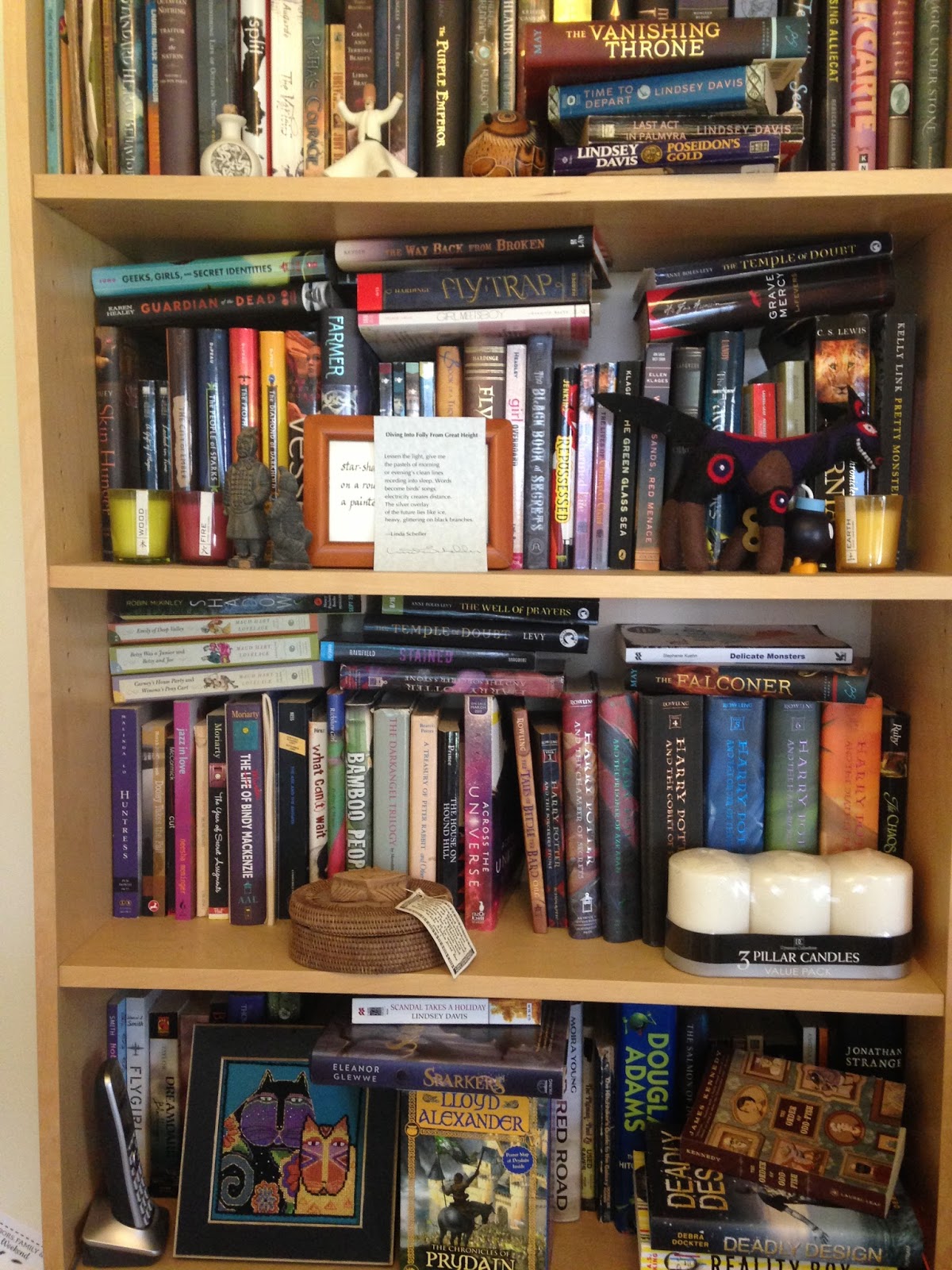
I found this delightful post via Scholastic talking about where and how their bloggers organize their bookshelves: alphabetically, by color (!!!), in a bookcase, in the nightstand, etc. That inspired me to take a picture of one of my bookcases and think about how I generally "organize" (ha ha) my book collection.

When I'm NOT otherwise too swamped to organize (and to be honest, most of the time I'm too swamped to organize--not pictured are the ancillary book piles on the floor), I seem to have come up with a system where I first group the books by overarching category, then within that category I alphabetize them. I have category groups for literary stuff, poetry, plays, old textbooks, children's/MG/YA (all one group), grown-up fiction, nonfiction, writing books, language books, and graphic novels. Within each of those, I usually try to keep them alphabetized by author's last name.

Oh, and I have one special stash of books right by my desk which are Frequently Used Titles such as the AP Stylebook and a Welsh dictionary.

Unfortunately (well, not for me, but unfortunately for anyone else), the groups themselves aren't in any particular order--but I did try to group together categories that make sense together. The children's/MG/YA books are in the same bookcase as the grown-up fiction books. Literary, poetry, and plays are in the same bookcase. And graphic novels and nonfiction are in the same case. Buuuut...old textbooks are crammed in with all the fiction, and writing books actually live in a couple of different spots. And then there's the pile of Books What People Done Lent Me That I Haven't Read Yet and the pile of Review Copies I Was Supposed to Read An Embarrassingly Long Time Ago and the box of Stuff to Donate.

And that's just the stuff in my office. Elsewhere in the house are other groupings for art books and travel books and random crap like old high school yearbooks, and stacks of books my husband bought for the purposes of prepping classes or going to seminars. We're definitely book people!

March 07, 2016

Monday Inspiration: The Wise Natalie Goldberg


Photo taken by me, this past fall, at West Head, Ku-ring-gai Chase National Park, near Sydney, Australia. Quotation is from the always inspirational book Writing Down the Bones by Natalie Goldberg, a must-have for your bookshelf of writing inspiration. When you are feeling like what you have to say isn't important--remember that it is all our moments, all our details, all our selves that are, collectively, of critical importance. It's like one of those heinously complicated, thousand-piece jigsaw puzzles: even if it's just one single teeny piece of the sky missing, the whole scene will feel incomplete.

You are that piece. Go fill in the space with words!

March 23, 2015

In Tandem: BLACK DOVE, WHITE RAVEN, by ELIZABETH WEIN

Welcome to another edition of In Tandem, the read-and-review blog series where both A.F. and I give our two cents at the same time. (You can feel free to guess which of us is the yellow owl and which of us is the purple owl...we're not telling!) We're discussing the latest book from Elizabeth Wein today, the well-regarded NY Times bestselling YA fiction author, and, in the interest of disclosure, a personal friend. 

Told, as it is, in a series of essays, a letter, and flight logs, the novel is a pastiche of places and histories. Our discussion, to reflect this, will be more thematic than linear summary, so be warned. We also won't go into more detail than the jacket copy supplies, so you can read without fear of spoilers, if you worry about that kind of thing. This imagination-capturing story is an unforgettable work of historical fiction dealing with airplanes, Ethiopia, and love of country. It's billed as a historical thriller, a novel put together with a series of other documents - pieces of essays, a letter - detailing lives and purpose - and a need to go home. Join us. We're...
 
Two writers,
& Two readers,
With one book.

In Tandem.


A new historical thriller masterpiece from New York Times bestselling and award-winning author Elizabeth Wein


Emilia and Teo's lives changed in a fiery, terrifying instant when a bird strike brought down the plane their stunt pilot mothers were flying. Teo's mother died immediately, but Em's survived, determined to raise Teo according to his late mother's wishes - in a place where he won't be discriminated against because of the color of his skin. But in 1930s America, a white woman raising a black adoptive son alongside a white daughter is too often seen as a threat.

Seeking a home where her children won't be held back by ethnicity or gender, Rhoda brings Em and Teo to Ethiopia, and all three fall in love with the beautiful, peaceful country. But that peace is shattered by the threat of war with Italy, and teenage Em and Teo are drawn into the conflict. Will their devotion to their country, its culture and people, and each other be their downfall or their salvation?

We received copies of this book courtesy of the publisher, via NetGalley. After March 31st, you can find BLACK DOVE, WHITE RAVEN by Elizabeth Wein at an online e-tailer, or at a real life, independent bookstore near you.


LANDS, PEOPLE, PLACES & EMPIRE

ts davis ~ As always, I appreciate a good Elizabeth Wein book, and this one is no exception. This is a biiiig book. A big book. Not so much in terms of ... size dimensions, although I guess it's three hundred and sixty-eight pages, which is about a little longer than average, but it's a big book because it contains... multitudes. It's about love. It's about loss. And it's about ...history. The history of an old, old world that Westerners, really, but mostly Americans - know not that much about. Africa has been misidentified too many times as a single culture, a single story; a country and not a continent. And now here's this piece of a piece of a place, broken down to give us a little bite -- and it's just not enough. Though I'm not usually a fan of "reader directions," per se, like glossaries and forewords and the like, I love the afterword by the author, because she gives us a little more history and places the story within context - but lets us know how much more there is to know. I realize that everything I want to know about Ethiopia will never be enough. This is a novel which makes me want to both think, and travel. Maybe even time travel.

...many don't know the history of Marcus Garvey and Liberia and African Americans in the early part of the 20th century leaving the United States, and longing for a place where no one would mess with them. As an African American now, I have a different perspective - and no real connection to any nation in Africa, as it's not an empty continent onto which we can impress our stories - it has its own stories, and yes my ancestors were taken from there hundreds of years ago, but stories move on. Their story is no longer my own, and the people who were kind of "deported" to Liberia eventually figured that out... Anyway, I was intrigued by the whole concept - of what Americans would have had a connection with Ethiopia, and how they would have seen it.


sj stevenson ~ The whole idea of Empire as not "constructive" (constructing a vast landscape) but destructive (of what it already there) is something that we are given a vivid glimpse into in this story. Both kids, having grown up pretty much American in some critical ways, are our eyes, through which we see the problematic early-20th-century history of a place in which many nations were still clinging to the last vestiges of the old-style empires. And Ethiopia too was clinging to their own past, their own great empire and history. It never ceases to awe me that they were the last country to retain its independence against outside empirical powers. Really, there is a lot in this book to be inspired by: the accomplishments of women and African American pilots, just for a start. The movement between worlds, opened up and made possible by air travel.

Bessie Coleman; Photo: Smithsonian Institution
ts davis ~ Travel seems like it was so much easier back in the 20's and 30's - between the British and their Grand Tours and their "empiring" everything in sight, and the Americans "empiring" everything that was left (which wasn't much, granted), there were wealthy white people colonizing things all over the place. It was really nice in this story to see historical brown faces in the mix, too -- some I'd never heard about before, but then some I'd known about for years. I love so much that Bessie Coleman was included in the book as an inspiration for Em and Teo's mothers, who were at that time just pretty ladies sitting on the sidelines, to become barnstormers.

sj stevenson ~ Yes - I was fascinated by this unusual, adventuresome, determined family who are so dedicated to carving a space of their own, and how Ethiopia fit into that space (and they into IT). "I want to live in a place where people can do what they like, and it is ordinary." It is amazing to remember that this is still something many are struggling with--the right, the ability to simply live their lives and be who they are. And Africa as a setting is something that many people still see as an undifferentiated, monolithic place. We see the overarching (yet less important) similarities and know nothing about the vast differences between cultures. This book breaks down that monolith and introduces us to distinct landscapes, to concrete places we can feel (Beehive Hill!), to individual human beings and their stories.

MOTHERHOOD, MANHOOD, WOMANHOOD, PERSONHOOD

ts davis ~Em and Teo's mothers are striking - Delia, because she is game for anything, and makes it work, and Em's mother, because she appears, at first read, ...flighty. There's really no other word for her - at first read. She has that post-Great War, 1920-30's enthusiasm thing - everything's a bright, lovely game! Let me drink champagne out of your slipper! And stand on the wings of my plane - wheee! - It's like they were all making up for the Great War, and dancing as hard as they could, Gatsby style, and yet, despite her breathless narrative, there was something more to this woman - because she was raised Quaker and a believer in equality? I don't know. What would make her really befriend this Colored woman, Delia? And what would make Delia really trust her? So much in that relationship - in the barnstorming and the friendship - depended on so little - one tiny point of congruence: absolute trust.

I also loved that though Em & Teo's mothers - and the shadows they cast - were immensely impacting in their lives that they were still different - they didn't allow their mothers to overwhelm them, force them into identical roles, etc., though at times it was a near thing!

sj stevenson ~ I completely agree with your characterization of the two mothers. Their personality contrast is fascinating, and yes--making up for the Great War by almost WILLING themselves into a different world, some parts of which were real and other parts fantasy, perhaps. The two women have a fascinating story in and of themselves for sure. Something I didn't really HAVE to know--but which kept popping into my head time and again--was the nature of their relationship. They were "soul mates," yes--and I really loved the fact that Grandma characterizes a soul mate as something unique and qualitatively different, not necessarily your life partner or spouse (though they could be) but your best friend in the whole world, someone who understands you better than anybody else. Besides that, though--clearly the moms were best friends, they were partners in flight, they were a team. They are the kids' parents, and that trumps any other possible aspects of their relationship. The four of them are a family and that is the important part and nothing else matters. There was something profoundly simple about that which I loved.  

ts davis ~ As with the friendship of Diana and Anne in ANNE OF GREEN GABLES, there are those people who feel that Elizabeth Wein's books have lesbian subtexts - that the relationship between the original Black Dove and White Raven is romantic, and maybe it is - but I have also often heard the author rail against the idea that there must be a romance in every single YA - that if you're not romantic, or if you're just not there yet or choose not to partake in relationships that there is no story for you. I think that these women could have had a romantic relationship, but I think they were truly and deeply soul mates, in truth, above all and before other considerations. And I find that I am intrigued by that, in many ways, because I don't know how to do that with girls... most of the female friendships in the Western world are not that trusting. I mean, we get the idea of "Mean Girls" shoved at us in the second and third grades. A misogynist society pits women against each other, as if men are some resource we're running out of -- so we don't know how to be this kind of friends.

Wouldn't it be amazing if we could learn?
With the exception of Teo and a few of the Ethiopian guys, in this novel, men - makers-of-rules, bringers-of-war, goers-back-on-deals - don't fare too well. Historically they were the makers of empire, the writers of history - but this time, they tried to write history on a place which had its own. Even the Emperor Selassie didn't fare well - his mistakes, in tolerating some things in the name of support in other areas is a political trade-off that happens all the time - this time with fairly disastrous results. And yet, Teo grows up to be a man -- a good man. Why? Because he was raised with his eyes open, observing men... and observing women.

I liked the roles in which this novel depicted women. They didn't always need or want husbands, that they didn't always have or show maternal caring. Some of them have children and love them traditionally, and others, differently. Despite the hard-and-fast roles for women in that time, this novel showed them crossing continents, and their love - for families, children, partners, friends - surviving, even in an age without electronics, where the only connection comes via airmail. This love doesn't have to be in the same room to be love. Love doesn't have to be on the same page, of the same color, of the same family. I think that, for some people, will be a discovery most profound. Some people will not see this mother as a loving mother - but she was, and she remained so... but she also loved herself. That's not something we see a lot of in fiction -- mothers, if they don't love the character as they want, are uniformly bad. This seems like it opens up so many possibilities. I'm liking the non-binary trend I am seeing in realistic and historical fiction -- that there is more than black and white, more than one story, areas of gray. This is, at last, truth.

METAPHOR, IDEOLOGY & MEANING

ts davis ~ "Doing the thing you are scared of is much harder than not being afraid of anything. It is easy to be brave. It is not so easy to be scared and do a brave thing anyway." Sometimes, breathless optimism wears you out. Sometimes it can feel like recklessness. Then, desperation. As I read this novel, I was both glad NOT to be a mother, and that no one was asking anything adventurous or protective of me, in a time of war.

Emperor Haile Selassie
sj stevenson ~ It was so painful to witness Teo being caught up in events in Ethiopia simply due to his parentage, something he had no control over. And yet, in the end, seeing him realize that if people had only ASKED him if he wanted to perform the task, rather than turning right away to their ownership of him, he would have done it freely--Wow.

ts davis ~ Who owns us - what we owe - these things are SO HARD. As an Ethiopian of African American descent, Teo wasn't a caricature of a black Southerner as is so often the case in YA historical fiction where we see black kids on a plantation or something -- he was depicted as a regular, 1930's kid, someone who wore his sweater backwards and wrote stories and read comic books and flew planes and went to school and had a mom who died -- and someone whose life was just as suddenly shot out of the air like a previously soaring bird. He was just... downed. Boom. All that potential, crumpled up and ricocheting off the edge of the garbage can. Doomed by history. And even in the calmest manner, the book doesn't shy away from this: "Are we important, or just valuable?"

Part of me - cynical, person-of-color me - was really mad at Em's mother and thought, You fools! You walked him right into this snare! And again, this idea is reflected by Em: "Everything is all your fault. You are our momma, and you are supposed to protect us."

I like the way the book talks about that ownership, though -- how it is something which just grows with you, like the cells with which you were born. That inevitability of Teo and Ethiopia meeting up in negative ways felt a lot like how inescapable everything has been, since last summer, about all the racial violence and tension just floating in the air... it owns you, in a way, even if you don't think you know or care about it... because it's written on your skin, it's a birth...debt, instead of a birthright. You, by virtue of your birth, are owned by this faceless THING and you can't escape it -- "The whole way out, White Raven worried about how they were going to get rid of Black Dove's invisible chains without hurting him any more." The metaphor in that story that Em and Teo wrote together is just kind of mind-blowing. Invisible chains. It's what shackled Teo at every turn. At every turn. That realization within the narrative was, for me, just huge.

STORY & STRUCTURE

sj stevenson ~ I wasn't entirely absorbed at first by the narrative format, but once the story got going, as always, the author is a master of using an epistolary storytelling method. And the "Theme for Miss Shore" provoked echoes for me of Langston Hughes' "Theme for English B" and its honest, self-exploratory, subtly provocative style.

ts davis ~ I love that Hughes piece, so much, and I think it's a brilliant little leap from that to this. If I could write essays like Em and Teo could when I was a teen, I would've been happy... It was a happy-sad thing for me how they wrote stories when they were completely overwhelmed and out of ...countenance with the world. When they needed to think. When they needed ... a bedtime story themselves, they wrote themselves one. Very poignant, and true-to-life as a coping/comfort mechanism.

sj stevenson ~There is some really awesome stuff in this book about the power and role of story, how we can turn to stories in times of trouble and they will strengthen us for the times when we need to put the book away and ACT. Em and Teo create their own stories, their own alter egos, and find strength in them. They are "maps to help you navigate." I love that.

ts davis ~ That larger theme is what makes this a crossover, to my mind - and that's one of the other things I like about the writing of Elizabeth Wein. It's not like she writes FOR teens, and tries to simplify things, or FOR adults, and tries to write... up, or what have you. She just writes, and tells her true. Honestly, this is not going to be an easy book to read for everyone. It's like paging through a scrapbook and finding an historical mystery, and putting the pieces together - an essay here, a flight log there, a little bit of backstory, a fragment of history -- and then you find this family. And they're real. And they're vital. And they -- change things; maybe even their own hearts and mine, maybe how we think of slavery and freedom and people of color, maybe nothing... but maybe everything. And this is a Wein book. She writes her truth, and I think her books always find their tribe.


As noted, we received copies of this book courtesy of the publisher, via NetGalley; all quotations from the book are from the uncorrected review copy and may not reflect the final version. Thanks for joining us on this journey. And if you've read the book, feel free to join in the conversation!

November 13, 2014

Read All Day? Sign Me Up!

I just heard word in my inbox of a new upcoming event for all of us voracious readers. In case MotherReader's 48-Hour Book Challenge isn't enough for you--or if, like me, it's sometimes too much--maybe this will suit: Penguin Random House, the National Book Foundation, GoodReads, and Mashable are teaming up for National Readathon Day, a brand-new collaboration.

The date in question is Saturday, January 24th, 2015, from Noon-4pm. Kind of like a walkathon, participants in the Readathon sign up for their own fundraising page on FirstGiving, and the money donated helps the National Book Foundation promote reading and literacy in America.

I may be terrible at setting aside a weekend to read (much as I'd like to), but even *I* can surely manage four hours for a good cause. If I can do it, so can you! You can even organize a fundraising team or a "reading party" (sounds like my kind of party). I'm kind of wishing we could do something as a Kidlitosphere group, but I'm not sure how...

January 27, 2014

Now Reading: The Van Gogh Blues

I don't feel like I have it in me to talk books today, this Monday at the start of what promises to be yet another week of hectic-ness, so instead I'll talk writing. (That's what this blog is ostensibly about, yes? Writing YA, or so I'm told? Um.) Also, there is one of those city trucks right outside our house, the kind that sucks leaves out of the storm drain with a gigantic hose, making a ridiculous amount of noise. SHHH PEOPLE ARE WORKING.

Anyway, I've started reading something called The Van Gogh Blues: The Creative Person's Path Through Depression by Eric Maisel, a psychologist and creativity coach who specifically addresses creative types and often writers in particular.

Oh. I guess I AM talking books. Or book. Oh well.

I'm still very early on in the book, but it's intriguing in that it posits writers and artists and other creatives often have a specific source for their depression that others may not: for those whose lives and psyches are intimately tied up with the creation of things new and meaningful, depression can result from more existential sources, a "crisis of meaning," as the author puts it. If you feel like what you're creating isn't meaningful, for instance, or you're not sure how to create something real (or even cope) when the world feels meaningless or difficult, then you're having a meaning crisis. We as artists, Maisel says, will feel more empowered if we are able to step back a bit, and embrace our role as creators of meaning rather than trying to find or receive meaning from somewhere "out there."

From time to time I enjoy reading books like this, about the creative life. I think I like them more than I like the how-to-write or how-to-art type of books (although I enjoy those, too) because they address the nagging issues of day-to-day existence, going beyond questions that are writing-specific. I find both types of books valuable, because hearing about others' experiences and the myriad of ways other writers and artists persevere is helpful. But as someone who does feel a lot of anxiety and angst—and someone with a very analytical side—it also gives me a sense of control to try to articulate and put a name to, or at least describe, what I'm feeling. One of the most formative books of this type that I've ever read is Art and Fear by David Bayles and Ted Orland. I've owned two copies of it and lent both of them out never to be seen again, so I'm assuming the people I lent it to really needed it. Highly recommended. I've read it again and again, flipped through it when I needed a bit of wisdom or reassurance.

A few other recommendations in this vein:
  • Writing Yoga by Bruce Black (of the lovely Wordswimmer blog) 
  • Writing Down the Bones by Natalie Goldberg 
  • Bird by Bird by Anne Lamott 
  • What It Is and Picture This by Lynda Barry 

Know of any others I should read? Eric Maisel actually has written a TON of books, and if I enjoy this one, I plan to explore those.

January 16, 2014

A Few Thoughts on Being a Cybils Judge

Since I have to zip my lip on the Cybils YA titles I'm judging until the contest is over, I thought I'd do a quick post on what it's like to be a judge for a book award contest. I might have done this before (honestly? I can't remember). But something has changed in the way I evaluate books as a judge. What I've noticed is, the way I read and think about these titles has changed since I've been published myself.

The biggest change I've noticed is, I'm more likely to count it against a book if it seems to me that a problem could have been dealt with in the editing process. I'm not just talking about typos (although those annoy me, it really isn't fair to hold them against the story, if that part is strong). I'm talking more about inconsistencies, pacing issues, things that are left out or unexplained, stylistic indulgences or other things that could have been stripped out before the final version. These are all things that I notice a lot more while I'm reading, having been through the editing process multiple times myself. It takes a very particular type of book to make it past my barriers and enable to me to just get lost in it.

And I guess now that's what I'm looking for: those books that don't boot me out of the story for one reason or another. I realize part of that is personal resonance--for a story that resonates with me, or characters that resonate with me, I'm less likely to get tripped up by details. And of course a story that resonates with one person isn't necessarily going to resonate with another person. But that feeling of being lost in a book can happen even when I'm very conscious that I don't relate strongly to the character or the setting or whatever.* That's when I know a book has been really well crafted.

* I've also noticed the opposite can happen: I can relate to the characters or the story but I'm not getting lost in it because of the style or some other issue that brings me out of my immersive state.

When I'm reading a book for judging purposes, therefore, I try to be very conscious of WHY I don't like something--if it's because I don't agree with a stylistic choice, for instance, because it's not one I would have made, versus whether I think something just wasn't well done. Or if it's just not the kind of genre I would naturally gravitate towards. That one is more difficult for me to move past, because genres have conventions of their own, and while I tend to read fairly widely, there are a few types of stories I just don't have a strong interest in, and so it's hard to judge them because the very things I dislike about them may be the things fans LOVE about them.

(Side note: While I may actually BE a judgmental person when it comes to certain types of books, it does NOT mean that other people shouldn't be reading whatever the hell they like to read just because I think something is crappy.)

When I'm judging, then, I have to be very honest with myself and about myself as well as about the books. Only then can I be open to the judging criteria the way I need to be. It's a very different process from winnowing down titles in Round 1, which I've also done in the past. In fact, being on Round 2 for a while has kind of made me miss Round 1, and the ability to be eclectic and broad rather than specific and choosy.

For those of you who have been on Cybils or other award committees, what do you find yourself getting tripped up by? Do you prefer creating shortlists or picking winners? I'm curious.

December 05, 2013

Toon Thursday: Back in the Saddle with a New Regular Feature!

That's right, a new cartoon, and not only a new cartoon, a new ongoing feature. (You know I love to make up the new ongoing features.) Clearly I will be mining this particular one for years to come: the adventures of ME and my INNER CRITIC. In this initial installment, learn how I first acquired this uninvited guest. Note: All cartoons are semi-non-autobiographical. Any resemblance to reality is ALL IN YOUR MIND.

As always, click to view larger.


September 23, 2013

Writing Daze: Thoughts on the Writing Mythology, Pt. 2

Last Monday I started down this road by talking about the mysteriousness surrounding the actual writing process. What actually got me thinking about writer mythology, though, and doing a post about it, are the sort-of-true, sort-of-inaccurate notions out there about becoming a writer.

Image credit: USF Clipart Etc.
People sometimes ask me, "How long have you been writing?" The answer to that one is pretty easy for most writers who have gotten to a certain point in their careers: The Whole Time. That is true for me, too. I've always enjoyed writing, for almost as long as I've enjoyed drawing. Over the years, that combination resulted in some rather embarrassing projects, such as my pet-oriented fashion magazines entitled Young Cat and Vogue for Doggies, or my decidedly unfunny and rather mean comic strip, Dork the Duck. I wrote poems, I wrote stories. I had one or two novel beginnings that didn't amount to anything (which, believe me, is a very positive thing for the world at large). I wrote articles and drew comics for my college's humor magazine. And, in a slightly different take on the whole idea of writing, I learned how to make handmade books.

But, until about 12 years ago, I don't think I ever ONCE said to myself, "I want to be a writer." I had a plan, and that plan was to be an artist of some sort. The specific sort changed over time, but the artist plan was in place by the time I was 11 or 12. There really was no question in my mind. In many ways there still isn't, although my definition of "artist" has expanded and morphed a bit.

In the larger sense, this doesn't seem all that strange to me. I'm still in a creative career. And people change their careers ALL THE TIME. (Well, not ALL the time. You know.) I haven't even really changed so much as shifted to include another creative activity.

But that's kind of beside the point. The point (yes, I do have one, thank you very much) is that even the idea of how you become a writer is invested with this mystique, with assumptions--often true--about how you decided on such a career. When I talk to other writer friends, I realize that the way I came to a writing career is really not quite like anybody else's path. There seem to be two major trajectories, neither of which fits me comfortably:
  1. There are a vast number of writers for whom writing is their lifelong dream. They have always dreamed of becoming writers; they have pursued it in wee morning hours and lunch breaks and however they can, or they dropped everything one day to follow that dream, or whatever.
  2. Then there seem to be those for whom becoming a writer happened later--not unlike what happened to me--but it was revelatory, like suddenly finding their calling after years of doing something totally unrelated. These are the people (and I've talked to several) who realize that the ongoing story they've been telling their children before bed at night is really their creative magnum opus.
Of course there are other trajectories. There's the uber-annoying "anyone can write a book, so I sat down and wrote one" trajectory. There are people who become obsessed with a thing and with sharing their obsession via the written word.

I guess I have to conclude that it's wrong to assume people actually DO fit neatly into these categories. It's just an illusion. Maybe it's an enduring conspiracy of marketing: like my previous post, maybe it's just easier to give a tidy story rather than boring people with your individual details. I have no answers. (This is generally true of me. I'm better at asking questions.) But it's interesting to think about.

September 16, 2013

Writing Daze: Thoughts on the Writer Mythology, Pt. 1

There are so many mythologies around being a writer or an artist. By "mythology" I don't mean to imply a lack of accuracy or truth--just the idea that our culture has built up certain expectations about the way artists think, live, and work that may OR may not be true for everyone. It's always interesting to get a hint of these mythologies when talking to someone about my creative work, or when fielding questions at a reading or a school visit. Whether the setting is formal or informal, similar types of preconceived notions seem to come up.

For instance, one of the major sources of the "writer mythology" (that is also applicable to the "artist mythology") is a certain mysticism about the process. I know that there are artists and writers who actively encourage the idea that there is an almost magical intangible something going on when they create. As someone with a pragmatic streak, I have long thought that this is ridiculous.

Having said that, I have since learned it is quite difficult to actually answer questions about process without either 1) boring your listener to death, 2) confusing them because your process only makes sense to you, or 3) making them look at you askance because you can't explain your process coherently at all. The vast majority of MY writing process consists of staring at my computer screen for hours on end, typing out words or attempting to type out words. And then there's the part where my brain does things, sometimes seemingly on its own in a rather inspiring fashion, but mostly because of me beating it with a metaphorical stick and forcing stuff out regardless of perceived quality. Lastly, there's the part where I ask my friends and family an array of random bizarre questions that make me sound possibly psychotic. Oh, and sometimes I draw charts.

And I haven't even touched on the part that involves stimulating or relaxing beverages, extremely sneaky procrastination, and bribing myself with treats. (Apparently this whole division of labor is something that I'm minorly obsessive about documenting in cartoon form.)

Faced with this WTF-inducing mishmash that does not remotely resemble what most people call an actual job, I am starting to understand why so many writers just get all mysterious about the whole thing when asked what it's like to write a book. It's SO MUCH EASIER to simply tell people it's the "magic of the creative process" or "the mystical forces of the subconscious mind" than talk about how you spent ten minutes surfing the thesaurus for the perfect word that quite possibly does not exist, or how that one sentence still sounds weird even though you rewrote it seven times, or how you're now afraid of being on a terror watch list because you bookmarked so many websites describing how to make napalm (true story).

Maybe that's why I always find it so fascinating to hear about other people's writing processes. The actual ones, not the public versions. It's interesting to me to see that contrast between mythology and reality. And, in a way, it makes those few moments of magic that are there, seem even more magical.

More on writer mythology next Monday...

February 11, 2013

Random Revision Ramblings

"Whoooo wants to finish
this revision for me?"
Fresh off a weekend where I did nothing but edits, I find myself shockingly brain-fried. And, since I'm waiting on posting a few reviews until Cybils winners are announced (I got all excited, went and read a few finalist titles, and then realized I should probably do as the panelists do and avoid posting about them for now) I thought this might be a good time to put down a few thoughts on writing. Specifically revision, since I'm doing a lot of that right now.

One of the things I talked about with CitySmartGirl over the weekend was the proliferation of blogs with writing how-to advice--regardless of the experience/knowledge level of the person giving the advice. And yes, there ARE a lot of blogs that are happy to dispense wisdom about writing. I know because one of my time-honored time-wasting methods is Googling for random writing help when I'm feeling stuck. But that makes me think: I may well have more writing and publishing experience than some of those giving the advice that I'm reading, and yet here I am feeling like I know nothing and I'm still looking around for help. To needlessly quote Kenan Thompson on SNL, What's up with that?

The more I learn, the more I realize I don't know squat. That's one problem. But what else is stopping me from dispensing wisdom of my own? It's very hard to articulate the stuff I do know; there's that. But also, as a visual artist, something I came to realize which is also true in writing is that every writer is different and every project is different, and has different demands. It can be very hard to figure out what those are. It's always tempting to think that, once you've finished the process of writing and revising one novel, all you have to do with the next one is lather, rinse, repeat.

So far, I have not found lather, rinse, repeat to be especially helpful advice, except insofar as one must, at a minimum, spend plenty of time with Butt In Chair, and Just Work, Dammit. I have realized that, for every project, something slightly (or radically) different started me on the road to writing it; my goals are not the same; its strengths and weaknesses are different; and it takes a discerning eye and patience and plain old teeth-gritting determination to embark on the revision process and figure out what needs to be done and in what order.

I'm still trying to figure that out for my next project. But I'm curious: what do other writers do? Do you have a step-by-step revision method that you utilize, in the same order, without fail? Or are you like me and fumble around in a panic until you've got it semi-figured-out? Or something in the middle? Discuss.

December 12, 2012

WEDNESDAY WRITERS: Your Bechdel PSA

Periodically I share things with my writing group that I think are a great idea to share with people across the board, as it were. So, from us to you: your periodic Bechdel Public Service Announcement.

A quick refresher for those who don't know what I'm talking about - the Bechdel Test came from a 1985 comic strip called "Dykes to Watch Out For," written by one Alison Bechdel. One of the characters in the strip, which is entitled "The Rule," talks about how she only sees a very specific sort of movie, ones in which female nad male actors interact in specific ways. The Rule has been taken and morphed to touch on not just movies but books and media of all kinds. So, on to what was shared in our writing group:

Every once in awhile, I reread what this Bechdel thing means. I desperately want ALL of my work to pass this test, and so it's important to me to remind myself to not fall into the easy tropes and cheap shot stereotypes. Multiple, developed, relevant female characters who advance the story is the goal. Multiple, developed, relevant male characters who advance the plot are also good, even from the periphery.

DEFINED:The Bechdel test is used to identify gender bias in fiction. A work passes the test if it features at least two women who talk to each other about something other than a man.

And, of course, there's the Bechdel Test for Race in Popular Fiction. Does your story have at least two characters of color in it? Do they talk to each other? About anything other than the character from the dominant culture?

Multiple, developed, relevant men and women of all genders, ethnicities, and sexes is what will make your fiction great -- tougher to write at times, with no lazy in-group shorthand, more critically observed, walking the line between inclusiveness and condescension, but with the potential for excellence. And what more can we really ask from our writing but this?

Go forth and write outside of the box, people. Si, si puede.

January 16, 2012

Bits and Bobs: The Power of Words, The Art of Books

Holly Cupala is one of our longtime author friends and blog buds, as well as a kindred spirit, so we're happy to help plug her newest book, Don't Breathe A Word, which is already getting some great buzz. Not only that, ten percent of the author proceeds go toward Hope for Sexually Exploited Girls. All of those are reasons why I was happy to do my part to help get the word out, along with numerous other amazing (far more amazing than me!) YA authors, as part of this YouTube video on how Words Have Power:


I can only wish I was less dorktacular in this video, but I hope my words and everyone's still ring true. I was thrilled to be a part of it and join Justina Chen, Melissa Walker, Stephanie Kuehnert, Beth Kephart, Denise Jaden, Lish McBride, Lisa Schroeder, Cynthia Jaynes, Tara Kelly, Joelle Anthony, Stasia Ward Kehoe, Janet S. Fox, Tina Ferraro, and Janet Lee Carey in such a worthwhile endeavor. Thanks, Holly, and congrats on your latest!


Need motivation, but the shoulds and the expectations keep bogging you down? Dear Sugar says, don't write "like a man." Don't write "like a woman." Write like a motherfucker. (I would say Pardon my French, but it isn't MY French. I'm just quoting. Plus Tanita sent it to me in the first place.)


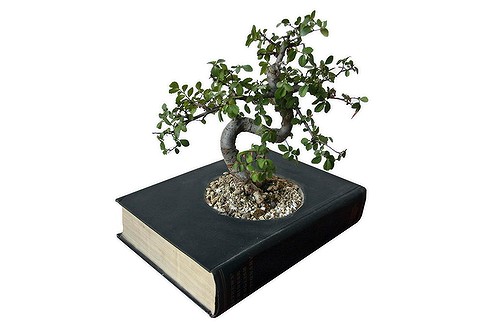
If that's not working for you, here are some pretty pictures.


More wild, gorgeous repurposed books are in the slideshow accompanying this Sydney Morning Herald article. (Link via Jim at This Into That, whose work is mentioned in the article.)

July 07, 2011

Toon Thursday: Drunk Tweets!

Now that I've got your attention, here is your cartoon for the next fortnight. Click on it for an enlarged view.

Note: By "diehard fans," I do not mean "Die Hard fans."

Happy weekend!

P.S. Sorry this cartoon was posted so late. I scheduled it for 8 am, but...as Blogger is wont to do...it reverted my post to draft status. ARGH.

July 05, 2011

Writer's Rites: Preaching to the Choir

This past weekend, I visited Sociological Images, my go-to blog for when I pretend to my second career as a sociologist. Oh, don't laugh at me - I think most writers are amateur anthropologists and sociologists, not to mention psychologists - we observe the weird human animal, and we report.

Anyway, on SI, I saw a video that really got me blinking. You might have heard of the song, "Random Black Girl." It ...wow. It is funny and snide, and bemoaned the role of "random black girls" in musicals (and also comments on Asian women on Broadway - that the roles are limited to Miss Saigon or pole-dancing), and for me, it set memories reverberating.

If you're an African American tween or teen, in a lot of schools, you're expected to do a couple of things: one, be a high-scoring forward on a basketball team, two, mow down the opposition playing football, or three, go out for track, play baseball, or just be a jock on some sports team. If you're not a jock, you're expected to sing and/or dance. If you're really special, you must be the soloist/lead dancer. Somehow band, debate team, chess club, computers, the Honor Roll - those are expectations are left to ...others.

My faux-suitability for these roles was demonstrated to me tons of times in high school. In junior high, I auditioned with a classical piece for a solo, in competition with my fellow choir members, and though only one piece was on offer, another was created. I was shortly told I had been given a soulful, wailing solo in a spiritual we were going to learn. It was, I was told, "appropriate" for my voice. (Apparently spirituals were more appropriate for me than anything from Handel.)

When I was a teen on a treasure hunt through San Francisco with a group of friends, we were tasked with finding the menu from a jazz supper club. My friend Tim beamed.

"We're in!" he said with a grin. "Tee can get it."
"Um, and she will do this how?" I asked. The club was really exclusive - fancy, and there was a gauntlet of parking valets, and concierges, hostesses and waiters between myself and a menu. I was in cut-off jeans with long johns beneath them, and a sweatshirt - and none of my cohort looked any more club ready.

"It's a jazz club," Tim said, impatiently whisking a hank of strawberry blond hair from his forehead. "Just go in there, do a bit of scat, and you're golden!"

Beyond the fact that this still remains the stupidest plan I have ever heard -- yeah, like nobody would notice or mind a random black girl in cut-offs and long johns, swanning in, singing -- Tim's assumption that a.) she is brown-skinned, thus, b.) she can automatically sing scat like Sarah Vaughn, that was just stunningly, astoundingly, mind-numbingly misguided. I had to unpack this whole set of assumptions for him, and we ended up having a low-voiced discussion on the sidewalk in front of this club while the others looked on with interest. Things ended with me crossing the street and watching my team, my face hot with humiliation, as they made their move. As it turned out, a Caucasian boy was a much better choice to go in and be charming and get what we needed.

And, after all that, we didn't even win.

Yeah, so, what has this to do with you as a writer? Nothing, really. And everything.

We writers are PC enough to know that we aren't supposed to deal in cliché, and we're wise enough not to make all the Asians in our stories super-smart, and all the Italians unruly and thuggish like mobsters. Yet, it gets in. How? We are INUNDATED with media that reinforces stereotypes. I mean, we can ignore the whole Jersey Shore thing as an exercise in large-scale tackiness (as well as every Tyler Perry film that has ever been made), but consider the more insidious truth: slice-of-life movies and TV, talk shows, and reality shows -- even the innocuous ones -- manipulate our perceptions, and in a way alter our view of the world outside of the screen. Reality television producers have been outed long ago as controlling the unscripted storylines of their programs -- by throwing in types. The Instigator, the Nerd, the Brain, the Diva, the Weeper, the Thug. That these "types" often correspond with a socio-economic class or ethnicity is less obvious.

Have you ever felt a flash of nerves around a group of brown-skinned guys in a group? Even if they weren't talking to you or looking at you, have you ever crossed the street, or angled your body away, because your brain identified them as Dangerous Thug Types? Have you ever walked into a room full of fit, good looking woman from the dominant culture, and felt intimidated, or that they felt they were better than you because of their ethnicity, money, or body type and hair color? Did your brain sneer, "Cheerleaders?"

Guilty as charged.

"But, there's truth at the core of every stereotype,or it wouldn't be a stereotype," I've heard people argue.

Only the most error-riddled truth. We create generalizations to explain our experiences, but that's a poll based on a sample polling group of one. Our experiences are too small to be the whole truth. The problem is that we repeat and share our generalizations and they become stereotypes, because they are taken and shared as facts by people with no experience of our observation whatsoever.

These are the sorts of oversimplified, lazy thought-processes, assumptions, and superstitions that creep out in our belief systems, and through them, if we're not careful, our work. Prejudices are, after all, only pre-judgments of things we THINK we know, and insist are correct, without supporting facts or proof. It's easy to substitute "Angry Urban Black Man," and "Ignorant Redneck Southerner" into our text and see what happens next. When we deal in "randoms," the sort stand-in characters from central casting, bad things happen.

I think the biggest loss to our writing when we use those central casting "blanks" is that we lose distinction and specificity. In our "smart Asians" category, are we including Filipinos, and Malaysians? In our "all Scandinavians are blonde, hot, and sexy," label, do we include the Sami? Do we even know who they are? Do our male British characters all have bad teeth, and are all the females breathless, Bridget Jones clones with thickly applied eye makeup or posh accents?

One of the things I've learned living abroad is that there is more that we do NOT know about people than we know. Writing gives me the chance to explore, to learn, and to pass on not more generalization, but tiny bits of truth that can open doors into the experiences of others.

What's been your experience?

April 18, 2011

Spreading Poetry and Why We Love YA Fantasy

If you haven't checked out Greg Pincus's Kickstarter project Poetry: Spread the Word, you're missing out on a great opportunity to help support poetry in California schools, at a time when we're continuing to see funding dwindle and kids' access to the arts curtailed. Has there ever been a time when arts funding for schools hasn't been dwindling? Not in my lifetime, but if Greg's project succeeds, it will be a small beacon of hope that individual grassroots efforts can help combat what sometimes seems to be an inevitable slide toward seeing arts curriculum and creativity as optional and unimportant.

If Poetry: Spread the Word meets the $5,000 fundraising goal, Greg will do 40 or more school visits at no cost to schools and make original poetry available for free on his blog. If you've ever read Greg's poetry, you'll know that this is a real treat. There are 3 weeks left to pledge, and the more you pledge, the more goodies Greg will give you...


Franny Billingsley is the author of the new fantasy novel Chime. In the latest Horn Book e-newsletter, Mr. Read Roger asks her about YA fantasy vs. adult fantasy, and her answer really resonated with me:
I do read some adult fantasy, but I find it often lacks the intimacy I crave from any novel. Either the cast of characters is too large, or the landscape is too big, or the stakes are too broad (I’d rather read about saving the character’s soul than saving the character’s kingdom), or the protagonist feels somehow distant. This last is probably a function of one or more of the foregoing, all of which add up to a kind of psychic distance from the character that in turn, distances me from the story.
I feel like this answer applies in a much larger sense to the question I often get asked, which is "why YA?" Adult fiction really can be distant and lack intimacy with the character. A character-driven book becomes a dry study, observing from above, rather than delving deep into the heart of the character. Thanks to Franny for articulating some of the reasons why I love YA so much--as a reader and as a writer.

March 31, 2011

Toon Thursday: Special Tax Time Edition

That's right, I spent inordinate amounts of time this year fussing with our home office deduction, not to mention figuring out how to deduct the art studio for the 3/4 of the year that Rob used it for his sabbatical workspace. So I hereby bring you A Day in the Writing Life 6: Your Home Office. (Click cartoon to view larger.)


For earlier installments of  A Day in the Writing Life, check out the Toon Thursday Archives.

In other news, are you ready for National Poetry Month? Who cares about taxes? Let's get poetic. Lots of kidlitosphere folks are participating, including blog buds like Liz Garton Scanlon, Gregory K., Jama Rattigan, Andromeda Jazmon, Mary Lee Hahn, and many many more. Original poems, classic poems--you'll find plenty of both. Stay tuned for an update of the full schedule on the Kidlitosphere Central site.  (As of this writing, the list still referred to last year's schedule.)

March 24, 2011

Thursday Bits and Pieces

Since it's my birthday today (and thank you, Tanita, for the lovely birthday message below), I'm simply going to present a few links for your enjoyment, and wait until Monday for my next batch of reviews:

The Kidlit 4 Japan auction started up this past Monday. There are some great items to bid on, including signed ARCs, manuscript critiques, a poetry critique from our own Kelly F., and (to be posted in a future batch of auction items) a copy of The Latte Rebellion, signed by yours truly, plus bookmarks. Donation proceeds will go to the UNICEF U.S. Fund. Also, YA author Heidi Kling is hosting a Doctors Without Borders fundraiser on her blog.


Don't forget to hit save! Check out Robert Lee Brewer's tips for avoiding computer-related writing disaster on his blog My Name Is Not Bob.


Via the SCBWI Expression newsletter, a BoingBoing post on what it's like on the inside of James Frey's YA novel assembly line. Plus, an article about series books and the YA-oriented book packaging industry. Very revealing. And makes me so glad I'm not working in marketing any more.


Get this... Martin Scorsese's next film is...wait for it...The Invention of Hugo Cabret. We love that book here at FW, and all we can say is, he'd better do it justice. Yeah, Jude Law, you heard me. You too, Ben Kingsley and Sacha Baron Cohen. (Jeez, is there anybody NOT in this movie? Besides Charlie Sheen?)


This week on Guys Lit Wire: flying men and Floating Islands; Tim Powers blends beer, Arthurian lore, and magic; and flaming guitars a la Chris Barton.


Lastly, Patricia McKillip!! How much do I wish I could go to Norwescon next month? Unfortunately, I have plans already that weekend, plus my conference budget for this year is already spoken for, but maybe some other year...

Enjoy the weekend!

January 27, 2011

Toon Thursday: The Title-O-Matic

That's right, it's time for your semi-monthly edition of Toon Thursday. This one's got a little heavy reading, but I promise it's worth it. I even used type rather than writing it out. Don't say I never consider my loyal audience. All four of you.


Disclaimer: Toon Thursday is not responsible for the success or failure of the Title-O-Matic. Use the Title-O-Matic at your own risk. Do not taunt the Title-O-Matic. Thank you.

February 02, 2010

YA Literature: Interstitial, Speculative, and More Than Just Vampires

Just for fun, I'm going to get a little intellectual here and discuss genre.

I'm currently reading an anthology called Interfictions 2: An Anthology of Interstitial Writing. One of the cool things about it—besides the fact that reading it sort of feels like I've found more kindred spirit writing peeps—is that it includes an interview with the editors by our own Colleen Mondor, as well as short stories by YA author Cecil Castellucci and Guys Lit Wire contributor Will Ludwigsen.

It's also cool because, although the stories themselves aren't specifically YA, they ARE what I'd call speculative, or, as this anthology calls them, "interstitial." As the back cover copy puts it, "It's all about breaking rules, ignoring boundaries, cross-pollinating the fields of literature. It's about working between, across, at, and through the edges and borders of literary genres. It falls between the cracks of other movements, terms, and definitions."

And it struck me that some of these descriptions can apply just as aptly to YA fiction. It often exists across genres. There are liberties that can be taken with setting, with character, with format, that aren't tolerated as generously in the "adult" world of grown-up fiction. It often falls between the cracks—or, more often, is relegated to a very specific niche by who see teen fiction as solely series books or vampire tales, Harry Potter clones or rehashings of Judy Blume coming-of-age stories. (And frankly, I'm getting tired of explaining to people "ha ha, yes, the Twilight books are very popular, ha ha, no, I don't write about vampires" while inside I die just a little more each time.)

Those of us who know the scope of YA literature know how inapt those labels are, how much more YA fiction is than simply genre fiction for a younger audience. How much YA fiction—like the best of adult fiction—breaks boundaries, sprinkles a little coming-of-age here, a little fantasy there, and tops it off with a healthy dose of questioning convention. Isn't that a critical part of young adulthood—questioning? It's a critical part of being human, I think, and of reading thoughtfully.

Of course, in some ways it's an illusion to consider YA a cohesive genre or even a definable age range. The way I see it, it's a marketing category, a convenient label that can be used to encompass (or lump together) a very disparate, diverse, and elusive area of fiction.

Wonderfully, gorgeously, and blessedly elusive. Interstitial, even. A place where a weirdo like me can fit in—unlike actual teenage life, or even adult life, but like life should be...leaving room for the mysterious and undefinable, a zesty and constantly surprising gallimaufry.