Showing posts with label Chosen family fiction. Show all posts

March 27, 2018

Turning Pages Reads: RELATIVE STRANGERS by PAULA GARNER

Welcome to another session of Turning Pages!

Synopsis: Jules, a senior, lives with her librarian mother, who is, by Jules' lights, not much of one of mother. She dislikes her job at the library, cares indifferently for Jules, but she lives and breathes painting. And she's got talent, too - but her humanity as a mother and her humanity as an artist seem to be two wildly different things, in Jules' opinion. Sometimes she vanishes into her art and doesn't surface for days. Jules is grateful for the roof over her head, but longs for the kind of mother who asks about her, is interested in her day to day, and who is more like her friends Leila and Gab's mothers - women who show their love by cooking and providing a beautiful home, where nothing is taped together, or cracked. Unlike her mother, who is thrifty and tidy to the point of throwing away even memorabilia, Jules loves antiques, is fascinated by how the world was in days gone by -- but with no grandparents, no antecedents, and no connections, she feels cast adrift in a world full of odds and ends - nothing with real value, nothing anyone would keep, or put in a museum.

Jules - on yearbook staff - has been asking for a baby picture for yearbook for weeks, and now that the deadline has passed, she finally goes into her mother's room to find one... but discovers that there's a nineteen month gap from her newborn photograph to when she's almost two years old. Why aren't there any good, real baby pictures? And, why's there an envelope of paperwork from the Department of Children and Families? What happened in her and her mother's lives? When Jules discovers the answer, her world tilts off its axis. She's always wanted more of what she had - more family, more connection, more life, more love -- and now she realizes that somewhere, she might have had it. Pursuing the connection she finds on the other end the love she feels she's been denied. But, is it really all for her? Does she have the right to it? And, if she tries to grab all of that love with both hands... what happens to everything else? Wanting more can lead to having more, true - and some of the chances Jules takes have panned out into a past and a history she could never have dreamed existed. But, Jules is unable to let go of the temptation to have it all... with predictable results. After Jules is left with her hands empty, she has to learn to accept that you can't have it all in life -- but appreciating what you have is the key to everything.

"It didn't escape me, despite all my angst about family, about finding family and having family and missing out on family that this was a very real thing I had: friends I would drop anything for. Friends I'd take a bullet for. Friends I'd handle dead rats for.

There is more than one kind of family."


- RELATIVE STRANGERS, unfinished copy

Observations: This book will resonate with anyone who has had an unsatisfying relationship with their family, who ever dreamed of having been adopted, or who always wished they could be part of a huge, amazing family, or closer friends with the people with whom they hang out... which means that this book will resonate almost every teen at some time or another. There is such a huge well of wanting in Jules that her desires slip into the heart like a little hook. Is there anything so wrong with wanting more love? More family? More people to pay attention and SEE you? The desires seem innocent - and they are - but the narrative shows how easily pandering to the desire for more than what you have can ultimately overwhelm you.

I don't think I've ever read a YA book quite like this before, which deals with the ignorance immaturity and privilege provides, convincing us to believe the convincing narratives others present to the world, and to envy them in a destructive way in response. Most people can pull back from that brink, identify that the lives we encounter - whether at work or school or digitally curated on Instagram - are airbrushed and carefully displayed for maximum affect. Most of us know that when people are out in public, they wear a public mask... however, this is a book about someone who believed the hype so thoroughly that she allowed herself to wallow in that envy, and made selfish choices based on what she believed she saw, what she believed people had that they could stand to share, and the luxuries of family and affection which she felt she needed but which she hadn't been given.

Garner is a practiced write, and Jules' voice is confident and assured - but there are other YA novels with that confident, wry, snarky voice. What sets this novel apart is that most of us aren't able to articulate the dangers of ...unexamined neediness, maybe let's call it. Jules grieves for what she doesn't have in such a realistic way - and the repeated lashings of grief, the haunting, nostalgic longing, the sadness and the hope blends together to make a truly beautiful, quiet, thoughtful, emotional read. (I teared up repeatedly through the entire last half, surprising myself.) This was an unusual book topically, and I can't imagine how many fewer mistakes I might have made as a teen and nascent adult had I had this book then.

While there isn't a lot of ethnic diversity necessarily, this book has titanium strong male and female friendships and a realistic depiction of the judgment and confusion surrounding understanding friends and a burgeoning sexuality.

Conclusion: A quiet, thoughtful book with humor and insight, and a HUGE miscalculation, which may catch some readers off guard, but to others may be perfectly understandable, if still cringeworthy. A very real book about fumbling our way to a very real understanding and acceptance of who we are, and what we truly need.


I received my copy of this book courtesy of the publisher. After April 10th, you can find RELATIVE STRANGERS by Paula Garner at an online e-tailer, or at a real life, independent bookstore near you!

March 23, 2018

Turning Pages Reads: PERIOD 8 by CHRIS CRUTCHER

Welcome to another session of Turning Pages!

It's another Crutcher book! And I can't really tell you much of the plot without ruining the story! Come along and read about it anyway.

Synopsis: Period 8 lunch at Heller High school is where they've always met, just to hang out. Paulie, Justin, Hannah, Josh, and the rest have always felt comfortable with Mr. Logsdon, their government teacher. Some of them have been coming to his lunchtime salons since they were sophomores and juniors, and others are new. Since this is their senior year, and Logs' last year teaching, the meetings feel necessary. Logs always says that leaving school without any clue about what's really out there is what messes people up, so they meet at Period 8 to be honest, to talk about what's really on their minds, to purge their family griefs, and to just ...make it through. Period 8 is honesty - and confidentiality. What's said in Period 8 stays in Period 8.

It was supposed to be a safe place for everyone. And it is, mostly, except if student body president Arney's doing his usual politician schtick. Lately Paulie's made it a little less safe for himself, since he cheated on Hannah - and she needs to talk about betrayals and guys and their stupidity. Paulie needs to talk about it, too... because he's still not quite sure what happened. He's terrified he's turning out to be like his philandering father -- but there was just something weird about the whole thing. Mary Wells, the girl they call "the Virgin Mary" came on to him, hardcore. What was that about? And, why is Arney, his supposed friend so... smug about it? And lying to him? And, worse, making time with Hannah? What kind of friend does that? Certainly not a real one.

At least there's truth to be found in open water. Paulie and Logs have been swimming as a year-round workout for a long, long time, and as things unspool, Paulie discovers more lies, and Mary continues to fling herself at him. Everything is unclear - people he thought he knew are wearing masks more than at any point in his life, but there are answers. Until he finds them, Paulie pushes himself harder and harder in the water. When no where else is safe, it will be his salvation.

Observations: Wonderland loves Chris Crutcher. I may have even stalked him at Conferences (Tanita style, which is, showing up where he was speaking, but not looking at/speaking to him), and AF and I interviewed him back in 2006. Which made discovering I'd missed the release of one of his books a bit bittersweet. On one hand, the field has changed immensely since I first started reading Crutcher; there are more honest, diverse voices speaking louder in the field, so his books maybe don't stand alone on a solitary plane anymore. That's all to the good -- but I'm a little sad I missed this release, yet grateful he's still writing and that I eventually discovered this book, though I must admit, it's slightly different from Crutcher's usual fare.

The realistic male voices and the immense athletic focus usually found in Crutcher books is present - swimming again - but this time it's sport unrelated to school, but to a personal challenge, which I loved. There is ethnic and gender diversity, the usual wry send-up of the "thumpers" - the Bible-reading religious kids -- but with a sense of humor this time, giving them the grace of allowing them to be characters with their own thoughts, and lessening, a bit, their usual roles as narrow-minded idiots, which was LOVELY. Also, as expected in a Crutcher book, there's the great discussions of values and ethics, and the sympathetic, wise adult figure - in this case, he's nearly retired, so has a lot less to lose than many adults within a school system, thus the conversations really go deep. Finally, there's the group of kids who are, on the surface, average teens, wrestling with issues of life and love. This time, there are real stakes -- real losses, and real pains which don't come up in the presence of the honest, wise adult mentor, or even the values-clarifying classmates. This time, the secrets stay hidden until it's nearly too late, and everything is destroyed. Without telling too many details, when all is said and done, it's a helluva way to end a senior year.

Conclusion: I wanted to put this book down - repeatedly - and spent time screaming pointlessly at the characters "Nooooooooo!" Readers will anguish as characters are manipulated and make Really Bad Choices, but there is within the human psyche the inability to look away from a train wreck for very long. Suspenseful, unnerving, and a subtle, nuanced discussion of whether we really know each other, and what we owe each other, this fast-paced book will reverberate with readers for days.


I received my copy of this book courtesy of the bookstore. You can find PERIOD 8 by Chris Crutcher at an online e-tailer, or at a real life, independent bookstore near you!

March 20, 2018

Turning Pages Reads: DREAD NATION by JUSTINA IRELAND

Welcome to another session of Turning Pages!


NB: Readers will be glad to know that this is a story with a clear beginning, middle, and end, but be aware that said ending has left a clearly marked door open for a sequel. This is a duology, so weather this battle, and keep your powder dry/your scythes sharp to win the war.

While it can be difficult to present an unbiased review of the work of an acquaintance whose intellect the reader deeply respects, I believe I have achieved it; your opinion may vary.


Synopsis: The Battle of Gettysburg has had a vastly different conclusion than any battle before; the dead have risen and... are eating both friends and foes. Two days later, Jane McKeen is born on the plantation at Rose Hill, as the North and South join forces to combat the newest threat to the States. The Native and Negro Reeducation Act, which forces African American and Native children to enroll and learn to fight, is at the forefront of protecting the world. However, in Baltimore, it is believed that the threat is receding. Jane, who was taken from Rose Hill to be trained to fight zombies at Miss Preston's school, is almost ready to graduate into being an Attendant, but for her sharp tongue and quick temper - and who can blame her, really? Katherine Devereaux is entirely too light-skinned, snotty and pretty for her own good. So, Jane's not so much what you'd call a model student. She's wanted to leave Miss Preston's school pretty much for the moment she arrived. Other than goading Katherine, and wandering around outside at night, there have been...a few other, er, missteps... one of whom is called Jackson Keats.

No matter that Jackson a.) doesn't love Jane and b.) is a low-down, fast-talking, redbone con man, c. and is too pretty by half, Jane remains a loyal and faithful ...frenemy. No matter that her head tells her that the world is harsh and bitter and full of awful people, her heart remains curiously, humanly, tender. When Jack's sister, Lily, vanishes, along with the white family with whom she lives, Jane's curiosity - and loyalty to Lily - urges her to look into some of the oddities at the Mayor's house. Predictably, Jane's prying gets her in trouble - and sent to a shockingly bleak Survialist colony in Kansas called Summerland. Now on essentially the very front lines of the war against the undead, Jane has new obstacles between herself and Rose Hill. She'll have to dodge zombies and Survivalists and all kinds of insanity -- as well as find new allies and combat her own tender heart to see herself back where she belongs.

"It's a cruel, cruel world. And the people are the worst part."

Observations: I grew up with family from near New Orleans, consequently, I grew up with a childhood of tales associated with 'haints, Marie Laveau, and a distorted depiction of "voodoo." Zombie books, for me, are generally a very hard pass -- but the truthful voice and keen gaze of Jane McKeen, and the determination and fury which drives her survival will hook even zombie-averse readers and draw them in for the, um, kill.

The pettiness of shade-ism and class at Jane's school where she's learning to be a zombie-killing Attendant to white ladies is emphasized by the (mostly) well-meaning teachers whose insistence on manners and appearance at a school where they do scythe drills are amusingly reminiscent of the oddly misplaced pride Victorian ladies held for their finishing schools. Readers meet Jane's classmates, and judge her education, manner, bearing, and her teachers, while childhood memories of Rose Hill are revealed. When they finally arrive, the zombies loom large, but after the other monsters which readers encounter, they become almost background characters.

Primarily, DREAD NATION is a Reconstruction-era zombie novel, but merely skim the story's surface, and readers will discover that it is equally about the true costs of and the inhumanity and injustice of racism. The narrative grapples with the idea of who owns the rights to The Good Life, and at what cost we sell each other into the fell dark for a chance to reach it. Significantly, in DREAD NATION, former Confederates twist their poisonous ideology into a new belief system. "Survivalist" beliefs twist older Manifest Destiny ideas with Latter Day Saints theology about black and brown people to create a new horror. In Biblical literature, Noah's son, Ham, was cursed, and 18th century reasoning used this to explain why Africans are dark - because they were "blackened" by their sins, and by distant being relatives of Ham. This sin/salvation framework for race "allows" the Negro and Native peoples the "opportunity" of propitiation for their sins by giving their lives in the service of fighting zombies for their "betters." Readers will shudder at the Preacher, the single most creepy character in the Survivalist's colony for me, as I am well versed in religious ideology, and throughout World History (not to mention American) it is very clear how the devious and morally bankrupt can twist religious ideology and belief to suit their needs.

Conclusion: Star-studded reviews of this book use the word "subversive" to describe it, as well as "suspenseful" and "sinister." This novel is all of that, plus lively storytelling, as well as sharp-edged and clear-sighted critique of inequality and injustice. All of this is folded into a fast-paced, exciting, and (somewhat) fictional package. There are more monsters in this narrative than those shuffling along the Kansas prairies - and readers will be drawn to reevaluate the presence of the monsters lurking in their own society.

The best truths are wrapped in parable - Ireland takes the bitter pill of racist reality and wraps it into a blood-tingingly exciting adventure. It's better than I could have even hoped, and there are cinematic elements lying around all over the place. Dare we hope the novel gets a film treatment? For this reader, hope springs eternal...


I received my copy of this book courtesy of the publisher. After April 3 - less than fifteen days! - you can find DREAD NATION by Justina Ireland at an online e-tailer, or at a real life, independent bookstore near you!

March 14, 2018

Surveying Stories: Separating Fears and Identifying Heart's Desires in T. Kingfisher's SUMMER IN ORCUS

1. Don't worry about things that you cannot fix. 2. Antelope women are not to be trusted. 3. You cannot change essential nature with magic.

In the stressful days of last summer, Ursula Vernon, through the pen of T. Kingfisher, started a twice-weekly fantasy serial about an eleven-year-old girl. It was not, she informed her Patreons, for middle graders, despite the title character's age.

In time, the series became the highlight of a rather lackluster few months, and patrons hugely supported a Kickstarter to have it printed in hardback with illustrations by Lauren "Luve" Henderson. I chose to wait for the bound book to arrive, instead of finishing the serial, and frequently wondered exactly what in the conclusion of the book would prove it wasn't for middle graders... would it be Baba Yaga, and her scary dual nature as cranky grandmother type and periodic sales person carnivore? Would it be tragic Donkeyskin, or the frog tree? Could it be the deceit of Antelope Women everywhere? Or, the warlike legacy of Zultan Houndbreaker and the Queen-in-Chains? No - as Tech Boy and I read the finished copy, I reconfirmed that these are deliciously scary and delightfully fanciful elements which are a hook, drawing the reader onward.

So, where might the problem lie? In the journey.

As we've discussed before, middle school is an immense time of change and pressure, and in Summer's case, her main adversary in her journey to maturation is not her peers - they barely cause a blip in Summer's mind. It is instead her mother who is her adversary, jealous of her personal thoughts, encroaching on her personal space, and unable to allow her daughter a moment's peace without her smothering hopes and terrors, all in the name of love. Like a too-small pot causing roots to be knotted and unable to take in sufficient nutrients, Summer's mother isn't allowing her to grow.

Very few contemporary middle grade novels tackle the grinding, long-term phenomenon of the parental bullying/emotionally diminishing parent and the caretaker child (maybe the last one I read was by Cynthia Ryland in the 90's). This subject seems limited to YA readership, but for many children fulfilling the complex needs of a damaged parent begins in elementary school and morphs into something burdensome and strange well before high school. Summer's needy, hyperprotective mother and the journey which Summer undertakes into another world to find a similar issue isn't something every middle grader will be able to relate to, but the way the novel is written, with excitement and danger and wry humor, I believe that plenty of tweens will relate well enough not to be bored by Summer's fear, or the lack of major battle scene. SUMMER IN ORCUS is an excellent older middle grade novel with familiar tropes and portal novel elements. Summer's quest was to find her heart's desire... and in her search, we discover the desire of the hearts of most of us. With all that being said,

Let's survey a story!


When the witch Baba Yaga walks her house into the backyard, eleven-year-old Summer enters into a bargain for her heart’s desire. Her search will take her to the strange, surreal world of Orcus, where birds talk, women change their shape, and frogs sometimes grow on trees. But underneath the whimsy of Orcus lies a persistent darkness, and Summer finds herself hunted by the monstrous Houndbreaker, who serves the distant, mysterious Queen-in-Chains…

From the Hugo and Nebula award winning author of "Digger" and "Jackalope Wives" comes a story of adventure, betrayal, and heart's desire. T. Kingfisher, who writes for children as Ursula Vernon, weaves together a story of darkness, whimsy, hope and growing things, for all the adults still looking for a door to someplace else.

Baba Yaga is as ambiguous as she is terrifying. In Slavic folklore, she's almost seen as a trickster, at times being revered as a Crone of great wisdom and insight, and in other moments, an antagonistic threat parents use to frighten their children into submission. Baba Yaga might eat you. She might beat you about the head with her pestle. She might just pat you on the head, and go away. Really, you never know. The day Summer meets Baba Yaga is one of Baba's good days, according to the skull door knocker on her chicken-legged house...which speaks to anyone unwise enough to encounter Baba Yaga's door. Summer wisely checks the lay of the land via the skull - which proves to stand her in good stead later on.

Beginning a portal fantasy with the entrance of Baba Yaga is a clear signal to readers that chancy times are ahead - things could go perfectly well, and the story wind up with a significant HEA, or ... it could all go straight down the loo pretty much immediately, with lots of lumps and bruises from a well-wielded stone mortar. I loved that Baba Yaga both begins and ends this novel, which provides a perfectly satisfying story arc, and informs us that LIFE in the real world is just as chancy as a summer's day in Orcus... Baba Yaga introduces herself to Summer for the sole purpose, she says, of offering Summer her heart's desire. Summer doesn't go looking for this boon, nor does she ask for it, nor does she know what that could possibly be. And yet, when Baba Yaga offers you something... well, if you don't know if she'll suck your marrow or send you on your way, you take it... right? Or don't you? Summer's first lesson is quickly apparent, and repeats itself through the many traveling days, Be careful what you wish for.

Through the machinations of a lit candle and an opened door, Summer is plopped into another world without a map or much of a guide but a weasel in her pocket. Surprisingly, she does have instructions of a sort - three, guiding principles by which she must view life in Orcus... and possibly elsewhere. In the real world, we often encounter guiding principles framed by persons or institutions like churches, and if we're wise, we can understand and apply them. More often, in the high chaos and noise of the world we cannot and they're true things we remember after the fact, or which echo upon reading, but are soon forgotten. Summer mainly holds onto one of the rules, 1. Don't worry about things that you cannot fix. This serves her well both in Orcus and will when she's back home again.

As Summer is ostensibly in Orcus to locate her heart's desire, she is soon confused about why she has been sent to a land which has been once torn by war, and is now not quite healed and in so much need. How is it that human hearts are meant to find their truest voice in a world so filled with other things which are broken and leaking chaos and dying? With the addition of a nattily dressed gent called Reginald (of the Almondsgrove Hoopoes) and a splendid cottage wolf to their party, readers are reminded that the world isn't all bad, and that company along the road can make most things bearable.

The world is still broken, and grows darker - and this is where Kingfisher's novel may speak more to adults. Summer is still, in spite of everything, meant to be finding her heart's desire, as we often are called on to carry on with fixing things while on a personal level we're trying hard to shut out the noise and listen for ourselves. While it might be difficult for a tween to articulate, what we want, and who we want to be is at the beating centers of all of our hearts. The worst thing about having a mother like Summer's is that Summer cannot hear her own heart - she hears her mother's. She feels her mother's worries and frequent weeping fears. She bears her mother's burdens, and her grief. Summer has to deny her own self in favor of her mother, and it is a burden both unfair, unjust, and unwieldy. What Baba Yaga does for Summer in giving her Orcus, more than anything, is give her a time away from everything she has had to carry for so long, and lets her know that it has strengthened her enough to carry a cheese knife for someone else's sake. This resonated strongly with me.

This is where the magic lies -- in T. Kingfisher's book, and in all books which carry us away, in portal fantasy in particular, which allows us to believe that things could be different, if we opened the correct wardrobe, and in Orcus in specific, where Summer finally discovers that she can be all she thought she might be when she isn't bent double under an inheritance of anxiety and depression that isn't hers to own. Summer is, by Baba Yaga's observation, "dangerously ignorant," and it's not just of the world outside of her backgarden gate -- Summer is dangerously ignorant of herself. But, it's not wholly her fault - unless she refuses to do the work of looking within to know herself. This is subtly conveyed throughout the story - Summer makes several mistakes from sheer innocence, and it nearly costs her her life in the end - but after every flub, she learns to listen to herself, to hear, and to act on her own advice. At journey's end, you cannot imagine that Summer is still the same innocent, "sweet summer child," as it were. She Knows Things. She knows herself a little better. And that cannot help but change her, for the better.

In the larger world, family is imperfect - and entangled familial relationships often a burden, to be blunt. Our world is messy, dying, and packed full of the deceitful and unkind. And yet, the journey to find one's heart's desire can still be an adventure worth taking. The act of saving one tiny part of the dying world is still an action worth taking. One frog tree, alive and well, is worth all the bruises and terror, and deceptive antelope women in the world.

Afterward, when all has been said and done, Baba Yaga is there to grant you entrance back into the world from which you came - with its insults and burdens, and deceptions and degenerations. You are home. You may not have your cheese knife, but you can manage the battles in the real world, the battles between someone else's concerns, and the ones which concern you. And knowing that, more than anything, is the summation of any heart's desire, middle grader or adult.


I received my copy of this book courtesy of a Kickstarter purchase. You can find T. Kingfisher's SUMMER IN ORCUS in ebook form on Amazon, possibly in print via Sofawolf Press or as a freebie read on the Red Wombat Studio website. Enjoy.

November 28, 2017

Cybils SpecFic Bookmark: JANE, UNLIMITED by Kristin Cashore

The Cybils Speculative Fiction Bookmark:

As a panelist for Cybils YA Speculative Fiction, Round 1, I'm going to be briefly writing up some of the hundreds of books I read as part of the award. As panelist conclusions are not for public consumption, the purpose of these write-ups is primarily to keep track of what I'm reading, and will mostly touch on plot synopsis, with minimal comments on thematic tropes.


Synopsis: Jane is unmoored within her own life. College doesn't suit, living with three grad students and working at a coffee shop is hideous. The world is unfair and awful, but it's what Jane has, after the death of her Aunt Magnolia. She longs for something nameless - and it walks into the coffee shop. Her old tutor, Kiran Thrash is rich, disaffected, and deeply unhappy. She doesn't understand Jane's staying in her world, going in circles, when she could come home to the Thrash family mansion to be unhappy with an old friend. So Jane packs up her possession, including her trunks of umbrellas, which she makes as ongoing art projects, and goes away with Kiran, to Tu Reviens, the island mansion her aunt told her to visit if she ever got an invitation. After months of directionless wandering, at least Jane has this.

Or, so she thinks. There's something SUPER weird going on at Kiran's. First, Kiran's stepmother has just vanished - entirely. No one knows where she's gone. Second, while there's a gala happening in a few days, and there are tons of people there, there is more than just party-prep going on as rafts of people wander in and out. Some of them seem to disappear in hallways or in the library, others of them seem to have found a secret door - and was that a man with a gun!? The house either has a haunting spirit, or a baby somewhere, from the wailing in the walls. And there was this one little girl she saw, digging holes in the lawn. There's a rambunctious dog, a couple of wealthy ladies, and whole raft of bewildering servants - some of whom act a whole lot more like they own the house than that they work there - Kiran's boyfriend, and Kiran's very handsome brother, Ravi, who adores the priceless - odd, and sometimes tacky - art located throughout the mansion, and has just had his prized Vermeer stolen.

Jane should really just hang out with her lathe and saw and finish working on her precious projects. No artist in the world has it as good as she does, with the ability to just potter along and make art in this gorgeous, gorgeous place, surrounded by the sea, with amazing food to eat whenever she wants it, and a beautiful suite of rooms -- but Jane can't help her curiosity and her desire -- her need -- to figure out what's going on at Tu Reviens. As it turns out, the servants knew her aunt! Surely there's something of her left behind - more than just her photographs. Surely, someone can tell her something about the woman she adored, but discovers that she didn't fully understand. But, every bit of knowledge changes Jane - and every choice comes with a price. Leaping down the rabbit hole after any number of clues she doesn't understand could change Jane's story forever.

Observations: NB Readers who come to this book looking for a GRACELING or BITTERBLUE readalike will be disappointed, as it is not medieval-era fantasy, nor are there swords or kingdoms.

After the death of her parents, the discovery that college wasn't really a good fit, and then the death of her Aunt Magnolia, who has for so long been her touchstone, Jane doesn't have much control over the elements of her life. Going to Tu Reviens, to fulfill a quirky request from her aunt seems like a single direction that makes sense. At the house, there are either/or feelings too - Ivy or Ravi, upstairs or down, answering which call from whom first - all of these options are before her. The idea of divergent roads, multiple universes, retries and do-overs would seem, to her, deliciously compelling. Teen readers, too, who fear regret and making "wrong" choices will find these ideas appealing. What choice Jane ultimately makes - and where the book actually ends, is anyone's guess... and the reader's choice.

Conclusion: The charm of the mid-80's Choose Your Own Adventure craze was the power over a story, in which readers could, through a combination of skill, luck, intuition, or sheer randomness, power themselves through the life of the book, avoiding ignominious conclusions to emerge triumphant in a glittering heroic ending. Since real life doesn't work like that, the appeal of the books is easy to see. Cashore capitalizes on the idea of second chances and do-overs to make five weirdly compelling - and compellingly weird - branches from the spokes of her metaphorical literary umbrella. An intriguing puzzle box of a book, readers will come away thoughtful - and will likely read it again, to see what they missed.


I received my copy of this book courtesy of the public library. You can find JANE, UNLIMITED by Kristin Cashore at an online e-tailer, or at a real life, independent bookstore near you!

November 14, 2017

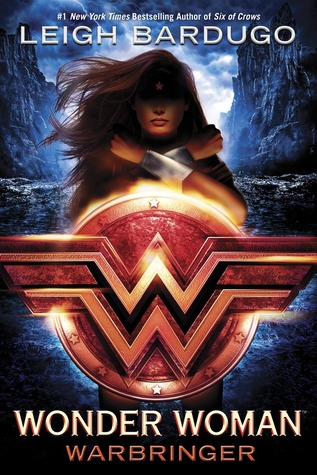
Cybils SpecFic Bookmark: WONDER WOMAN: WARBRINGER by LEIGH BARDUGO

The Cybils Speculative Fiction Bookmark:

As a panelist for Cybils YA Speculative Fiction, Round 1, I'm going to be briefly writing up some of the hundreds of books I read as part of the award. As panelist conclusions are not for public consumption, the purpose of these write-ups is primarily to keep track of what I'm reading, and will mostly touch on plot synopsis, with minimal comments on thematic tropes.


Synopsis: Diana knows, as her mother's daughter, that everything she does is going to have more weight. Her mother is the queen of the Amazons, and Diana has her place on Themyscira by accident of birth, rather than right of sisterhood as the other warriors there have earned. Diana knows that everyone believes her to be small and easily broken, the least of her tribe. She only wants her chance to prove herself -- which seems to come in the form of a plane crashing off the shore of their hidden island. Diana saves the human girl from the wreckage, but breaks Amazon law... and soon discovers she's made more of a lasting, horrific mistake than her little law-breaking led her to believe. Meanwhile, the human girl, Alia, was only on the plane - without her brother's permission - because since their parents' death, he NEVER let her go anywhere or do anything, ever. She just wanted to prove that she didn't need the Keralis name to protect her, and she could take a biology internship with strangers, and do just fine. But, no - a bomb on the plan changed those plans, and now she's stuck with a half-dressed supermodel type who was obviously raised in cult. She thinks Alia is some kind of violence magnet -- and she's trying to convince her that she needs to go to Greece to stop a world war.

The people chasing the two girls are not imaginary illusions from a cult, regardless of what Alia longs to believe. It is going to take nerves of steel to outwit their pursuers, survive betrayal, and make herself safe again... if she even survives. The only way to do this is to trust her shieldsisters and stand together.

Observations:

Sister in battle, I am shield and blade to you. As I breathe, your enemies will know no sanctuary. While I live, your cause is mine."

Readers seeking representation of strong female friendships will find them in this book. Alia, Nim, and Diana do not always trust each other, nor believe in how the other sees them, but in and out of the face of danger, their interactions are both amusing and instructive in terms of sisterhood and how true friends should be.

Diana is inexperienced in terms of American society, but she isn't ignorant or naive, her people having studied men, nations outside their own, disease, weapons, religions and history for years before coming across examples of the real thing. Likewise, though she is uneducated in all things Greek mythology, Alia is able to inform herself by reading and study, which allows her to be prepared.

"It's a trap for us. Alia and I always have to be better. We always have to be a step ahead. But the stronger you get, the more you achieve, the more people want to make sure you know your place." He bumped the back of his head gently against the rock. "It's exhausting." - WARBRINGER, p. 272-3

Including Diana's friends as people of color in this novel allowed the author to make some interesting choices and parallels between the lives of superheroes and the lives of successful people, especially people of color. I found it intriguing that she often explored the limitations society puts on people of color and allowed Diana as a character to explore her own society's limitations as being matriarchal and female-exclusive, and how that allowed the Amazons to both identify - and misidentify - the mores of their culture and their world.

Conclusion: One of the strengths of this DC novelization of the iconic Wonder Woman backstory is that readers with little to no experience with the comic books, the cartoon, or 70's era TV show can still find their feet in the story. A place of entry for those unfamiliar with the Wonder Woman superhero universe, this fast-paced story is full of peril and humor, betrayal and determination, and shows the grounding and powerful force true friendship can be.


I received my copy of this book courtesy of the public library. You can find WONDER WOMAN, WARBRINGER by Leigh Bardugo at an online e-tailer, or at a real life, independent bookstore near you!

October 27, 2017

Cybils SpecFic Bookmark: REBEL SEOUL by AXIE OH

The Cybils Speculative Fiction Bookmark:

As a panelist for Cybils YA Speculative Fiction, Round 1, I'm going to be briefly writing up some of the hundreds of books I read as part of the award. As panelist conclusions are not for public consumption, the purpose of these write-ups is primarily to keep track of what I'm reading, and will mostly touch on plot synopsis, with minimal comments on thematic tropes.


Synopsis: Lee Jaewon is doing what he has to, to stay in the Neo Seoul military school where he attends. His side-hustle in this war-torn place is actually three jobs - one of student, doing his best to hang on to his grades, and the other two as couriers for war vets - and those who need black market items. He's barely making ends meet, but he's got rent money and food, at least. Alone in the world - abandoned by his bestie, who stepped away from him to gain power in a gang, and by his mother, who, after the execution of his father for being a traitor to the new state, left Jaewon to the Old Seoul gangs when he was eight, so he'd have a "better life," Jaewon is a realist - and bitter. As a realist - and the son of a traitor - the worst thing Jaewon could do is get mixed up with the Director's son and his mad schemes, but here he is -- being recruited to the military weapons complex in Neo Seoul. He's a senior with everything to lose, so he's going to do his best to make his mark, take his money at the end of two years, and escape his past.

At least that was the plan before he discovered what his job for the military is going to be - working in weapons development. And the weapon is a supersoldier... a girl who doesn't exist, who has no future, and no past. She's a weapon. When Jaewon realizes that he sees her as a person, he tries to keep his distance. She warns him that she will hurt him -- that eventually, she hurts everyone. As events hurtle to a confrontation between New and Old Seoul, the state and the seething rebellion of the people, Jaewon wonders what it is that he's been fighting for - and if any nationstate is worthwhile if it treats people as objects. There are choices to be made.

Observations: There are myriad Korean words used within the text, many of which the reader will be able to decipher from context clues, and many Asian groups represented in authentic and matter-of-fact ways, including the correct ordering of their patronymic and given names, which is nice to see. This is a wildly futuristic novel, and the setting is chock full of bright lights, K-Pop style bands, vice and luxury existing alongside filth and poverty, all set against the backdrop of an endless rebellion after the war in the East Pacific. Yet, for all of the Blade-runner vibe, this is a sweeping, deeply sentimental romance -- boy meets girl, girl could break boy in half, they fall in love anyway. The deeper theme of both loving and criticizing a national ideology are especially pertinent for readers of all nations just now, and engage critical thinking beyond the satisfyingly swoony and dramatic romance.

Conclusion: A sure hit for teens seeking cinematic, action-packed, futuristic science fiction, this novel also touches on quieter emotions such as loneliness, loyalty, and love.


I received my copy of this book courtesy of the publisher. You can find REBEL SEOUL by Axie Oh at an online e-tailer, or at a real life, independent bookstore near you!

October 03, 2017

Turning Pages Reads: MS. BIXBY'S LAST DAY by JOHN DAVID ANDERSON

Welcome to another session of Turning Pages!

While I love John David Anderson's books, I was scared to read this one, because "last" is a word for me that contains expectations of OTT emotion and pathos. But, then, I remembered who I was dealing with. John David Anderson writes books with heart, but they are always, always, always, in tiny, screwball ways, or in ridiculous, massive, exploding building fashion - funny. So, content commentary for this book: Some may need tissues, others might only feel heart pinches and not need them. Most young readers I would expect will come away feeling a bit melancholy, but Anderson artfully ends the novel with its beginning, to help keep the focus on the theme of the story, and to bring the question back to the reader: what would make for your perfect last day?

"We all have moments when we think nobody really sees us. When we feel like we have to act out or be somebody else just to get noticed. But somebody notices, Topher. Somebody sees. Somebody out there probably thinks you're the greatest thing in the whole world. Don't ever think you're not good enough."

MS. BIXBY'S LAST DAY, pp. 232-3

Synopsis: Topher, Steve and Brand are sixth graders in Ms. Bixby's class at Fox Ridge Elementary. They're thoroughly different - Steve is Japanese American and the genius of the group, with his eidetic memory and a head full of stats and detail. Brand is the biggest - calm, serious, full of smart, made-up words, and could probably beat up Trevor Cowly, or even a seventh grader, if he put his mind to it. Topher is the artistic one - full of wild stories and amazing drawings. On the surface, the three of them don't have that much in common, except pizza, video games... and Ms. Bixby. But, a look beneath, and Steve, wilting under the sky-high expectations of his parents is a lot like Topher, withering under the busybusybusy-lack-of-attention from his, who is just like Brand, who is struggling with a father who fell down, but lost the heart to get up again.

When their favorite teacher lets the class know that she's withdrawing from school to fight the cancer she's just been diagnosed with, the three boys - so different, and so much the same - don't know how to manage. To each of them individually, Ms. Bixby has been Their Person - the one who sees something good in them, cheers them on, only minimally rolls her eyes when they're being doofusy, and who never gives up on them. Without her, who are they? When on the day of the planned class farewell party, they arrive at school to find a substitute teacher, they embark on The Plan - a plan to bring the party to her, to make it a perfect last day of school with three of her favorite students. They plot to cut school - which makes Steve's knees shake - and go see her in the hospital. Topher's already imagining chases with police and truant officers. Brand is making detailed lists. The genius is that The Plan will to give Ms. Bixby back everything that she's given to them.

It's ...a disaster.

It's also, perfect.

Observations: I can't say much about The Plan without ruining the story, but I think the genius here lies in the character shading. Anderson takes the time to explain why Brand would pick Steve's nose for him - (it made sense at the time. Kind of) that gives us insight into the rigid rules that Brand is locking himself into. That, in turn, explains at least in part why Steve kind of couldn't stand Brand for a long, long time, and there's another part of Steve that isn't all the way filled yet, at least not by Steve. Topher, whose easy acceptance of Brand is hard for his best friend Steve to accept, likes lots of people and lots of different things, and has a running screenplay in his head that makes him imagine himself to be a lot of other people, all the time. Who wants to be just himself, when he could contain multitudes? All three of these aspects of the boys' characters enlarge the story and help make it memorable.

Conclusion: There really are no perfect books, but this book has both wit and emotional resonance. The imperfection of its characters - and even of Ms. Bixby - step it back from being a overly-sweet paean of tribute to being a slice-of-life-ordinary, rare-and-extraordinary love story between a group of students, and one of The Good Ones; an excellent teacher.


I received my copy of this book courtesy of my personal library. You can find MS. BIXBY'S LAST DAY by John David Anderson at an online e-tailer, or at a real life, independent bookstore near you!

September 06, 2017

Turning Pages Reads: RAYMIE NIGHTINGALE by KATE DICAMILLO

Welcome to another session of Turning Pages!

I picked up this book because of the author, and the enigmatic - or meaningful, as Betsy Bird calls it - cover. And then, I almost put it down, because it is set in 1975.

It is hard for me to imagine the seventies as a time anyone wants to read about, much less venerate as "historical." After all, to be antique, an object must be at minimum a mere hundred years old; novels set in the seventies and eighties feel... indulgent and nostalgic; more about the authors than the readers. But, on the other hand, the 20th century is now considered "historical fiction," so setting my hesitation aside, I read on.

Synopsis: Raymie Clarke's plan for the summer is this: learn to twirl a baton in Ms. Ida Nee's baton-twirling class; win the Little Miss Central Florida Tire 1975 competition; get her name and picture in the newspaper... and thus create enough interest in her life and well-being to make her father come back from where he's run off with the dental hygienist. By all accounts, it was a reasonable plan. It was something Raymie could hold up to herself when she was afraid, when her mother was silent and sat in the sunroom, staring into space: she had a Plan that was going to Fix Things.

Unfortunately, other people had plans - and troubles of their own. Louisiana Elefante, a tiny, blonde asthmatic, wants to win Little Miss Central Florida Tire 1975 so that she can claim the prize money and free her cat from the pound. Unspoken is her hope that they can use the money to then eat more than tunafish and she and her grandmother can stop running from Marsha Jean, the invisible social worker who might put her in foster care. Beverly Tapinski's plan is to sabotage the pageant - somehow. With a knife. Beverly hates Little Miss pageants, is tired of her mother signing her up for them, and has tried to run away to her father in New York, twice. She is angry and fearless - and sometimes bruised.

Raymie strikes out alone, at first, to do a good deed so that she can list it on her Little Miss application, but soon she, Louisiana, and Bev find themselves doing things together... not willingly, at first, but Louisiana's winsome imagination draws them, and Raymie is eager for something brighter and better than life at home. Even Bev finds herself charmed, despite herself. The girls have more in common than Raymie first believed, and in the end, relying on each other's strengths saves them

Observations: I did not love this book, but found it ...complex and textured. The people Raymie meets during the course of the novel add a depth and nuance that is unexpected. There are cynical elderly people and optimistic ones; haughty ones living on their past successes, like Ms. Ida, and ones running from their current responsibilities, like Raymie's dad. Among her peers, Raymie's problems don't seem so very big to her. While it's true that her father left them, and her mother is depressed and silent, Louisiana, in addition to her very serious asthma, is food insecure, living in a house with no power and no furniture, and a grandmother who is very old and teaching her survival tricks to help her live outside of the county assistance she needs. Beverly poses as self-confident and brave, but she is furious at being abandoned by her father, always running away to be with him, and fighting with adults - to the point of having physical altercations at home. With all of this, the time period and the setting weren't... significant.

"Issues" were obviously not something which were talked about in school in the 70's, as Raymie didn't automatically respond by speaking with an adult when it was revealed that Louisiana was food insecure, whereas I think most of today's ten-year-olds would at least mention it to someone in passing. Infidelity seems to be much less common, and much more a source of shame to those left behind. By avoiding the obvious stereotypes, DiCamillo avoids a dated feel - no super bell bottoms and flower children or anything - but, to be honest, I don't think adding a year is going to be really significant to young readers.

An interesting quibble I did have with the novel setting, though, is that it depicted central Florida without any people of color in it. The only people in the novel who are of a different class than Raymie other than Louisiana signal this by speaking non-standard American English. These two nurses are kindly, immediately helpful, speaking endearments and providing tea and sympathy on the phone to Raymie's mother, and to a soaked and shivering Raymie, a sweater. The author provides no racial description for them, but I find myself hoping that those ladies are white with beehived brunette hair, because they move perilously close to the enveloping, comforting Mammy stereotype otherwise.

Conclusion: I'm still not sure about children's books set in the 70's and 80's, but this book in particular explored meaningful relationships with old people, divorce, grief, abuse, depression, food insecurity and poverty, the idea of having a plan to fix the world, and recovering when that plan shows itself to be flawed, and kind of going with the flow and finding new plans, new purposes, and new friends. Not much happens... but, in a way, everything -- life -- does.


I received my copy of this book courtesy of the public library You can find RAYMIE NIGHTINGALE by Kate DiCamillo at an online e-tailer, or at a real life, independent bookstore near you!

September 01, 2017

Turning Pages Reads: THE LAND OF FORGOTTEN GIRLS by ERIN ENTRADA KELLY

Welcome to another session of Turning Pages!

Though I don't often do so, after reading this book, I checked to see what kind of critical acclaim it had received. I was pleasantly surprised to see a star from SLJ, a star from Booklist, as well as a commendation from Bulletin of the Center for Children’s Books.

Content Commentary: This is may be painful or distressing to people who have experienced physical and psychological abuse. It's indirect enough that most kids will likely simply express unhappy surprise at some of the interactions, but more sensitive children (and knowing adults) may find themselves utterly brokenhearted. Provide tissues.


Synopsis: Auntie Jove never did come to take them to live with her. Soledad expected her at seven, after her mother died, but now that she's twelve, she knows Auntie Jove was just a story - her mother didn't have a sister, and now she's dead. To comfort her little sister now, Sol shares the arresting, vibrant, beautiful adventure stories of the dashing Auntie Jove with her little sister, Dominga, to keep Ming's spirits up. Since their father left them, three years ago, things have been going from bad to worse with their stepmother, Tita Vea. Ming doesn't talk to Vea, and sometimes, she hardly talks to Sol. Her silence just pushes Vea to get worse and worse, to scream louder and louder, to pinch and throw ice water, and take their toys... They're not little girls in a fairytale story. There's no one going to step in and save them. And really, who should save them? Tita Vea always says Sol is a bad, bad girl.

Soledad is so bad, she and her best friend, Manny, sometimes pick on the kids from other schools for fun. She's so bad, she steals from the corner store - and now Ming's done it, too, which is NOT what Soledad intended. Sol is so bad, she's responsible for her other little sister, Amelia's death, when Amelia was only ten. And recently Sol threw a pinecone at a girl's head, and the girl ....had to get stitches. Oops.

Sol believes herself to be bad, but not quite that bad. After some effort, she tracks down the girl, with her pale skin and paler complexion, and Soledad apologizes. In doing so, she discovers that it's not so hard to make a enemy a friend... All it takes is listening. The girls share stories, and Soledad begins to feel a little bit heard, realizing that harsh realities feel just as harsh to others, even when they've got different problems. Now that the weird skateboarding girl from the snobby school talks to her, and the boy who hangs around with her, Sol's almost got three new friends. Things get a tiny bit brighter, for Sol, at least. But after Ming's theft, Tita Vea has been told, and there was Real Trouble. Since then, Ming's been... acting odd. She's insisting that Auntie Jove is coming for her -- and her silences grow louder. She's packing her bags. She's retreating inside of her own head, and Soledad can't get her out. Now all of her trips to Blackbeard's junkyard to find her a special something just might be in vain. She's got to find someone to help her -- but is there anyone who sees them?

Observations: It's rare to see a book with Filipino main characters, and these girls were born in the Philippines, and immigrated to the U.S. Most of us who live in California grew up with immigrants surrounding us at work, at school, and in our neighborhoods. More of us who lived on the margins will recognize that at times, the real America to which these families came did not mesh well with dreams the families brought with them, nor with the cultures and mores of the countries these families had left behind. This caused some tension in those families, and for a variety of reasons, in a variety of ways, many of us observed this tension. While I dealt with the fallout from this tension, teaching group home students, I have never seen a book deal with this specifically. It was heartbreaking and strengthening in myriad ways, because how often do kids in trouble - immigrants or no, being bullied by children, or by the adults who are meant to care for them - how often do they wish desperately that someone saw them? The children in this story were visible, by virtue of finding people to listen amongst their peers, by virtue of learning to listen to others, and through the salvation of a silent but kind neighbor. This made me wonder how I could do better at seeing, and will spark some important conversations with the big-hearted and intelligent children who read this.

There are magical elements of the story, as Amelia appears and reappears as Soledad's conscience, in a manner of speaking, but she is ambiguously not much of a ghost, but more of Soledad's inner mind, or what she believes a protective adults would think or say. Amelia tries to help Soledad be an amazing sister to their baby sister, Ming, and her proactiveness allows Ming as much protection as their rough world affords. This tender relationship provides a tendril of hope and allows mature readers to set aside their sadness at the circumstances in which the girls find themselves, and embrace the truths, that story is a lifeline, that sisters can be fierce protectors, and that hope is sometimes found by taking less traditional and unexpected paths.

Conclusion: This novel is not tied neatly in a bow; life, especially lives in the margin, are a series of victories and defeats. The story certainly ends with the traditional "kernel of hope" however, and most readers can clearly see better days ahead. Some readers will find it "too depressing" and be upset that an adult writer articulated so clearly the struggles of children, but I encourage you not to allow your feelings to be centered, and shift your focus to potential young readers. It's important that more privileged children learn that not everyone has their privileges, and it's important for less privileged children to know that their lives and struggles have meaning and validity and that they are seen. The voices in this book are real and true, and Soledad is allowed to be "bad," angry, confused, and flawed. The adults in this book are not irredeemably bad, either; Vea is a selfish, monstrously abusive woman, but she is also an immature person who paid a staggeringly high price for what she wanted, feels trapped, and doesn't know how to better herself. There are complexities available to the reader who doesn't assume this entire book can be understood in a single glance.


I received my copy of this book courtesy of the public library, but for me, this is a Buy book not a Borrow. You can find THE LAND OF FORGOTTEN GIRLS by Erin Entrada Kelly an online e-tailer, or at a real life, independent bookstore near you!

August 29, 2017

Turning Pages Reads: TWO NAOMIS by OLUGBEMISOMA RHUDAY-PERKOVICH & AUDREY VERNICKAT

Welcome to another session of Turning Pages!

Synopsis: Okay, so Naomi Marie knows her mother is getting ...serious about someone. That's what she's overheard. It doesn't really matter to her; she knows who her Dad is, and he's just a couple blocks away, and that's fine. She'll help out with her overly enthusiastic baby sister, who is only four, and doesn't really know how to feel about things -- she'll be a good example. It's what Dad would want from her, right? And anyway, she's busy with the library clubs she's starting. Eventually, ONE will catch on, and people will come and hang out with her. It's the best library in the world, so they'll have to, eventually...

Naomi Edith is named after the famous clothing designer, Edith Head ... and that name keeps Naomi E. close to her designer mother, away in California, working madly as a costumer on various plays and films. Regretfully, with the time and distance between them, Naomi E's mother has little time to talk to her daughter anymore, but Naomi E. cherishes the traditions she made with her mother - their favorite bakery on Saturdays, their ability to talk about any and everything. With her best friend in the backyard, too many snacks with Dad to mention, Naomi E. keeps faith with how their family used to be. It helps, keeping things the same, to fill the yawning chasm in her insides that the word 'California' leaves inside...

Naomi Marie and Naomi E's parents are having "meet-the-family" meetings, and the Naomis get squished together. Then, their Saturdays are interrupted with "family" outings. It's fine for Naomi Marie's baby sister, who really thinks everything is just awesome, but for the Naomis, who have their own friends and their own particular preferences, it's all getting to be A Little Too Much. And then, there's the class that eats up the rest of their Saturdays. Surely, it won't hurt to do a project together... if Naomi E. would do something. Naomi Marie just wants everything to be PERFECT. Is that so wrong?

Inevitably, the girls clash in earnest. Feelings are hurt, expectations are disappointed, and there are many tears. While readers see the fallout coming, the way the girls resolve things, for the good of everyone, is true grace under fire.

Observations: A lot of YA and MG books are predicated on the fact that adults are occasionally absolutely, drastically, painfully blind to how kids feel about things. This book has such a decidedly, strongly, realistically kid's-eye-view on things that it's hard to read as an adult. My kid brain was sputtering with rage a lot of the time. The pushing - and the pushback - and the digging in of heels on both sides was Real and readers will really feel it.

This was a delightfully urban setting - the girls walked, rode the bus, and their families used ZipCars on the weekend to get where they needed to go. (The complaints about the new car smell wearing off were realistic and amusing.) That Naomi Marie is black is also included in myriad aspects of the narrative - she's not just described and abandoned; her sister goes to Little Nubian playgroup, Naomi Marie takes African Dance. While Naomi E. has less culturally specific interests, care is taken to differentiate her as an individual as well.

Though the girls are listed as ten-year-olds, older readers - and younger readers - may find this a valuable book, because there's a lot of information and discussion and rumination on how to get along with others - a skill many grade school and middle grade kids truly struggle with for a while until getting the hang of things.

Conclusion: I'm glad I finally got around to writing up this book; it's on my list of books for strong girls displaying strength. The Naomis are strong because they aren't railroaded into anything; they CHOOSE their behavior and their acceptance and their level of effort. I love that about them - it's not all sunshine and roses, but they make their own road. A delightful book for kids going through a divorce and family blending, or for kids coping with a sudden influx of family members, as I experienced periodically through childhood.


I received my copy of this book courtesy of the Newark Public Library. You can find TWO NAOMIS by Olugbemisola Rhuday-Perkovich & Audrey Vernickat an online e-tailer, or at a real life, independent bookstore near you!
July 25, 2017

Turning Pages Reads: THE GENTLEMAN'S GUIDE TO VICE AND VIRTUE by MACKENZI LEE

Welcome to another session of Turning Pages!

If you ever wanted to read Jane Austen's books with a male lead... you might have to pick up this book. Austen's books are quiet routs of Victorian era manners; this is a rather noisier affair poking holes in the idea of the staid or wholesome English boy, making his way in the big world via The Grand Tour...

Synopsis: Henry Montague is a hot mess, really. He's privileged and the son of the Lord of Standards and Manners practically - frequently lectured, with fierce physical punishments to back up the cutting words - but this only spreads out the veneer of rakishness further and thicker. Henry is a good time boy, always laughing, drinking, smirking, and hitting on anyone with a pulse. It's his last hurrah, however; his bestie, Percy is off to law school after this Grand Tour they're embarking on. Felicity, Henry's sister, will be "finished" and ladyfied at her school, and Henry himself will be working side-by-side with his father, running the estate... all of which sounds like a living death, frankly. So, it's time to have fun, fun, fun 'til Papa takes his freedom away.

Henry is reckless - and sometimes stupid - with drink, with terror, with pain. He makes the worst choices, about people about money, and about his various vices. With some deliberate nudging, soon their Grand Tour goes grandly off the rails. They lose the minder Papa Montague sends along with them... and then the trip really begins. Unfortunately, this is still Henry we're talking about, so it's not all fun and games - highwaymen, robbery, dodgy conveyances and dodgier people mean their trip careens from bad to worse. As a manhunt gets underway across the continent for them, Henry has one more awful, heart-stopping surprise. Percy, Henry's darling best friend, reveals a truth and Henry realizes he doesn't know him that well after all.

Broken-heartd, terrified, and determined to wrest something good from this journey before his life ends, Henry pushes onward. Persistence - and a whole lot of pigheaded stubbornness has this gamer gambling at last to find the best answers to the biggest questions in his life, to help a friend, and to find his happy ending.

Observations: I delighted in my first introduction to The Grand Tour years ago in Sorcery and Cecelia by Caroline Stevemer and Patricia Wrede, followed by The sequel, The Grand Tour: Or, The Purloined Coronation Regalia. It was a story of two closely sheltered young ladies discovering the large grand world, and it was a lot of Regency with pixie dust.

This is not that book.

... rather than a sheltered Englishman seeing the world for the first time, Henry is a jaded... jade. The boy is a tightly wrapped bundle of neuroses and emotions pinging all over the place, a boiling stew of hormones and appetites. He's likely rather a more realistic illustration of young manhood (READ: rakishness), but I found his privilege and ignorance somewhat exhausting. If you love Regency novels and adore the reformed rake trope, this will work out well for you. Henry's vices sometimes overwhelm his virtues, but there is truly a tender love story going on, true diamonds amongst the glitter and the paste... which is a good thing, or many readers would have drop-kicked him.

Henry is queer as well as being young, so his confusion is multiplied. Percy is half Barbadian, and I found it interesting that he's described as having skin the color of sandalwood and ungovernable hair, but that's it - he seems to face no prejudice or scrutiny on the continent - at least not for being browner than is fashionable. As there were quite a few persons of African ancestry wandering the British Isles and the Continent all the way from Medieval times, this is wholly accurate, but I did wonder what Henry thought of his being different, since he had an opinion on EVERYTHING. Even Percy seemed rather quiet about himself; I found myself wondering if he ever wondered about the family his father took him away from when he brought him to England then up and died...

With his self-centered, narcissistic, shallow hedonism covering his wounds and poor self-esteem, Henry's a lot of work, and you've got to dig before you get to anything worthwhile with him. Which is true of us all, I guess. But, his sister and his friend don't give up on him, even though he takes them straight into trouble. With combined ingenuity, they take themselves back again - so there's an 'ever after' to look forward to - maybe a hard one, but the right one.

Conclusion:Henry is like a male Emma in Jane Austen's world - frivolous, silly, privileged, very attractive and charismatic, and sometimes dangerously ignorant of the true harm he can cause. But, like Emma, Henry is redeemed through the love - tough and merciful love - of a good friend.


I received my copy of this book courtesy of the public library. You can find all 528 pages of THE GENTLEMAN'S GUIDE TO VICE AND VIRTUE by Mackenzi Lee at an online e-tailer, or at a real life, independent bookstore near you!

May 09, 2017

Turning Pages Reads: MAUD by MELANIE FISHBANE

Welcome to another session of Turning Pages!

Synopsis: Maud has been left behind by her father, who has gone away to make a success of himself after the death of Maud's mother so long ago. Maud has been with her strict grandparents ever since, sweating away the muggy summers, longing to strip off her stockings and run down to the shore. Trouble at school found her sent away from her grandparents to act as live-in nanny and help raise her cousins for a while. Now she's back with her grandparents and meant to prove to them that she can be a good girl.

Unfortunately, trouble seems to find Maud wherever she goes. A friendship with the Baptist minister's son is seen as a signal that her morals are in question; regular girlish hijinks are reported on as being "just like her Mother." Maud has no idea what her mother was like -- she died when Maud was only a toddler, and no one will speak of her. Her grandparents clearly disapprove of Maud's father -- and now rumors are wafting about which confuse her even more. fortunately, Maud's father at long last sends for her. It's a treat to leave behind Price Edward Island and see the rest of the country, but when Maud arrives at her father's household, it's not quite as she expected. Her stepmother doesn't seem to like her very much, and it seems she'll be closest to the maid, instead of her new step-siblings. It seems that at every turn, Maud faces disappointments -- not truly feeling wanted within her own family, feeling tremendous pressure to have a beau, be the perfectly poised and ladylike person expected, to do her "duty" for her family at home and not go to school, to take care of others, and bite her tongue. It's a triumph when Maud finally does get a break, but it's a bittersweet story that a girl whose tales transported others lived such a sad story herself.

Observations: Not every classic stands the test of time. If I go back and read ANNE OF GREEN GABLES, the book is still a lovely memory of childhood, of kindred spirits and bosom friends, but Anne herself isn't as clear a favorite (EMILY OF NEW MOON, published fifteen years after Anne, shows Montgomery's skills to a much better advantage, but for some reason, the rabid fave is still Anne). Her constant imagination-induced scrapes and good-hearted sweetness can be a little much if one is unprepared, and reading now I see some of the narrowness and racism of Edwardian era British life reflected in Anne's eyes. Still, L.M. Montgomery's gifts somehow never lose their appeal, even over a hundred years later.

The voice in this book has a reserved and less immediate feel to it, reminiscent of Montgomery's books, but somehow not quite. I felt that the author had pulled a screen between me and the emotions of Maud as a character, whereas with any of L.M. Montgomery's work, its trademark is that the reader practically weeps and laughs with the character; somehow Montgomery's characterizations are that sharply felt. The story itself is a bit depressing; I knew a bit about Montgomery's life, and knew it had been an unhappy one, but found it difficult to connect this Maud in the historical fiction to the facts about her life. Many readers might find that this novel opens slowly, but it moves more quickly after Anne leaves Cavendish behind and heads to her father's house. Subsequent developments in her life feel a bit more energetic, as the author leaves the focus on Maud alone, instead of writing with more detail on the immense cast of secondary characters. It was fun finding out that Maud had a nickname with also had a particular spelling upon which she insisted ("With An E!") and to discover how much Anne and Maud were a lot alike, in some charming and vexing ways.

Conclusion: While this book is published in the YA/children's lit category, I feel like this book's best audience is adults. Tweens who read L.M. Montgomery books now can find them a little tough to get into the adventures of an Edwardian era orphan, and so a fictionalized biography of the author might not appeal, but for those of us who cut our teeth on Anne's adventures and her big-hearted emoting, this will have crossover appeal, and echo faintly of Anne.


I received my copy of this book courtesy of the publisher. After May 16th, can find MAUD by Melanie Fishbane at an online e-tailer, or at a real life, independent bookstore near you!

March 28, 2017

Turning Pages Reads: THE OTHER F-WORD, by NATASHA FRIEND

Welcome to another session of Turning Pages!

I need to get every single one of the books this person has read, so I can bask in the sarcasm and snark of the dialogue. I really enjoyed all the 'feels' I had reading this book, and can practically guarantee that you will, too.

Synopsis: Milo lives with his two mothers, Frankie and Suzanne. Milo's had it kind of rough. He's skinny with wild, curly hair, and he's never quite fit into the world of junior high. In part, it's because Milo has catastrophic allergies -- peanuts, melons, tomatoes, coconut, gluten, wheat, dairy -- sooo many things. He's so tired of the EpiPen and the drama attached to every meal eaten away from home. He'd just like a piece of pizza, just once, hold the drama. He wishes desperately that he knew his sperm donor - not just as someone to figure out where the allergies are coming from, but sometimes... sometimes he'd just like someone else to talk to. About his life. And so, he contacts a girl he met when he was six -- who shared the same sperm donor, Hollis.

Hollis lives with her single mother - though once she had two. Pam died of cancer when she was in the second grade, and her remaining mother has been weird ever since. She cried for years, and drank wine. And now she's in the phase of talking to Pam's picture. She carries one with her. Hollis' mother seems not to notice that her wild-haired, Goth-influenced, tongue-pierced daughter isn't exactly thrilled about how her mother interacts with Pam's memory. Unfortunately, Hollis' mother doesn't seem to notice how conflicted Hollis is about everything. She's decided that... Pam would want Hollis to talk to Milo. That Pam would want Hollis to go and meet Milo in person. Hollis would like to call BS on the whole thing. This isn't about Pam! This is about Hollis, and she's ...snarky and angry and really, really, really wishes that she'd gotten to say goodbye to Pam when she died. But, a nurse's prejudice against a lesbian family and Hollis being only seven had worked against them. And there's more -- but Hollis isn't telling.

When Hollis and Milo meet - and soon find more children of this same sperm donor, through a website aimed at connecting donor progeny with their donors, it's amazing. FaceTiming and texting each other is great. Finding a group of people roughly the same age who have so much in common -- from looks to quirks to skills is like finding more ready-made family. There is an ease and joyousness to their interactions. And then, through Milo's research, and his weird friend JJ's persistent assistance, they find their sperm donor, #9677. Suddenly, Milo, Hollis, and their siblings are confronted with a real person -- and the other f-word... the father word. Are they ready for him? Is he ready for them?

Observations: This is an ensemble novel, which is narrated by turns, so it may take some readers time to find their feet. Hollis is an acquired taste - she holds grudges, is mean to her mother, and is basically you on a bad day, which may cause the more judgmental among us to hold back from her. Keep reading. This novel delves into the topic of in-vitro fertilization, bullying, friendship, and family. There is mild drinking and drug from some characters. The novel delves into sexual diversity in that two sets of parents are lesbian. Though JJ's adoptive parents are Jewish, there isn't much ethnic diversity in the novel, except for a stock character Latina maid.

This is a novel written by someone who knows the craft well. There is snark and sideways humor and geeky, cheesy parents and anxious, stressed, helicoptering parents. There is grieving and finding joy again, making out and deciding to stop. There is numbing of emotion, and letting oneself feel -- even feel fear and pain that goes with that feeling. There is an ending which is so perfect that I want to hug it and pet it a bit. It is spontaneous and joyful, and full of possibilities -- for both utter disappointment and terrifying happiness.

Conclusion: This is a great book - original, heartfelt, funny, sweet, and real. I wish I'd written it. Barring that wish coming true, I can at least press it firmly into the hands of every reader I know. ENJOY IT.


I received my copy of this book courtesy of the publishing company You can find THE OTHER F-WORD by Natasha Friend at an online e-tailer, or at a real life, independent bookstore near you!

February 03, 2017

Surveying Stories: Reflections on Emotional Resonance in Renée Watson's PIECING ME TOGETHER

There are so many things which have been happening in the last several years (days!?) which have deserved our emotions. As a person of color, the uptick in police slayings of African Americans indeed engaged my emotions - but sometimes those emotions are so massive they can't be expressed - and the "public" page seems not the place for something so large, unwieldy, and indiscreet. But Renée Watson has shown herself to be a woman with a dab hand at conveying complex emotional nuances in a delicate manner - not clouting the reader over the head with them, but allowing them to feel and experience them, and to puzzle them out, in their own time.

While there are a few novels out this year speaking directly to the experience of being a minority in a dominant culture world, I haven't read one which deals as well with the poignancy of the human condition of wanting acceptance and love just because -- and not wanting to be bundled with being "fixed" or "helped" in some way. Occasionally, I observe themes or topics in the zeitgeist, and try to work through these ideas in a talking-out-loud kind of way. This is an occasional series which proposes to study these elements in children and young adult fiction from a writer's perspective.

Let's survey a story!


Listening to these mentors, I feel like I can prove the negative stereotypes about girls like me wrong. That I can and will do more, be more.

But when I leave? It happens again. The shattering.

And this makes me wonder if a black girl's life is only about being stitched together and coming undone, being stitched together and coming undone.

I wonder if there's ever a way for a girl like me to feel whole.

Wonder if any of these women can answer that.

    - from PIECING ME TOGETHER, by Renée Watson, p. 86, uncorrected proof

What is emotional resonance, anyway? It's not just playing up an emotional angle within a narrative... it's allowing readers into the character's mind to understand as the character reacts, and to feel in concert with them. The emotion ...lingers, like a chord played on a piano seems to hang in the air. That this author is able to take such messy emotions dealing with race and empathy and class and create in them an entrance for the reader to access them and echo them is nothing short of amazing. This is truly some world-class writing, and while I'm not one for blethering on about awards before their season, I'd be surprised if this book didn't take home at least a few.

I was gifted to come to this book with little or no expectation, other than that it was a story about a black girl in Portland, Oregon. As Portland is historically racist and still struggling with that legacy, I expected something touching on that. Growing up on the West Coast, I've been a "model minority" in a culture which has surface expectations of us all "getting along," -- because we're not the South, after all -- but which underneath often has its own stinking brand of putrescence in the form of "genteel" racism and people able to explain away or turn a blind eye to things which don't directly impact them. (Yes, it's the same everywhere, but it is particularly interesting at times on the West Coast.) Having been that person who - of my own self - was doing pretty well, yet the color of my skin and general poverty and lack of opportunity made people want to jump in and save me, and having to negotiate my emotions surrounding my gratitude for the help and my resentment for its need, boy, do I relate to this book pretty strongly. Watson starts out with that idea of a black girl needing and getting help, and then just ....dives down deeper and deeper into it -- unpacking the ways in which black people judge each other and seem to ask each other to conform to a fracture idea of normal, as well as the ways in which "good" white people are so eager to "help" us that they are often blind to what we can give. If this sounds like it's too deep for a YA novel, though, it's not. Number one, there's really nothing too deep for a YA novel, if the writing and exposition is done well, and two, Watson has such range in terms of bringing something up and letting the character - and the reader - react to it that you find yourself with an unputdownable book.

That doesn't often happen to me. I found myself taking notes. How. Does. She. Do. That!? And I knew it had to do with how she skillfully lays out emotion.

Jade has already accepted that upward momentum in her life is going to mean getting up out of her neighborhood, but as she's already scholarshipped into a mostly-white school, she's wondering how much further "out" she's going to have to get. Her mother - her counselor at school - her teachers - all urge her to get involved in this and sign up for that, and she's constantly having Opportunity pressed on her, in the name of bettering herself -- as if she's not good enough -- and supporting her "at-risk" status, despite the fact that she makes A's and isn't at risk for much of anything - except living in her black neighborhood... and being black. Jade articulates the demeaning nature of so many of the offers and suggestions she receives -- here, honey, we don't want you to miss out on THIS thing which will take you further from your side of the city into where the other half lives obviously better lives. or Hey, Jade, why don't you sign up for THAT thing to help make you a better person, because you're obviously not enough now?

Jade's mentor is a young black woman, and even from her direction comes relentless, well-intentioned pressure. All around Jade are people who think she is a girl who needs saving, a girl in need of a lifeguard to fish her out of where she is, instead of a swimmer in need of someone swimming ahead, whose arms breaking the surf are close enough to see where to safely go. Jade does need a hand, but she's not sure she can trust her mentor's reach... not when the woman's so obviously messing up he own life. I love how Jade keeps her own counsel in this regard - she trusts whom she trusts, not who she's told has her best interests at heart.

This is for the times when York told the Native Americans that he was a negro man, a black man. they didn't believe him. They took dirt, scrubbed his skin, trying to wipe the black off. I can just hear them asking,
What are you?
Where are you from?
Why are you so dark?
What happened to you?


And he would tell them he was a black man, not dirty, not a supernatural being. A black man. But for some reason, they thought this man who had this same dark skin and big frame all his life didn't know his truth.
"You're not black," they said.
"Let me see," they said.
"Does this hurt?" they said, as they tried to scrub his very existence away, erase his experience.

    - Watson, p. 191-2, uncorrected proof

One thing I love, additionally, is that Jade finds her own exits -- she NEVER loses her friendships with her cousin and her cohort from school. Despite the fact that they don't see each other often, they text and get together and still are friends. I so appreciate that Watson didn't strip Jade of her friendships in an attempt to make her look tragic, and then give her the clichéd One White Friend so that readers could see and understand that We Can All Just Get Along. And I appreciate that Jade has a falling out with her white friend, until they learn to be friends, until the friend learns to not turn away from what she hears, and until they both understand the importance of communication and sharing and listening, if friendships across races are going to be real and deep. (I don't even have adult relationships with that much potential, and I couldn't help but write myself a little note about This Is How You Do It.)

Secondly, I love how Jade and her crew have their art - whether through words or collage or drawing, they can all do something for themselves, to express themselves, whether they are in a wealthy & well funded district with plenty of opportunities, ...or not. Jade's art centers on what she's thinking, and so we see her respond to finding out the deeper history of Lewis & Clark, and how their story intersects with the history of where Jade lives, and how it eclipses the story of the Native woman, Sacajawea, and the black slave, York, who traveled and explored with them, doing twice the work for none of the respect. When Jade turns her art from her internal landscape into the external world, I love how the author uses her small offerings, together with those of her friends and cohort, to create a gift that changes and brings together a community.

Finally, I love how Jade explores language, how she looks through a wider lens at a greater world longs to go. The Spanish vocabulary words and pronunciation at the beginning of each chapter are wonderful - language and words are a code to get her out of the world she's in and open the door to elsewhere. These are all such relatable things for anyone, and yet they're also a specific flag waving at black readers, saying, "Pssst! The world is bigger than you think. There are new experiences around the corner - and around the globe. Get up, get out, GO." It is a message of hope and of momentum which just cheers me still.

Sometimes I just want to be comfortable in this skin, this body. Want to cock my head back and laugh loud and free, all my teeth showing, and not be told I'm too rowdy, too ghetto. Sometimes I just want to go to school, wearing my hair big like cumulus clouds without getting any special attention, without having to explain why it looks different from the day before. Why it might look different tomorrow. Sometimes I just want to let my tongue speak the way it pleases, let it be untamed and not bound by rules. Want to talk without watchful ears listening to judge me. At school, I turn on a switch, make sure nothing about me is too black.

    - Watson, p. 199, uncorrected proof

This just hits me, on multiple levels of grief and longing and agreement -- and I think will hit readers of various ethnicities, sizes, and experiences as deeply and as poignantly as well. As their emotions are engaged and resonate, I expect them to spend some time thinking, and then get up, filled with these perhaps largely unarticulated, inchoate emotions, determined in some small way to do something with them, to change their world.

And that is the power of emotional resonance in an excellent novel.


I received my copy of this book courtesy of the publisher. After February 14, you can find PIECING ME TOGETHER by Renée Watson at an online e-tailer, or at a real life, independent bookstore near you!