The deceptively slim volume The Rag and Bone Shop--Robert Cormier's last novel before his death--is nevertheless classic Cormier, packing more emotion and edginess into a small space than one would ever think possible.
Cormier is so good at creating an atmosphere of foreboding that I knew, regardless of any hopeful signs, that the ending would contain a kernel of despair, if not something outright painful and disturbing. Certainly he has a past history of writing YA works that don't necessarily have a happy ending. This last written work is no exception.
When a seven-year-old girl is murdered, a renowned interrogator is called in to talk to the last person who saw her alive: twelve-year-old Jason Dorrant. Local politicians are demanding a culprit, and the interrogator's reputation is on the line. The novel takes a hard look at whether finding out the truth is really the most important thing, or if it's enough to just dig out what seems to be true. The novel also examines the responsibilities of adults in their treatment of children in this type of situation. Cormier shows that sometimes, if you want badly enough for something to be true, you can convince yourself that it is...but that only matters if you're in a position of power. And, sadly, sometimes perceived truth from someone in control will trump the real story. And then what happens?
Sadly, the murder victim is not the only victim in this story. Rather dark and disturbing, especially in its unflinching examination of the more unpleasant side of human nature, The Rag and Bone Shop is a gripping page-turner that will leave you unsettled at the end.

October 24, 2006
October 23, 2006
In the Dark with Vampires
Stephanie Meyer's highly romantic stories of star-crossed lovers Edward and Bella have garnered comparisons to a more modern Romeo and Juliet, and have gained her hundreds of thousands of fans. Her newest novel in the celestial quartet, New Moon, is rapidly gaining Meyer thousands more. However, it should be noted that while New Moon is somewhat of a stand-alone novel, it is best read after having first read Twilight (or at least seeing Twilight, the movie, which is allegedly due out in 2008).
Nothing is more important to the improbably-named Bella than her boyfriend, Edward. His perfect beauty, his perfect logic, his perfect... perfection keeps her going. It also bums her out. She's only human, and it's perfectly natural for her to assume that someday Edward is going to figure that out, and kick her to the curb. Oh, it's not just because he's so good looking... it's because he's a vampire, immortal and flawless, while Bella is flinching at merely turning 18, imaging wrinkles and death ahead, while Edward is forever young, beautiful, and lost to her.
A papercut at Bella's birthday party turns über-dramatic and almost ends in her death, as Edward, in trying to protect her from his bloodthirsty brother, Jasper, flings her across the room and injures her further. When Edward and his family leave New Forks in order to save her life, the anchor of Bella's life is ripped out of its mooring. She drifts for months, losing friends and contacts, unable to smile or get a grip. She's beyond wallowing. She's sleepwalking through life. But that begins to change when she reconnects with an old friend, Jacob Black. Jacob's only a sophomore, but his liveliness and sense of fun are just what Bella needs. Even better is Jacob's ability to keep a secret -- and his promise to teach her to ride a motorcycle and to cliff dive. Because Bella's found something almost as good as having Edward back -- wonderfully accurate hallucinations of his voice when she's in danger. And if that's what it takes to preserve a memory, Bella's all about living on the edge. But there's something else that Bella didn't count on... one, that Jacob loves her, and two, that Jacob can't stay forever.
The ending of this book will make you alternately want to slap someone and long for the next episode -- read and decide if you're still cheering for the path of True Love, or wondering if Obsession isn't a disturbingly melodramatic substitute. High school: from difficult to impossible, just add vampires.
Nothing is more important to the improbably-named Bella than her boyfriend, Edward. His perfect beauty, his perfect logic, his perfect... perfection keeps her going. It also bums her out. She's only human, and it's perfectly natural for her to assume that someday Edward is going to figure that out, and kick her to the curb. Oh, it's not just because he's so good looking... it's because he's a vampire, immortal and flawless, while Bella is flinching at merely turning 18, imaging
wrinkles and death ahead, while Edward is forever young, beautiful, and lost to her.A papercut at Bella's birthday party turns über-dramatic and almost ends in her death, as Edward, in trying to protect her from his bloodthirsty brother, Jasper, flings her across the room and injures her further. When Edward and his family leave New Forks in order to save her life, the anchor of Bella's life is ripped out of its mooring. She drifts for months, losing friends and contacts, unable to smile or get a grip. She's beyond wallowing. She's sleepwalking through life. But that begins to change when she reconnects with an old friend, Jacob Black. Jacob's only a sophomore, but his liveliness and sense of fun are just what Bella needs. Even better is Jacob's ability to keep a secret -- and his promise to teach her to ride a motorcycle and to cliff dive. Because Bella's found something almost as good as having Edward back -- wonderfully accurate hallucinations of his voice when she's in danger. And if that's what it takes to preserve a memory, Bella's all about living on the edge. But there's something else that Bella didn't count on... one, that Jacob loves her, and two, that Jacob can't stay forever.
The ending of this book will make you alternately want to slap someone and long for the next episode -- read and decide if you're still cheering for the path of True Love, or wondering if Obsession isn't a disturbingly melodramatic substitute. High school: from difficult to impossible, just add vampires.
The Second Tale of Crispin
Avi's Crispin is back. In Crispin: The Cross of Lead, the 2003 award-winning beginning to his trilogy, 13-year-old Crispin, living the rough life of a nameless orphan in the 14th century, is reviled and hated. Unnamed, he is called 'Asta's son,' and his mother seems to both love and hate him. When she dies, he is required to give up his only ox as a death tax for his mother, leaving him both penniless and without means to work. When he is falsely accused of theft, he must run for his life, bearing only the lead cross the village priest has given him, with words inscribed in the soft metal back. Asta's son learns that he's not just a nameless orphan, but that he is the illegitimate son of a knight, but this knowledge does not save him from imprisonment. He's meets with a big man named Bear, a juggler who he is not sure is friend or foe, but, in return for his freedom, Crispin gives up his lineage so that they can both go free.
In Crispin: At the Edge of the World, Bear and Crispin are free and happy, though their happiness is short-lived. Bear is a wanted man, and when he is injured, Crispin seeks shelter for them both in the forest hovel of a crone and her cleft-palated apprentice, who is learning herbology. Crispin is horrified that they are pagans, but he fears for Bear's life, and would do anything to save it. He tries hard to be a man, and make a man's decisions, but he fears that each new choice is wrong. Despite war and religion, Crispin learns that he would do anything to save his family, as he confronts what he fears is the edge of the world.
In Crispin: At the Edge of the World, Bear and Crispin are free and happy, though their happiness is short-lived. Bear is a wanted man, and when he is injured, Crispin seeks shelter for them both in the forest hovel of a crone and her cleft-palated apprentice, who is learning herbology. Crispin is horrified that they are pagans, but he fears for Bear's life, and would do anything to save it. He tries hard to be a man, and make a man's decisions, but he fears that each new choice is wrong. Despite war and religion, Crispin learns that he would do anything to save his family, as he confronts what he fears is the edge of the world.
Chaos Under New York
It all begins when Ananka sees a sinkhole across the street from the New York brownstone where she lives. She sees a tiny person crawling out from inside it, immediately throws a coat and boots on over her pajamas, and goes to investigate. She finds a book and a ladder, and is on the trail of an adventure. There's a city under New York, the Shadow City. And more than anything, Ananka wants to find it. But it seems that someone has found it first -- and they want her to know all about it. Could it be the intriguing Kiki Strike, Ananka's almost invisible and strange classmate? 
Interested -- and bored out of her mind by being ignored by her over-educated and under-socialized parents -- Ananka determines to find out what makes Kiki tick, and in so doing, find out the secrets of Shadow City. Ananka tails Kiki -- poorly -- throughout New York for two months, trying to figure out where she goes and what she does. An invitation from Kiki to get to know her is surprising -- and irresistible. Within weeks, Ananka is part of the Irregulars, a group of intrepid girls who use their particular talents to not only help New York's hapless citizens, but to map out and discover the secrets of Shadow City, once the haunt of gangsters and smugglers, and possibly endless treasure.
But all is not as it seems. First comes the realization of the true danger that they are in. And once everything cuts loose, Kiki vanishes. Who was she, anyway? And what did she want? Ananka thinks she's grown out of the whole Kiki stage... and then Kiki comes back, with one more request to be trusted -- for one last adventure.
An unbelievably labyrinthine mystery, Kirsten Miller's Kiki Strike is like taking the red pill to see how deep the rabbit hole goes. Full of plots, counterplots, kidnappings, spies, getaway Vespas, the FBI, and learn-as-you-go detective tips, this juicy mystery is so busy that you forget that the girls involved, the Irregulars, are all lapsed Girl Scouts with school and parents to worry about. But who's got time for parents when it's time to save New York?
Interested -- and bored out of her mind by being ignored by her over-educated and under-socialized parents -- Ananka determines to find out what makes Kiki tick, and in so doing, find out the secrets of Shadow City. Ananka tails Kiki -- poorly -- throughout New York for two months, trying to figure out where she goes and what she does. An invitation from Kiki to get to know her is surprising -- and irresistible. Within weeks, Ananka is part of the Irregulars, a group of intrepid girls who use their particular talents to not only help New York's hapless citizens, but to map out and discover the secrets of Shadow City, once the haunt of gangsters and smugglers, and possibly endless treasure.
But all is not as it seems. First comes the realization of the true danger that they are in. And once everything cuts loose, Kiki vanishes. Who was she, anyway? And what did she want? Ananka thinks she's grown out of the whole Kiki stage... and then Kiki comes back, with one more request to be trusted -- for one last adventure.
An unbelievably labyrinthine mystery, Kirsten Miller's Kiki Strike is like taking the red pill to see how deep the rabbit hole goes. Full of plots, counterplots, kidnappings, spies, getaway Vespas, the FBI, and learn-as-you-go detective tips, this juicy mystery is so busy that you forget that the girls involved, the Irregulars, are all lapsed Girl Scouts with school and parents to worry about. But who's got time for parents when it's time to save New York?
Purling Girls
It's not as if Scottie wants much -- just for life to be somewhat... normal. For starters, maybe her best friend, Amanda, could start acting like her best friend again, and less like the Trust Fund Princess Prom Queen Wannabe she's morphed into lately. Or, her mother could start acting like a mother who has just lost a beloved sister, instead of Creative Artisté Extraordinaire, around whom she and her Dad must tiptoe. Scottie would even take just getting a good night's sleep as a quick route toward normalcy -- really, she doesn't want much. Just her life back. Instead, what Scottie gets is ...knitting. Hours of hypnotic peace that starts with twenty four rows of blue on its way into becoming a scarf. It's not sleep, but it's close. It's not friends, or Mom and Dad, but it'll do, especially when she finds a friend in a local yarn store owner.
When Amanda finally wakes up to the fact that she's lost her friend, she seeks Scottie out at KnitWit, the place where Scottie's finally found herself. And then Tay, one of the kind of goth girls from their artsy high school, happens by, taking up knitting on a dare from her counselor. And then comes the effervescently freaky home-schooled girl, Bella. And as suddenly as yarn snarls, Scottie has friends again: chicks with sticks. They knit their lives together, and Scottie suddenly feels a little less wobbly, even though things with her parents aren't any better, and things are as lumpy as a marled sweater. Anxiously, Scottie circles her bundle of friends, trying to hold them together by sheer willpower and fear. Because if it all unravels, she'll be left alone. And what good is a single strand?
Not just for crafty types (though there are actual knitting patterns in the book), this excellent novel is about the staying power of friends. Sometimes all you need for friendship is a little yarn and a little patience.
Instead, what Scottie gets is ...knitting. Hours of hypnotic peace that starts with twenty four rows of blue on its way into becoming a scarf. It's not sleep, but it's close. It's not friends, or Mom and Dad, but it'll do, especially when she finds a friend in a local yarn store owner.When Amanda finally wakes up to the fact that she's lost her friend, she seeks Scottie out at KnitWit, the place where Scottie's finally found herself. And then Tay, one of the kind of goth girls from their artsy high school, happens by, taking up knitting on a dare from her counselor. And then comes the effervescently freaky home-schooled girl, Bella. And as suddenly as yarn snarls, Scottie has friends again: chicks with sticks. They knit their lives together, and Scottie suddenly feels a little less wobbly, even though things with her parents aren't any better, and things are as lumpy as a marled sweater. Anxiously, Scottie circles her bundle of friends, trying to hold them together by sheer willpower and fear. Because if it all unravels, she'll be left alone. And what good is a single strand?
Not just for crafty types (though there are actual knitting patterns in the book), this excellent novel is about the staying power of friends. Sometimes all you need for friendship is a little yarn and a little patience.
Summer on the kibbutz
A novel in free verse, The Weight of the Sky tells the story of Sarah, a high school junior whose self-absorption and stress-load are typical of most students whose parents are pressuring them to attend a particular college or head a particular direction after high school. Sarah assumes she feels more 'other' than her classmates, for not only is she a chunky band-geek, she's Jewish. As school and parental pressure mounts, the unhappy Sarah calls a halt to the madness by taking the opportunity to visit a kibbutz in Israel, and connect with her culture. Naively assuming that all will be well in the land of her homeland, Sarah goes and gawks like a tourist, falls in love with a soldier, and realizes that even on the soil of her people she's not the same as everyone else. Sure, there are Jews everywhere, unlike her Midwestern hometown. However, no one is united in Israel, either, and not everybody thinks that Israel is a cause worth fighting endless wars for. However, her confusion is glossed over by finding herself in relationships with another former boy; when her soldier-boy friend is killed, all Sarah wants to do is go home and forget. Still, Israel woos her back as not a perfect place, but as a place where she has grown. While Sarah's choice to go to college in Israel shocks her parents, it seems to her a perfect fit.
Though beautifully written, this novel seems to set apart Sarah's feeling of otherness as something foreign to other teens in her school. She makes little or no attempt to understand how other's feel, and so her very personal struggle to find her place is not as easy to read. The country of her people is the obvious answer to her, but other teens who read this, whose country of religious origin is perhaps Italy or America may not find they have as much in common with the protagonist as they may have hoped.
Though beautifully written, this novel seems to set apart Sarah's feeling of otherness as something foreign to other teens in her school. She makes little or no attempt to understand how other's feel, and so her very personal struggle to find her place is not as easy to read. The country of her people is the obvious answer to her, but other teens who read this, whose country of religious origin is perhaps Italy or America may not find they have as much in common with the protagonist as they may have hoped.
Faceless in New York
It was the difference of one night that spelled out life or death for Nicole Nieman. In the French town of Aix-les-Baines in 1943, she pestered her mother for one last sleepover with her dear friend Francoise, who was moving to Switzerland. Sleeping the night at the French girl's house meant that she wasn't home when the Gestapo moved in and carried off her mother, father and little sister to Auschwitz. For that one last night of fun and friendship Nicole paid an unfair and heavy price -- she was marginally safe, but frightened, out of place, and alone.

But the war in Europe was over soon. Nicole's aunt, whom she eventually found, moved into her parent's home with her boyfriend. Though in her own room, surrounded by the things the Gestapo hadn't looted from the house, Nicole didn't fit. Overseas with cousins who looked a little like her, but who had no idea of what she'd gone through, Nicole didn't fit. In the workplace, she's not quite like the other young girls, and slowly Nicole realizes that she's not like anyone else in the world. At the age of sixteen, Nicole finds herself Lost -- in America, among family and among friends. Without her parents, and left with guilt about how she treated her sister, Nicole doesn't know what to do to be found.
A quiet tale of innocence lost, of bravery and persistence, this true story is based on the experiences of Marilyn Sach's true-to-life neighbor, Fanny Krieger, and her first year in America, how she coped, and how she survived.
But the war in Europe was over soon. Nicole's aunt, whom she eventually found, moved into her parent's home with her boyfriend. Though in her own room, surrounded by the things the Gestapo hadn't looted from the house, Nicole didn't fit. Overseas with cousins who looked a little like her, but who had no idea of what she'd gone through, Nicole didn't fit. In the workplace, she's not quite like the other young girls, and slowly Nicole realizes that she's not like anyone else in the world. At the age of sixteen, Nicole finds herself Lost -- in America, among family and among friends. Without her parents, and left with guilt about how she treated her sister, Nicole doesn't know what to do to be found.
A quiet tale of innocence lost, of bravery and persistence, this true story is based on the experiences of Marilyn Sach's true-to-life neighbor, Fanny Krieger, and her first year in America, how she coped, and how she survived.
October 21, 2006
Past and Present – Both Tense
 Time travel stories can be a lot of fun, but if they have one fault, it’s that the time travelers often go to the past or the future without a whole lot of repercussions in the present they just left. Conveniently, they return to the point in time where they just left, with nobody the wiser; or worse, "contamination of the time stream," to put it in Star Trek lingo, is just not dealt with at all.
 One thing I really loved about Linda Buckley-Archer’s Gideon the Cutpurse was that she didn’t pull any punches as far as the story in the present was concerned. When twelve-year-old Peter and Kate have an accident with a physicist’s antigravity machine in the lab where Kate’s father works, they are somehow transported back to the exact same spot in the English countryside—in the year 1763. However, time doesn’t stop, so to speak, while they’re stuck in the past. In fact, what you’d expect to happen, happens: two children have disappeared. The police are called in to investigate. The physics lab works with NASA and is not forthcoming to the police.
Months go by, and they find nothing of the children except a few strange ghostly sightings—it seems that Kate and Peter can “blur” back to the present for short periods of time. They travel towards London by carriage and stagecoach, looking for the cunning and treacherous Tar Man who has stolen the antigravity machine that was flung with them into the past. In the process, on occasion they find themselves blurring into the present: three feet above a supermarket parking lot, to the amazement of onlookers; in a modern-day office building. These crucial clues are what the police need to solve the mystery of their disappearance, but will the scientists cooperate and tell them what they think happened?
Meanwhile, in 1763, Kate and Peter would be entirely lost if not for the kindness of Gideon, a former cutpurse (of necessity only) who believes their story because he witnessed their strange fall from the sky and the theft of their mysterious machine. With his help, they navigate the strangely similar yet different world of 1763, fumbling with social conventions, and all the while trying to figure out how to get home.
The level of detail, both historical and in terms of character development, is amazing, yet seamlessly incorporated into this complex adventure. The parallel stories are effective and exciting. And, luckily for us, it’s the first in a trilogy!
October 19, 2006
An the Nominees Are... (Drum roll please!)
Well, the World Cup it is not, but to my mind, it should be at least as important (and include face painting, screaming, and a requisite three day party in the streets of an Italian city. Oh, okay. Maybe not the screaming. But definitely Italy should figure in somehow...). Creating a piece of children's literature worth reading is a major accomplishment, and we want to honor the  accomplishment of the people who gave kids and young adults their best this year.
I'm jazzed to be on the Cybils YA Nominating Committee, and we need you to step up and start nominating what you've loved in this year's YA novel crop. We don't all read or love the same thing, by any means, and you may have gotten tired of hearing the same novels talked up in the blogosphere, so speak up -- we want to hear what struck you as wonderful, funny, quirky, and worth passing on. Just remember - only one nomination per category, por favor, so make it count!
Non-fiction books for all ages, graphic novels, picture books and poetry is also going to get this treatment, so don't be shy - visit the Cybils website and tell us where your kid-lit explorations have led you this year. You're an opinionated person -- admit it. So nominate your favorite!
Tru... Romance?
Publishers Weekly reports that Harlequin is introducing a YA line for African American girls. Kimani TRU is the first romance genre dedicated to what Kimani Press feels is an underserved target market... er, audience. "African-American teens are underserved in today's literary climate with stories that solely dwell on the negative influences of the streets," states Linda Gill, general manager of Kimani Press. "Our goal is to reach out and embrace young adult readers with stories that are true to their life experiences, but that also encourage growth, and empowerment. At times, teens feel alone with the issues they are facing ... and in KIMANI TRU novels they will meet characters they can ultimately learn from," Gill concludes.
The novels will debut in 2007, and promise to present "characters that navigate this
crucial period and triumph through these hardships." The line is especially proud to debut the line with the work of 17-year-old Cassandra Carter, and another under-30 author, Cecil Cross II, who they hope will be able to catch the true voice of African American young adults.
Hm.
A new to-be-read recently reviewed by ChildLit Book Club (the blogger responsible for the fabulous Cybils icon design) is going on my booklist - it's Framed by Frank Cottrell Boyce. This novel takes place in a tiny Welsh town, and sounds like it's a good one for boy readers. Especially since someone I know loves all things Wales (ahem, A.F.), it's worth checking out!
ust say ...Happy Bunny?
Oh, WOW. PW also reports that the Texas Alliance of the Partnership for a Drug-Free America is going to be using HAPPY BUNNY, the über-snarky, plastered everywhere white rabbit for it's campaign ads. Good grief.
Via Ursula LeGuin's blog I found Fairytales for Cynics, wherein LeGuin reviews The Ladies of Grace Adieu And Other Stories, by Susanna Clarke. Clarke has written some fabulous fantasy novels that depict another England in which magic wakes up again. Definitely going on my to-be-read book list.
A sad truth of my life is that I've never even considered who wrote the six volume series of Mary Poppins adventures, and saw it only as one of the most aggravating Disney movies ever (although there are many more recent ones in the running, sans the winsome Julie Andrews). However, here's a great piece on the P.L. Travers, who was the genius behind the original STORY, not the horrifying musical. I take quite a savage joy in the fact that she couldn't stand Walt Disney either. Hee!
accomplishment of the people who gave kids and young adults their best this year.I'm jazzed to be on the Cybils YA Nominating Committee, and we need you to step up and start nominating what you've loved in this year's YA novel crop. We don't all read or love the same thing, by any means, and you may have gotten tired of hearing the same novels talked up in the blogosphere, so speak up -- we want to hear what struck you as wonderful, funny, quirky, and worth passing on. Just remember - only one nomination per category, por favor, so make it count!
Non-fiction books for all ages, graphic novels, picture books and poetry is also going to get this treatment, so don't be shy - visit the Cybils website and tell us where your kid-lit explorations have led you this year. You're an opinionated person -- admit it. So nominate your favorite!
Tru... Romance?
Publishers Weekly reports that Harlequin is introducing a YA line for African American girls. Kimani TRU is the first romance genre dedicated to what Kimani Press feels is an underserved target market... er, audience. "African-American teens are underserved in today's literary climate with stories that solely dwell on the negative influences of the streets," states Linda Gill, general manager of Kimani Press. "Our goal is to reach out and embrace young adult readers with stories that are true to their life experiences, but that also encourage growth, and empowerment. At times, teens feel alone with the issues they are facing ... and in KIMANI TRU novels they will meet characters they can ultimately learn from," Gill concludes.
The novels will debut in 2007, and promise to present "characters that navigate this
crucial period and triumph through these hardships." The line is especially proud to debut the line with the work of 17-year-old Cassandra Carter, and another under-30 author, Cecil Cross II, who they hope will be able to catch the true voice of African American young adults.
Hm.
A new to-be-read recently reviewed by ChildLit Book Club (the blogger responsible for the fabulous Cybils icon design) is going on my booklist - it's Framed by Frank Cottrell Boyce. This novel takes place in a tiny Welsh town, and sounds like it's a good one for boy readers. Especially since someone I know loves all things Wales (ahem, A.F.), it's worth checking out!
ust say ...Happy Bunny?
Oh, WOW. PW also reports that the Texas Alliance of the Partnership for a Drug-Free America is going to be using HAPPY BUNNY, the über-snarky, plastered everywhere white rabbit for it's campaign ads. Good grief.
Via Ursula LeGuin's blog I found Fairytales for Cynics, wherein LeGuin reviews The Ladies of Grace Adieu And Other Stories, by Susanna Clarke. Clarke has written some fabulous fantasy novels that depict another England in which magic wakes up again. Definitely going on my to-be-read book list.
A sad truth of my life is that I've never even considered who wrote the six volume series of Mary Poppins adventures, and saw it only as one of the most aggravating Disney movies ever (although there are many more recent ones in the running, sans the winsome Julie Andrews). However, here's a great piece on the P.L. Travers, who was the genius behind the original STORY, not the horrifying musical. I take quite a savage joy in the fact that she couldn't stand Walt Disney either. Hee!
October 17, 2006
Another lightning post!
I've been blogging in lieu of novel-ing, so I'm told that I'm on a blogging time-out today, but I had to sneak by and say this:
Go get Cybilized!
How exciting is this!? And can I tell you how much I love the name? All the quirkiest and most entertaining people I know are named Cybil... and in the larger world of Cybils, foremost in my mind is Cybill Shepherd. With this award, we now all have permission to be snarky, sarcastic, wisecracking and brilliantly beautiful and successful, whatever our ages. Cheers!
The Cybils will be accepting nominations for the best books of 2006 through November 20, 2006. Books will be judged in the following categories: Picture Book, Middle Grade Fiction, Young Adult Fiction, Fantasy/Sci Fi, Picture Book Non Fiction, Non Fiction (Middle Grade/Young Adult), Graphic Novel, Poetry. DO read more and find out how to nominate a book for the award and/or nominate your blogger-self to serve on a nominating/judging committee at Big A little a.
All right, back to the salt mines.
Down the Upturned Tree
It's been three months, and there's been no change in Chloe's condition.
Her brother Rob, whose life, and the lives of his actress mother, playwright father, and his godfather, Mac, have stopped cold. All of them are waiting... for something. For a change. If only something would happen. Either Chloe should wake up and live... or she should die. It's the coma, the waiting... it's killing them all slowly.
In need of a distraction, and finding that his parents are short on cash from Chloe's fancy nursing home, Rob takes a job on a local archeology dig, using his highly polished artistic skills to draw their highly secret find. It's not the greatest job... it's boring drawing and grunt work - but Rob is starting to find some really odd things at this archeology dig. Sure, they're unique and millions of years old... but they're...alive.
Outside the dig, Rob's met some really weird druid/New Agey types, too. And they seem to think it's all highly significant... and tied to his sister. What does what the archeologist is uncovering have to do with Rob and his family? How do the druids know so much? Should Rob trust them? Is there something going on at the archeology site that he should tell ...someone? And what about Chloe? Will the druid, Vetch, be able to wake her where she wanders? And does she want to come back?
Interweaving the classic Welsh myth of Taliesin and Ceridwen into a more modern tale, Catherine Fisher's Darkhenge explores the world of imagination, and the lines between it and reality. Chloe's emotions recreate her world. If we could live out our dreams, would we ever come away from them?
Her brother Rob, whose life, and the lives of his actress mother, playwright father, and his
godfather, Mac, have stopped cold. All of them are waiting... for something. For a change. If only something would happen. Either Chloe should wake up and live... or she should die. It's the coma, the waiting... it's killing them all slowly.In need of a distraction, and finding that his parents are short on cash from Chloe's fancy nursing home, Rob takes a job on a local archeology dig, using his highly polished artistic skills to draw their highly secret find. It's not the greatest job... it's boring drawing and grunt work - but Rob is starting to find some really odd things at this archeology dig. Sure, they're unique and millions of years old... but they're...alive.
Outside the dig, Rob's met some really weird druid/New Agey types, too. And they seem to think it's all highly significant... and tied to his sister. What does what the archeologist is uncovering have to do with Rob and his family? How do the druids know so much? Should Rob trust them? Is there something going on at the archeology site that he should tell ...someone? And what about Chloe? Will the druid, Vetch, be able to wake her where she wanders? And does she want to come back?
Interweaving the classic Welsh myth of Taliesin and Ceridwen into a more modern tale, Catherine Fisher's Darkhenge explores the world of imagination, and the lines between it and reality. Chloe's emotions recreate her world. If we could live out our dreams, would we ever come away from them?
Road Trip
"There are some kinds of trouble you never see coming," begins Elise Broach's YA novel, Desert Crossing, and boy, is that an understatement. On what is supposed to be a routine, though hot and painfully boring Spring Break drive from New Mexico to Phoenix to see their dad - who doesn't really even have time for them - Lucy her brother Jaime, and his best friend, Kit, find that some journeys take you where you never expected to go.
14-year-old Lucy is relegated to sitting in the backseat, ignored and reviled, as the boys, both high school Seniors, discuss girls, girls, girls, girls, girls - their bodies, their parts, their disconnected bits in objectifying ways that make Lucy's skin crawl as they drive through the endless miles of desert. After the first several hours, Lucy hates both her brother and Kit for their mindless flirting with waitresses and basically anything upright and female. Her brother Jaime's easy morphing into whatever a woman needs to see or hear to be interested and Kit's sarcastic shallowness leaves Lucy feeling abandoned and resentful and strange. Is this how all guys act, all the time? It only gets worse when the boys finagle a trucker into getting them a six pack of beer. Lucy knows she sounds like a downer, warning her brother not to drink while driving, but she's worrying that they'll all be sorry... While driving too fast in a sudden desert downpour, the car hits something -- something that makes a bone-jarring thump. Heartsick, Lucy insists, and Jaime turn back, muttering that it was only a dog or a coyote. What they find is infinitely worse.
And it changes everything.
Like leading readers down a suspensful, hold-your-breath scary rabbit hole, this sparsely worded, sometimes painful, fast-paced novel uncovers mysteries, secrets and self-discovery. This is definitely a growing-up road trip, in more ways than one, and the end of innocent assumptions.
14-year-old Lucy is relegated to sitting in the backseat, ignored and reviled, as the boys, both high school Seniors, discuss girls, girls, girls, girls, girls - their bodies, their parts, their disconnected bits in objectifying ways that make Lucy's skin crawl as they drive through the endless miles of desert. After the first several hours, Lucy hates both her brother and Kit for their mindless flirting with waitresses and basically anything upright and female. Her brother Jaime's easy morphing into whatever a woman needs to see or hear to be interested and Kit's sarcastic shallowness leaves Lucy feeling abandoned and resentful and strange. Is this how all guys act, all the time? It only gets worse when the boys finagle a trucker into getting them a six pack of beer. Lucy knows she sounds like a downer, warning her brother not to drink while driving, but she's worrying that they'll all be sorry... While driving too fast in a sudden desert downpour, the car hits something -- something that makes a bone-jarring thump. Heartsick, Lucy insists, and Jaime turn back, muttering that it was only a dog or a coyote. What they find is infinitely worse.
And it changes everything.
Like leading readers down a suspensful, hold-your-breath scary rabbit hole, this sparsely worded, sometimes painful, fast-paced novel uncovers mysteries, secrets and self-discovery. This is definitely a growing-up road trip, in more ways than one, and the end of innocent assumptions.
Half and Half Hapa
This book is a 2006 Cybil Award Nominee for YA Fiction.
Who are you if you feel like you're in nobody's group, when even the stereotypes don't fit you? Patty Ho, in Nothing but the Truth (and a few white lies) isn't entirely sure where she fits in this world. She doesn't think she's got much going on -- after all, there's a white guy at her school who hates her, her strict mother, a woman of tradition, is positive that her mantra of Good Grades, Good Job, and a 'Good One,' (which means a Taiwanese man) is the only thing that will save her brainless girlchild. Always ready to lecture and to compare Patty unfavorably with the children of other Asian families they know, Patty's mom seems to think she's a willful, worthless, terrible daughter, unlike her precious and perfect - and more traditionally Asian looking - brother, Abe, who has capture the Gold and is going to Harvard. At their neighborhood gossip potlucks, Patty's "China Doll" friends think she's not quite Asian enough because she's a hapa, and has a Caucasian father, who is long gone.
Patty despairs of ever fitting into her own world, and she resents being left with the Taiwanese half. She wishes she could find her father. She wonders if her hair were black instead of brown, her mother would think more of her...
Patty's not a "banana" -- Asian looking but Caucasian acting -- nor is she an Egg - White skinned with a "yellow" center. While those stereotypes don't necessarily fit anyone well, they fit Patty even worse. Adrift, it takes the women of the Kung Fu Kick Ass Club she meets at the Stanford Math Camp, and finding out the truth about her mother to show her the truth about herself and her own worth. Given the gift of anger and clarity in seeing herself as beautiful and cool AND Taiwanese -Caucasian --- and worth fighting for, Patty stops kowtow-ing and starts kicking butt -- in a bitterly funny, tear-jerking, raise-your-fist-and-cheer YA novel about race and relationships and reality by Justina Chen Headley. You'll want to check this one out, and the upcoming novels on Chen Headley's webpage. I only hope someday to write something half as good and real.
Who are you if you feel like you're in nobody's group, when even the stereotypes don't fit you? Patty Ho, in Nothing but the Truth (and a few white lies) isn't entirely sure where she fits in this world. She doesn't think she's got much going on -- after all, there's a white guy at her school who hates her, her strict mother, a woman of tradition, is positive
that her mantra of Good Grades, Good Job, and a 'Good One,' (which means a Taiwanese man) is the only thing that will save her brainless girlchild. Always ready to lecture and to compare Patty unfavorably with the children of other Asian families they know, Patty's mom seems to think she's a willful, worthless, terrible daughter, unlike her precious and perfect - and more traditionally Asian looking - brother, Abe, who has capture the Gold and is going to Harvard. At their neighborhood gossip potlucks, Patty's "China Doll" friends think she's not quite Asian enough because she's a hapa, and has a Caucasian father, who is long gone.Patty despairs of ever fitting into her own world, and she resents being left with the Taiwanese half. She wishes she could find her father. She wonders if her hair were black instead of brown, her mother would think more of her...
Patty's not a "banana" -- Asian looking but Caucasian acting -- nor is she an Egg - White skinned with a "yellow" center. While those stereotypes don't necessarily fit anyone well, they fit Patty even worse. Adrift, it takes the women of the Kung Fu Kick Ass Club she meets at the Stanford Math Camp, and finding out the truth about her mother to show her the truth about herself and her own worth. Given the gift of anger and clarity in seeing herself as beautiful and cool AND Taiwanese -Caucasian --- and worth fighting for, Patty stops kowtow-ing and starts kicking butt -- in a bitterly funny, tear-jerking, raise-your-fist-and-cheer YA novel about race and relationships and reality by Justina Chen Headley. You'll want to check this one out, and the upcoming novels on Chen Headley's webpage. I only hope someday to write something half as good and real.
October 16, 2006
A quick PS ~
Kudos, kudos, kudos to Aquafortis! Yay!
Meanwhile, finally, my opinion actually counts. Okay, not for money, but still! Over at Big A little aI learned that there will be a kids lit award given by ...kidbloggers! Book Buds' Anne Boles Levy is playing 'Name that Book Award.' The names which I thought of were so bad (The KidsBlogger Book Awards? Erg!) that I would NOT post them there but I'm going to keep trying... Those of you who can actually write titles to your YA novels that your editor doesn't change right off the bat? Well, perhaps you should give it a stab...
Meanwhile, finally, my opinion actually counts. Okay, not for money, but still! Over at Big A little aI learned that there will be a kids lit award given by ...kidbloggers! Book Buds' Anne Boles Levy is playing 'Name that Book Award.' The names which I thought of were so bad (The KidsBlogger Book Awards? Erg!) that I would NOT post them there but I'm going to keep trying... Those of you who can actually write titles to your YA novels that your editor doesn't change right off the bat? Well, perhaps you should give it a stab...
Don't Mess with Gilda
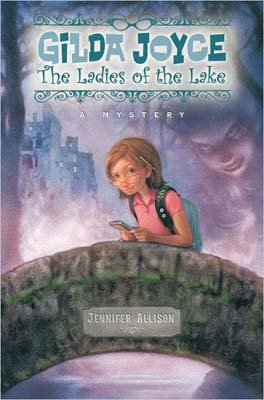
You thought Gilda Joyce was meddlesome, bold, and smartmouthed in Gilda Joyce: Psychic Investigator, the first book in the series. In the second book, Gilda Joyce: The Ladies of the Lake, Gilda brings these characteristics to a classic setting for mean girls and mysterious doings—an old, creaky Catholic girls' school called Our Lady of Sorrows.
With the same humor-tempered-by-seriousness that Jennifer Allison brought to the first book, this second book brings us yet another engaging Gilda Joyce adventure. Though it didn't have quite the same wonderful balance of Gilda recovering from her father's death at the same time she throws herself into solving a ghostly mystery, hiding her sorrow with humor and investigative passion, The Ladies of the Lake is still a highly enjoyable read.
Why is everyone at Our Lady of Sorrows so reluctant to talk about a girl who drowned in the lake a few years ago? Is Gilda's new friend Tiara really tormented by ghosts, or is she just looking for attention? Are Gilda's incessant questions about the mysterious drowning going to ruin her chance at making friends at this small, cliquish girls' school? And will she risk making all-out enemies of the most popular coterie of seniors?
Of course, the answer to the last question is yes, as Gilda forges ahead to solve the mystery at any cost. What I love about these books is that they're open-ended about the existence of paranormal phenomena—the mystery and its solution aren't dependent on a firm yes or no in that category. This is especially true of the first book; The Ladies of the Lake has a few definite supernatural encounters. But you'll have to read it to find out which ghosts are real, which are faked, and which are only in the minds of the guilty.
I laughed; I sighed; I gasped. I wished I'd written it. Another well-crafted offering from Jennifer Allison.
Good Tidings from the Land of Aquafortis
Remember my jubilation ages ago at getting third place in a YA short story contest? And then I never said anything about it again? That's because I had heard second- or third-hand that one of the editors at Blooming Tree Press--the publisher who is putting together the anthology of contest winners--had left her job, and therefore the remaining editors were suddenly swamped. At that point I had been very discouraged because I'd received a phone message from Blooming Tree early in the year. When I finally touched base with them, they said the anthology would get going in June or July 2006, but I never heard anything more. When I got the information about them being short an editor, I tried to resign myself to the idea that maybe it just wasn't going to pan out. Maybe my first real fiction publication was not ever going to make it into print.
But yesterday I came home to a message on my answering machine...from Blooming Tree. They are proceeding with the anthology. I spoke to the editor today and she'll be sending me an actual, physical contract. YAAAAY!!! And my story will be one of only 5 or 6 stories, she says. Perhaps now is the time to start planning my viral marketing campaign. (Those of you who've ever heard me ranting about my fabulous experiences in corporate marketing--for teen-oriented websites, no less--will have detected the towering level of sarcasm in that last statement.)
But yesterday I came home to a message on my answering machine...from Blooming Tree. They are proceeding with the anthology. I spoke to the editor today and she'll be sending me an actual, physical contract. YAAAAY!!! And my story will be one of only 5 or 6 stories, she says. Perhaps now is the time to start planning my viral marketing campaign. (Those of you who've ever heard me ranting about my fabulous experiences in corporate marketing--for teen-oriented websites, no less--will have detected the towering level of sarcasm in that last statement.)
October 15, 2006
Random Acts of Imperialism (loosely YA oriented)
So, the big wheeze our way is some spat about an SF city supe having a child with a friend. Of the friends, one is gay, the other lesbian, and they are neither married nor in a relationship (obviously) and the discussion is about what constitutes a family that is strong and solid and appropriate for kids. One talk radio commentator stated quite correctly that children are not a social experiment. Kudos to that thought. But as to what else is needful to provide a good home environment and stable life... ? That is open to discussion yet, I would think.
So, now to my real point: in the world of the glitterati, it's Adopt-An-African-Young Adult month (apprently I did not receive the memo), and now that certain celebrated personages are jumping on the Bag A Brown Baby Bandwagon (just wait - as Big A, little A says, "literature" on the topic will be forthcoming!), Mitali has had a few comments about a recent Washington Post article on the effect isolating a child from its home-turf can have upon its development. She raises some deeply "Hmmm!" ful points. The word 'apartheid' is used. Read. Think. Enjoy your weekend.
So, now to my real point: in the world of the glitterati, it's Adopt-An-African-Young Adult month (apprently I did not receive the memo), and now that certain celebrated personages are jumping on the Bag A Brown Baby Bandwagon (just wait - as Big A, little A says, "literature" on the topic will be forthcoming!), Mitali has had a few comments about a recent Washington Post article on the effect isolating a child from its home-turf can have upon its development. She raises some deeply "Hmmm!" ful points. The word 'apartheid' is used. Read. Think. Enjoy your weekend.
October 13, 2006
Odds and Ends
You must read Maureen Johnson's blog today. She's writing about Edit Head. It's something like Pregnancy Brain, something people don't like to admit exists, but...
I know everyone else has blogged on it, but today is, in fact, The End, and that adorably lugubrious Daniel Handler, Lemony Snicket's, er, friend, was quoted in the SF Chronicle today as saying that he's surprised to find himself with a completed series on his hands.
What actually caught my attention -- other than the fact that this is a strange and clever series with a huge vocabulary and amusing literary allusions in -- is the number of copies in this first print run. According to the Chron, "The initial print run for "The End" is 2.5 million copies, the largest ever for HarperCollins' Children's Books. "One million is considered really big," said Kyle Good, vice president of corporate communications for Scholastic Books, which released that many copies of the latest "Captain Underpants" book in August."
Two point five MILLION.
It's been a crazy week... and I'm just as glad to see the backside of it. Enjoy your weekend!
I know everyone else has blogged on it, but today is, in fact, The End, and that adorably lugubrious Daniel Handler, Lemony Snicket's, er, friend, was quoted in the SF Chronicle today as saying that he's surprised to find himself with a completed series on his hands.
What actually caught my attention -- other than the fact that this is a strange and clever series with a huge vocabulary and amusing literary allusions in -- is the number of copies in this first print run. According to the Chron, "The initial print run for "The End" is 2.5 million copies, the largest ever for HarperCollins' Children's Books. "One million is considered really big," said Kyle Good, vice president of corporate communications for Scholastic Books, which released that many copies of the latest "Captain Underpants" book in August."
Two point five MILLION.
I've learned a bit about print runs this week, as I've read up on contracts. Most authors receive 10% royalties on the first twenty thousand copies of their novel, and then there is something called an 'escalator,' wherein the contract may state that the author then receives 12.5% royalties for any number thereafter. At least I'm told that this is industry standard for a first novel, and it is pretty much the same over the board. I imagine that Lemony... er, Handler, even got that amount on his first novel, as HarperCollins only bought the first one, despite knowing that Snicket intended to write thirteen. I guess they felt safer that way, not knowing how such decidedly savage books were going to do. Of course things are different now, to which I can only say, YAY! since it's someone other than JK Rowling making that kind of dough (no disrespect for her, but other people can write), and I am happy to note that Handler is still planning on writing more kid books. I look forward to seeing what other droll tales he can produce.
"The Quills, an initiative launched with the support of Reed Business Information, is designed to be an industry qualified "consumers choice" awards program for books, honoring the current titles readers deem most entertaining and enlightening."
Okay. Admittedly, there are always questions about awards. I don't get the 'why?' of the Newbery most years - I can't pick a winner to save my life, nor can most people, several of whom are still bewildered about last year's honoree. Today, most of us are still scratching our heads at the dubious Quills awarded (ELDEST!? Over The Book Thief?!!? Rachel RAY over Julia CHILD!?!?!? Gaaaah! Are they INSANE!?!?! Oh, wait. This is a POPULARITY contest. Not a literary one. And note that they produced no statistics for the number of people who voted? Did anyone who can READ vote?? Oh, never mind...) this past week. But my question is, aside from the statuette, what do they win? For all of the "populist sensibility with Hollywood-style glitz " of which we are meant to partake October 28th with the televised Quills presentation, who is profiting from this? Where's the moolah? That's the question...
"The Quills, an initiative launched with the support of Reed Business Information, is designed to be an industry qualified "consumers choice" awards program for books, honoring the current titles readers deem most entertaining and enlightening."
Okay. Admittedly, there are always questions about awards. I don't get the 'why?' of the Newbery most years - I can't pick a winner to save my life, nor can most people, several of whom are still bewildered about last year's honoree. Today, most of us are still scratching our heads at the dubious Quills awarded (ELDEST!? Over The Book Thief?!!? Rachel RAY over Julia CHILD!?!?!? Gaaaah! Are they INSANE!?!?! Oh, wait. This is a POPULARITY contest. Not a literary one. And note that they produced no statistics for the number of people who voted? Did anyone who can READ vote?? Oh, never mind...) this past week. But my question is, aside from the statuette, what do they win? For all of the "populist sensibility with Hollywood-style glitz " of which we are meant to partake October 28th with the televised Quills presentation, who is profiting from this? Where's the moolah? That's the question...
It's been a crazy week... and I'm just as glad to see the backside of it. Enjoy your weekend!
October 12, 2006
Cheers and Cogitations
Kudos, kudos, kudos to the cool kids at Not Your Mother's Bookclub who are mentioned with many props in this week's PW! NYMBC loves YA authors and YA readers and bring the two together in some truly innovative ways. This week they're supporting San Francisco's literary festival, Litquake with a meet-the-author thing that looks like fun. Congrats, NYMBC - may your tribe increase.
Further kudos to the proud Mommy over at Wands & Worlds, whose son's imagine-the-ending to the Snicket Saga was chosen to be printed by the Washington Post. The kid not only writes in complete sentences, he's ... hilarious! Cheers! Another writer on the horizon! Mazel tov to both!
I don't know from manga, but...Via A Chair, A Fireplace and a Tea Cozy, this Anne Frank edu-manga thing looks like a big, fat, NOOOO! to me. And I am a little stunned, too, at the idea of a pop-up book on the Irish potato famine... Exactly what could you pop-up to make it more... um... readable? In my mind, pop-ups are supposed to be ...fun? However! I will wait like everyone else and read the book before I comment. Any further. Ahem.
A post I'm late discovering is via Tockla's World of Children's Lit and it's on mixed-race kids books. This is of special interest to me because my book originally had a mixed-race protagonist, and my agent suggested that since I'm "plain old African American" I should take that out.
Hmph.
I was fairly steamed, to say the least, especially since a nice letter I got from a senior editor at Jump at the Sun who called it "refreshing" that the character was not in any way concerned that she was mixed race, and that the novel did not necessarily concern race. But the real question? Is anybody really "plain old" anything? And I wonder now if I did wrong to change my character. Oh well. As I write more, I learn more, I guess...
An interesting discussion at AS IF on manga and graphic novels and their, er, graphic content. Some want to ban all graphic novels. Not really the answer!? Also on this same fascinating weblog, Laurie Halse Anderson posts her approach to dealing with challenges to her book, Speak, and states she has "no business insisting" that her book is taught anywhere. Very enlightening and enlightened thoughts.
One of the things I love deeply about literature is that it can bridge cultures and traditions and backgrounds and people, and bring together humans in a commonality of experience that transcends political rhetoric and polarizing speeches. Music, too, can be as fluid and versatile as literature, so today's "check it out because it is heart-touching and energizing and hopeful and positive" site of the day is NPR, whose lovely pieces from Lullabies from the Axis of Evil will make you want to add this CD of Iranian, Iraqi and North Korean lullabies to your repertoire so you can do some peaceful meditative yoga stretches and deep thinking while it plays (if you have no babies to sing to sleep). The CD is about a year old, but the short stories and poetry found in the book by the same title (and aren't YA) was just released today. The sample story I read is equally beautiful, and pulls my heart to a world that I don't quite understand, yet is so close to my own understanding of things that I feel I can reach across the chasm and touch it. Music and books: just another way to save the world.
Further kudos to the proud Mommy over at Wands & Worlds, whose son's imagine-the-ending to the Snicket Saga was chosen to be printed by the Washington Post. The kid not only writes in complete sentences, he's ... hilarious! Cheers! Another writer on the horizon! Mazel tov to both!
I don't know from manga, but...Via A Chair, A Fireplace and a Tea Cozy, this Anne Frank edu-manga thing looks like a big, fat, NOOOO! to me. And I am a little stunned, too, at the idea of a pop-up book on the Irish potato famine... Exactly what could you pop-up to make it more... um... readable? In my mind, pop-ups are supposed to be ...fun? However! I will wait like everyone else and read the book before I comment. Any further. Ahem.
A post I'm late discovering is via Tockla's World of Children's Lit and it's on mixed-race kids books. This is of special interest to me because my book originally had a mixed-race protagonist, and my agent suggested that since I'm "plain old African American" I should take that out.
Hmph.
I was fairly steamed, to say the least, especially since a nice letter I got from a senior editor at Jump at the Sun who called it "refreshing" that the character was not in any way concerned that she was mixed race, and that the novel did not necessarily concern race. But the real question? Is anybody really "plain old" anything? And I wonder now if I did wrong to change my character. Oh well. As I write more, I learn more, I guess...
An interesting discussion at AS IF on manga and graphic novels and their, er, graphic content. Some want to ban all graphic novels. Not really the answer!? Also on this same fascinating weblog, Laurie Halse Anderson posts her approach to dealing with challenges to her book, Speak, and states she has "no business insisting" that her book is taught anywhere. Very
enlightening and enlightened thoughts.One of the things I love deeply about literature is that it can bridge cultures and traditions and backgrounds and people, and bring together humans in a commonality of experience that transcends political rhetoric and polarizing speeches. Music, too, can be as fluid and versatile as literature, so today's "check it out because it is heart-touching and energizing and hopeful and positive" site of the day is NPR, whose lovely pieces from Lullabies from the Axis of Evil will make you want to add this CD of Iranian, Iraqi and North Korean lullabies to your repertoire so you can do some peaceful meditative yoga stretches and deep thinking while it plays (if you have no babies to sing to sleep). The CD is about a year old, but the short stories and poetry found in the book by the same title (and aren't YA) was just released today. The sample story I read is equally beautiful, and pulls my heart to a world that I don't quite understand, yet is so close to my own understanding of things that I feel I can reach across the chasm and touch it. Music and books: just another way to save the world.
October 11, 2006
Graphic Novels Getting Their Due
I heard a news brief on NPR this morning about today's announcement of the National Book Award finalists (winners to be announced Nov. 15). Among the nominees for Young People's Literature, which seems to be code for Middle Grade/YA, are Feed author M.T. Anderson's mouthful of a book The Astonishing Life of Octavian Nothing, Traitor to the Nation, Vol. 1: The Pox Party; a new book I'm looking forward to reading by Patricia McCormick, author of Cut; and a graphic novel! Yay! by Gene Luen Yang called American Born Chinese.
It's amazing to see graphic novels getting recognized by venerable literary organizations. There are so many great graphic novelists and artist/writers telling their stories through words and images together, in a dizzying array of styles, and it's a genre--or rather, medium--that deserves attention in the U.S. (In Japan, comics don't seem to have the same "kids and geeks only" reputation they have here--we saw a lot of well-dressed businessmen reading graphic novels on the train.) Incidentally, for those interested in creating graphic novels, I found an interesting link via Gene Yang's website about the Xeric Foundation, which awards graphic novel self-publishing grants. That's a great idea, despite my suspicion of self-publishing--if you think it's hard to get a novel published, it seems that it's a hundred times more difficult to make it big with a graphic novel. Then again, maybe it won't be so difficult anymore now that authors like Gene Yang, Marjane Satrapi, and Art Spiegelman have brought some great graphic literature into the mainstream.
The Boston Globe/Horn Book Award Winners have also been announced--another prize for Kate DiCamillo's latest, which I'm ashamed to say I haven't had a chance to read yet. An interesting website for children's publishing information (which I may have already posted and, if so, I apologize) is JacketFlap.com, which offers "the world's largest and most comprehensive database of statistics and information on children's book publishers. The site helps writers most optimally find the publishers that are publishing new authors and that publish titles in the writer's category of work."
If you have a ton of money and some time coming up this month, the Highlights Foundation is offering a new Writing Novels for Young Adults workshop with Rich Wallace. It's a small workshop, so sign up soon if you want to go. I personally do not have $895 plus plane flight to Pennsylvania, so... Jack Prelutsky has been named the nation's first Children's Poet Laureate by the Poetry Foundation, and high-school staple George Orwell has been lauded in a recent NPR story.
It's amazing to see graphic novels getting recognized by venerable literary organizations. There are so many great graphic novelists and artist/writers telling their stories through words and images together, in a dizzying array of styles, and it's a genre--or rather, medium--that deserves attention in the U.S. (In Japan, comics don't seem to have the same "kids and geeks only" reputation they have here--we saw a lot of well-dressed businessmen reading graphic novels on the train.) Incidentally, for those interested in creating graphic novels, I found an interesting link via Gene Yang's website about the Xeric Foundation, which awards graphic novel self-publishing grants. That's a great idea, despite my suspicion of self-publishing--if you think it's hard to get a novel published, it seems that it's a hundred times more difficult to make it big with a graphic novel. Then again, maybe it won't be so difficult anymore now that authors like Gene Yang, Marjane Satrapi, and Art Spiegelman have brought some great graphic literature into the mainstream.
The Boston Globe/Horn Book Award Winners have also been announced--another prize for Kate DiCamillo's latest, which I'm ashamed to say I haven't had a chance to read yet. An interesting website for children's publishing information (which I may have already posted and, if so, I apologize) is JacketFlap.com, which offers "the world's largest and most comprehensive database of statistics and information on children's book publishers. The site helps writers most optimally find the publishers that are publishing new authors and that publish titles in the writer's category of work."
If you have a ton of money and some time coming up this month, the Highlights Foundation is offering a new Writing Novels for Young Adults workshop with Rich Wallace. It's a small workshop, so sign up soon if you want to go. I personally do not have $895 plus plane flight to Pennsylvania, so... Jack Prelutsky has been named the nation's first Children's Poet Laureate by the Poetry Foundation, and high-school staple George Orwell has been lauded in a recent NPR story.
October 10, 2006
Guilty Pleasures: Lulu Dark
I must have been suffering from some kind of dementia, because I found myself picking up the second Lulu Dark novel in as many weeks! But, like candy, the highly aggravating girl detective is sort of addictive, even as she makes your teeth ache. Lulu Dark and the Summer of the Fox was actually quite entertaining. Lulu had already decided that the last detective shtick was a fluke, and that her real destiny lay in... well, lying around and doing nothing. Unfortunately, her mother came to town, which threw her off her stride. Lulu's mother, Isabelle, is an aspiring starlet... unfortunately, she's completely random and self-centered, and makes Lulu look normal. When she disappears, at first Lulu isn't excited. Her mother tends to be a dork like that. But then, when she shows up an awards show, and steals a statuette from somebody whoms she's supposedly taken under her wing... well, she's acting like the ringleader of a group of masterminds. SO not Isabelle's style. Lulu sighingly takes to the skulking around doorways and having guns pointed at her -- again. But really -- you won't guess your way out of this plot, so cheers, give it a shot, open the box of bonbons and dive in.
Wildly Successful Adventure!
Trouble rides a fast horse, cowpoke, and if you're not careful, trouble will run you right over. That's what 11-year-old Sallie and her  sister, Maude find out when their aunt is shot dead right in front of them. Orphaned for the second time in their lives, before they know it, they've lost everything -- their Aunt's house, which wasn't paid off, their independence, as they're moved into the Minister's house as unpaid servants, her quilts and clothes, which the minister's wife uses freely and puts into the missionary bundles for poor people, and their freedom -- as the minister tries to marry off Maude. Sallie is furious. She'd rather read dime novels than do anything else on earth, but even an old man who brings her some to sweeten her up can't just off and marry her sister -- she's only sixteen, and he's old! So, they cut off their long hair, take an old nag and the minister's horse -- leaving their fat milk cow in trade -- and head for the hills in search of their Uncle Arlen, whom Aunt never much approved of -- in Independence, Missouri. It's 1869 in the wild, wild west.
Sallie uses all she's learned from the dime novel Westerns she inhales to keep their pursuers off of their trail, but it's not easy to be on your own in the wild. The girls accept help from a shady gentleman and find that newspapers are laying out a trail of blame that implicates Maude first in horse theft, then in -- murder!? I can't tell you too much without giving away too many details of a thoroughly delightful Western that you'll really love. The Misadventures of Maude March is not just a great story, but it's a story about the power of information -- or misinformation -- in the media that applies to today, and the fact that what readers think they know, because they read it in a magazine or saw it on TV -- is probably all made up.
sister, Maude find out when their aunt is shot dead right in front of them. Orphaned for the second time in their lives, before they know it, they've lost everything -- their Aunt's house, which wasn't paid off, their independence, as they're moved into the Minister's house as unpaid servants, her quilts and clothes, which the minister's wife uses freely and puts into the missionary bundles for poor people, and their freedom -- as the minister tries to marry off Maude. Sallie is furious. She'd rather read dime novels than do anything else on earth, but even an old man who brings her some to sweeten her up can't just off and marry her sister -- she's only sixteen, and he's old! So, they cut off their long hair, take an old nag and the minister's horse -- leaving their fat milk cow in trade -- and head for the hills in search of their Uncle Arlen, whom Aunt never much approved of -- in Independence, Missouri. It's 1869 in the wild, wild west.Sallie uses all she's learned from the dime novel Westerns she inhales to keep their pursuers off of their trail, but it's not easy to be on your own in the wild. The girls accept help from a shady gentleman and find that newspapers are laying out a trail of blame that implicates Maude first in horse theft, then in -- murder!? I can't tell you too much without giving away too many details of a thoroughly delightful Western that you'll really love. The Misadventures of Maude March is not just a great story, but it's a story about the power of information -- or misinformation -- in the media that applies to today, and the fact that what readers think they know, because they read it in a magazine or saw it on TV -- is probably all made up.
500 Year Old Mysteries
Hero is starting the sixth grade, and she knows it's going to be bad. On the first day of school, some girl blurts out that Hero is the name her family calls their dog. Hero, and her sister, Beatrice, are named after characters in Much Ado About Nothing, which is a Shakespeare play, but that's not the point, in Hero's mind. Who cares about Shakespeare, except for her Dad, who is totally obsessed? Why can't she have a normal name, and a normal time in school like her sister, Beatrice, who is so pretty and popular that she gets just about everything she wants? But then, something takes Hero's attention away from her name and the teasing at school. The neighbor next door tells her that there may be a 500 year old diamond hidden in her house! Hero is determined to find it, and to shed the layer of anonymity and ordinariness that characterizes her life. She's not much of a hero, maybe, but she's a crack shot at solving a mystery. Oddly enough, the cutest boy in the whole middle school is suddenly willing and interested in helping her? Why? Is it because he's the son of the chief of police? Is there more to this diamond thing than meets the eye? A mystery within a larger mystery, Shakespeare's Secret is a middle grade novel that will keep younger readers guessing until the end.
The Aiken Wolves series
The Wolves of Willoughby Chase is a thoroughly dark and gothic tale, full of gorgeous descriptions and thoroughly evil henchmen, wild wolves and icy cold. Sylvia is a poor girl, coming to live with her wealthy cousin, Bonnie, where the contrast with her own life is wildly different - sumptuous and plentiful, where thinness and want has been her closest companion. But almost as soon as she arrives, in deep snow, with snarling wolves and gunmen escorting her into the safety of the gates -- her Aunt and Uncle are off to find a rest cure for her Aunt, and the sinister governess, Miss Slighcarp, has charge of them both. And horrors -- the Aunt and Uncle are reported wrecked at sea. Instantly, Miss Slighcarp begins firing servants, taking over the estate, and wearing Bonnie's mother's clothes. But Bonnie isn't about to take anything lying down. Though she and her cousin, Sylvia, are sent off to the poorhouse, they determine to escape, and set things right. An exciting story which has kept its wonderful sense of fun even though it was first published in 1962.
Blackhearts in Battersea introduces readers Simon, a boy who wants to be an artist, and is seeking his friend Dr. Field, who has promised him a position at his art school, only he's ...mysteriously disappeared! Simon moves in with Dr. Field's former landlords, the Twite family, and their irrepressibly spirited daughter, Dido, who is full of secrets and a bit lonely and ill-treated in her household. Simon meets the Duke of Battersea, who is somewhat mad, his nephew, who is sullen and snappish and wishes he didn't have to become a famous artiste like his grandfather, and reunites with his friend Sophie, the Duchess' maid, who keeps saving the Batterseas from being assassinated by political opponents. It's a wild adventure, full of random happenings all tying together in a complete whole that keeps readers guessing until the end.
Nightbirds on Nantucket is another story about Dido Twite, who wakes up from a ten month sleep and finds herself... onboard a whaling ship out to sea. She misses England immediately! The cabin boy, Nate, is very kind, but there's craziness aboard. For one thing, the Captain, a serious Quaker gentleman, is obsessed with finding a pink whale. He's sure he's seen it, and his terrified daughter, Dutiful Penitence, who has locked herself into his stateroom, is sure he's crazy, and that she, like her mother, is going to die onboard the whaler forever chasing the whale. Captain Casket urges Dido to help his daughter get more courage... and Dido really works on it. She helps 'Pen' get over her fear of her father, her fear of the ship, and her fear of her Terrible Aunt Tribulation, whom she knows her father is going to force her to live with, so he can get back to whaling. Then, just as Pen finally finds her courage, her father dumps the girls off with friends of his departed wife, the moment they touch land and he hears of another pink whale sighting. It's enough to tick Dido off for sure. She decides to head for the Captain's property, and never mind Aunt Trib -- who turns out to be a skinny and mean-spirited woman, one who Dido suspects immediately isn't whom she says she is. More political intrigue, a huge gun, several daring escapes, and the adventure ends safely and happily for all involved, including the pink whale, which actually exists.
Joan Aiken is a stupendous writer, aside from being amazingly prolific, her adventure tales really hold up over time. I truly enjoyed them, and can't wait to seek out more.
Blackhearts in Battersea introduces readers Simon, a boy who wants to be an artist, and is seeking his friend Dr. Field, who has promised him a position at his art school, only he's ...mysteriously disappeared! Simon moves in with Dr. Field's former landlords, the Twite family, and their irrepressibly spirited daughter, Dido, who is full of secrets and a bit lonely and ill-treated in her household. Simon meets the Duke of Battersea, who is somewhat mad, his nephew, who is sullen and snappish and wishes he didn't have to become a famous artiste like his grandfather, and reunites with his friend Sophie, the Duchess' maid, who keeps saving the Batterseas from being assassinated by political opponents. It's a wild adventure, full of random happenings all tying together in a complete whole that keeps readers guessing until the end.
Nightbirds on Nantucket is another story about Dido Twite, who wakes up from a ten month sleep and finds herself... onboard a whaling ship out to sea. She misses England immediately! The cabin boy, Nate, is very kind, but there's craziness aboard. For one thing, the Captain, a serious Quaker gentleman, is obsessed with finding a pink whale. He's sure he's seen it, and his terrified daughter, Dutiful Penitence, who has locked herself into his stateroom, is sure he's crazy, and that she, like her mother, is going to die onboard the whaler forever chasing the whale. Captain Casket urges Dido to help his daughter get more courage... and Dido really works on it. She helps 'Pen' get over her fear of her father, her fear of the ship, and her fear of her Terrible Aunt Tribulation, whom she knows her father is going to force her to live with, so he can get back to whaling. Then, just as Pen finally finds her courage, her father dumps the girls off with friends of his departed wife, the moment they touch land and he hears of another pink whale sighting. It's enough to tick Dido off for sure. She decides to head for the Captain's property, and never mind Aunt Trib -- who turns out to be a skinny and mean-spirited woman, one who Dido suspects immediately isn't whom she says she is. More political intrigue, a huge gun, several daring escapes, and the adventure ends safely and happily for all involved, including the pink whale, which actually exists.
Joan Aiken is a stupendous writer, aside from being amazingly prolific, her adventure tales really hold up over time. I truly enjoyed them, and can't wait to seek out more.
Poor, Tragic Mary
Author Marilyn Sachs -- founder of the San Francisco branch of the Jane Austen Society -- has written a novel about our Jane! First Impressions tells the story of Alice, who has just had to read Pride & Prejudice, and who hates it so much that she describes it as a "tragedy!" Alice hates how Austen treats Mary, the plain and downplayed middle child who is basically laughed at, and  never gets a gentleman to pay her any mind. Alice - a middle child lost in a big, noisy family herself - can't concentrate on the plot, so great is her angst about poor Mary, who is overlooked and underappreciated, much like Alice herself. Consequently, Alice turns the paper in, decrying Austen as an awful author, and the novel as terrible, and ...gets a C+. Alice is SHOCKED! Alice doesn't do C's, so her teacher's giving her a second chance over Christmas break to read the book again, and try her hand at the paper one more time. Ugh! It's all Alice can do bring herself to crack it open. The only way she can cope is to imagine the story... different. Better. Alice starts reading, and changes the book world. Christmas shopping at the mall, she runs into a guy named Kevin, whom she's known forever, and he offers to read along with her, to make the assignment more bearable. Alice changes her fictional life, and finds her real life is changing too. Kevin is cool -- way cooler than she'd ever noticed. Suddenly everything is like an Austen novel - subtle hints and real-life romances. Alice starts to wonder if maybe this Jane Austen thing isn't as bad as she thinks.
This is a "quiet" novel, in that there's no huge drama, but it really works. It's a fun and creative introduction for readers to the work of Jane Austen, and it's a reminder that what you think you already 'know' is sometimes totally wrong, and that life can hold surprises.
never gets a gentleman to pay her any mind. Alice - a middle child lost in a big, noisy family herself - can't concentrate on the plot, so great is her angst about poor Mary, who is overlooked and underappreciated, much like Alice herself. Consequently, Alice turns the paper in, decrying Austen as an awful author, and the novel as terrible, and ...gets a C+. Alice is SHOCKED! Alice doesn't do C's, so her teacher's giving her a second chance over Christmas break to read the book again, and try her hand at the paper one more time. Ugh! It's all Alice can do bring herself to crack it open. The only way she can cope is to imagine the story... different. Better. Alice starts reading, and changes the book world. Christmas shopping at the mall, she runs into a guy named Kevin, whom she's known forever, and he offers to read along with her, to make the assignment more bearable. Alice changes her fictional life, and finds her real life is changing too. Kevin is cool -- way cooler than she'd ever noticed. Suddenly everything is like an Austen novel - subtle hints and real-life romances. Alice starts to wonder if maybe this Jane Austen thing isn't as bad as she thinks.This is a "quiet" novel, in that there's no huge drama, but it really works. It's a fun and creative introduction for readers to the work of Jane Austen, and it's a reminder that what you think you already 'know' is sometimes totally wrong, and that life can hold surprises.
The Tuesday Round-up: Interviews and More
Cheers! I've just discovered the Neil Gaiman interview at Bookslut! And it's just another click to the montly Booksluts in Training piece, which features some great YA titles " that fit perfectly into the October sensibility. Adventures, mysteries, even thrillers are here but all have one thing in common: something wicked lurks within their pages and makes the readers cautious about turning each and every page." Good reads for crisp autumn nights.
Book Buds is relaunching and having a drawing for two cool books to celebrate. Enter the drawing by answering this question: What would you say upon climbing down from the hatch of your space rover, and setting foot on Mars? (And no, you can't say that "One small step" thing, that's been done.) This 'out of this world' contest ends October 18th, so start thinking now...
Hey, have you dropped by Competizione? I love web contests, and these guys advertise them all. Check frequently!
The Guardian has a round-up of the Top 10 Characters from Children's Historical Fiction. I find myself a bit chagrined at how many of these books I've never even read! Meanwhile, if you also haven't read any of the novels up for the UK's Man Booker Award, never fear - there's the Guardian's Digested Version to boil them all down to a couple of paragraphs for you. That, of course, would never work with a YA book...
Sigh. Yet another celeb writes a kid's book -- this time Gloria Estefan is throwing her spangled spandex um... hat into the ring. AND her book comes with a CD. Of course it does.
Via Bookshelves of Doom, what's got to be the oddest book challenge, EVER... Truly. Pre-Christian, Sumerian texts, now newly translated into English aren't stories of stick figures and dirt. Who knew?
If you haven't read Pam Coughlan's piece inThe Edge of the Forest on booktalking middle school-aged kids, do. Her tips can carry over as good info for doing author visits, too.
I don't often get to read the School Library Journal, but an article by Caroline Lehman discussing depictions of sexual abuse in YA literature really caught my attention. Lehman's new nonfiction book, Strong at the Heart has given her some insights into these hurtful incidents in the lives of young men and women, and I appreciated her taking a look at the literature we write that speaks about these topics. As YA authors, some of who want to write about these things in a fictionalized way, it's important to, as Jane Yolen says "write the true..." Is YA literature on sexual abuse really helpful? Does it present a true reflection of the lives and the stories of the abused? Does it perpetuate stereotypes in its depictions of "victims" and "heroes"? There's a lot in Lehman's thoughtful piece to consider. Check it out.
Book Buds is relaunching and having a drawing for two cool books to celebrate. Enter the drawing by answering this question: What would you say upon climbing down from the hatch of your space rover, and setting foot on Mars? (And no, you can't say that "One small step" thing, that's been done.) This 'out of this world' contest ends October 18th, so start thinking now...
Hey, have you dropped by Competizione? I love web contests, and these guys advertise them all. Check frequently!
The Guardian has a round-up of the Top 10 Characters from Children's Historical Fiction. I find myself a bit chagrined at how many of these books I've never even read! Meanwhile, if you also haven't read any of the novels up for the UK's Man Booker Award, never fear - there's the Guardian's Digested Version to boil them all down to a couple of paragraphs for you. That, of course, would never work with a YA book...
Sigh. Yet another celeb writes a kid's book -- this time Gloria Estefan is throwing her spangled spandex um... hat into the ring. AND her book comes with a CD. Of course it does.
Via Bookshelves of Doom, what's got to be the oddest book challenge, EVER... Truly. Pre-Christian, Sumerian texts, now newly translated into English aren't stories of stick figures and dirt. Who knew?
If you haven't read Pam Coughlan's piece inThe Edge of the Forest on booktalking middle school-aged kids, do. Her tips can carry over as good info for doing author visits, too.
I don't often get to read the School Library Journal, but an article by Caroline Lehman discussing depictions of sexual abuse in YA literature really caught my attention. Lehman's new nonfiction book, Strong at the Heart has given her some insights into these hurtful incidents in the lives of young men and women, and I appreciated her taking a look at the literature we write that speaks about these topics. As YA authors, some of who want to write about these things in a fictionalized way, it's important to, as Jane Yolen says "write the true..." Is YA literature on sexual abuse really helpful? Does it present a true reflection of the lives and the stories of the abused? Does it perpetuate stereotypes in its depictions of "victims" and "heroes"? There's a lot in Lehman's thoughtful piece to consider. Check it out.
October 09, 2006
Bet You Missed Me!
Thank God it's Monday and all the partying is over. I go away for a long and torturous wedding weekend (Sister of the Bride and Coordinator of Darn-Near-All -- how the heck did that happen!?) and there's so much I've missed!
First, Yay for Jay at Disco Mermaids. There was a bidding war for his novel, and he's a happy, happy man... Via Book Buds, a funny new website called Three Silly Chicks is hosting a contest for a book giveaway. This blog is dedicated to books of humor, which is really fun. Meanwhile, Bookshelves of Doom rightly mocks the charm-free prose stylings of Kylie Minogue's Showgirl Princess, which sounds awfully like a horse's name, only her book doesn't have the ability to jump that high, or be nearly as entertaining... And speaking of entertaining, Mother Reader, dead batteries, the National Book Festival and Mo Willems makes for quite a funny read.
Via Wands and Worlds, the last of the hilarious Vile Videos are up. Sing along with the cue cards, kids! The End is nigh... Friday the 13th!
NPR reported this weekend that though author Daniel Pinkwater's novel won't be out until next April, since August, he's been posting a new chapter of The Neddiad online every Tuesday! The book includes "swashbuckling actors, omniscient shamans, hungry ghosts, mysterious turtles, and an elephant or two," which sounds promising. What's posted is Pinkwater's his actual manuscript - with a few typos and all, but what a great way to get readers excited!
Another giveaway of YA books, listen up! Via E. Lockhart's blog -- the fabulous people at YA Books Central are having a drawing by Oct. 31 to give away 10 copies of The Boy Book! Just click on the link, answer a simple (but fun) question, and you're in the drawing.
And finally, just because it's cool, check out the Garden Bubble Cam. During daylight hours, you can push a button on your keyboard, and make the bubble machine work, miles away in South Florida. The site tells you how/why it works.
Happy Monday!
First, Yay for Jay at Disco Mermaids. There was a bidding war for his novel, and he's a happy, happy man... Via Book Buds, a funny new website called Three Silly Chicks is hosting a contest for a book giveaway. This blog is dedicated to books of humor, which is really fun. Meanwhile, Bookshelves of Doom rightly mocks the charm-free prose stylings of Kylie Minogue's Showgirl Princess, which sounds awfully like a horse's name, only her book doesn't have the ability to jump that high, or be nearly as entertaining... And speaking of entertaining, Mother Reader, dead batteries, the National Book Festival and Mo Willems makes for quite a funny read.
Via Wands and Worlds, the last of the hilarious Vile Videos are up. Sing along with the cue cards, kids! The End is nigh... Friday the 13th!
NPR reported this weekend that though author Daniel Pinkwater's novel won't be out until next April, since August, he's been posting a new chapter of The Neddiad online every Tuesday! The book includes "swashbuckling actors, omniscient shamans, hungry ghosts, mysterious turtles, and an elephant or two," which sounds promising. What's posted is Pinkwater's his actual manuscript - with a few typos and all, but what a great way to get readers excited!
Another giveaway of YA books, listen up! Via E. Lockhart's blog -- the fabulous people at YA Books Central are having a drawing by Oct. 31 to give away 10 copies of The Boy Book! Just click on the link, answer a simple (but fun) question, and you're in the drawing.
And finally, just because it's cool, check out the Garden Bubble Cam. During daylight hours, you can push a button on your keyboard, and make the bubble machine work, miles away in South Florida. The site tells you how/why it works.
Happy Monday!
October 04, 2006
PreK Books, Anyone?
I'm thinking about preschoolers...
Now, there's a topic which doesn't often get broached on Writing YA, but preKindergarteners are young adults... just very, very, very wee ones. I have the opportunity to support a nonprofit Early Childhood Education Center by buying books for these wee young adults, ages 2 - 4! Buying books is my absolute favorite thing to do, and this Center, which serves low-income families, some of whom are non-English speaking or developmentally delayed, has a small operating budget and a bigger wishlist, as so many schools do. Now, here's where you come in -- I need help with some titles to pick up and research! Because the Center has purged itself of commercially related books (no Elmo, nor Clifford, nor any licensed character who has a doll, cartoon, video, or TV series, in other words), and is concentrating on multicultural books, including those about Earth Sciences, Social Studies, Physical Sciences, Numbers and Colors -- all those good things kids need to help them get a grip on the world, this is going to take a little more research on my part.
If the Librarians Fabulosas and others have any thoughts on this, please reply -- I'm making a list and already have: And Here's to You, David Elliot, Candlewick Press; The Big Orange Splot, and a couple of others which have impressed me... but I don't really know from PreK, so any input welcome!
Now, there's a topic which doesn't often get broached on Writing YA, but preKindergarteners are young adults... just very, very, very wee ones. I have the opportunity to support a nonprofit Early Childhood Education Center by buying books for these wee young adults, ages 2 - 4! Buying books is my absolute favorite thing to do, and this Center, which serves low-income families, some of whom are non-English speaking or developmentally delayed, has a small operating budget and a bigger wishlist, as so many schools do. Now, here's where you come in -- I need help with some titles to pick up and research! Because the Center has purged itself of commercially related books (no Elmo, nor Clifford, nor any licensed character who has a doll, cartoon, video, or TV series, in other words), and is concentrating on multicultural books, including those about Earth Sciences, Social Studies, Physical Sciences, Numbers and Colors -- all those good things kids need to help them get a grip on the world, this is going to take a little more research on my part.
If the Librarians Fabulosas and others have any thoughts on this, please reply -- I'm making a list and already have: And Here's to You, David Elliot, Candlewick Press; The Big Orange Splot, and a couple of others which have impressed me... but I don't really know from PreK, so any input welcome!
October 03, 2006
Riddle Me This: What's with All the Diary Entries?

Epistolary novels are so hit-or-miss for me. It's not an easy format to do well—letters can seem contrived or antiquated, diary entries can be overworked and overdone, and e-mail or IM exchanges can quickly become tiresome and irritating. That being said, I love to see good examples of the form. They can be insightful, intriguing, and provide the fascination of sneaking a peek at someone else's mind. (One of my favorite examples is Nick Bantock's Griffin and Sabine books.)
The Riddles of Epsilon, by Christine Morton-Shaw, takes some chances with the epistolary form—ambitiously presenting a novel entirely in diary entries and IM conversations—but I'm not sure it was entirely successful. For one thing, this is a supernatural suspense novel. It's hard to build suspense and convey the incredulity of the supernatural experiences when limited to the writings (and typings) of a rather superficial and slightly annoying teenage girl. I also have trouble with diary entries in novels in general. Specifically, I often find them too narrative and too long to be believable as diary entries. How many people—even writers—can accurately reproduce entire conversations word for word? Why would one do this all the time? Who writes about their life, as it is happening, as though it is a story? I don't. Maybe I should. And who knows, maybe I'm the only one who doesn't. But I read books like Stephen King's The Stand, which is two inches thick of diary entries, and I just can't suspend my disbelief. (I know, I know; society as we know it came to an end and there wasn't much else to do but write, but STILL. Did this guy lug fifty notebooks around with him the whole time?)
Okay, I'm done with my little rant about diary entries. It's not like I don't use the occasional one in my own writing. And it's an admirable ambition to do a novel of this genre in epistolary from. In many respects this was successful in The Riddles of Epsilon. For one thing, there is a mysterious entity that appears to Jess only when she's in a chat room. Jess has moved with her parents to the small English island of Lume—she's a bit of a troublemaker, and her parents are dealing with issues of their own. An escape to an old house on a quiet island could be just the ticket.
But there's this strange presence called V (not for Vendetta) in the chat room, and as Jess explores the house and the surrounding island, she makes some interesting discoveries about those who used to live there and about the mythology of the island—which might be a little more real than your average myths. In fact, even her parents start to act a little strangely. She finds clues in a mysterious language, and is guided gently by V, who seems to want to help her unravel all these riddles. It's fun to watch Jess puzzle out the creepy clues in the form of poems, songs, and diary entries from some long-ago boy named Sebastian whose experiences seem to have an uncanny resemblance to hers…
I really liked the whole mythology of the island—it has its own strange traditions tied to ancient legends of the past, and these have been nicely done. There are enough scary elements to give a sense of real danger. I wasn't entirely convinced by the role of V—aka Epsilon—if he could pinpoint her to the location of things and tease her along with clues, telling her where to find them and when she was on the wrong track, I didn't see why he didn't just tell her things outright instead of just watching her puzzle out the clues, if things were so dire.
So I did have a few moments where I couldn't suspend my disbelief, but I think a lot of people might enjoy this book. It's a fun, fast read when you get past the quirky form, and there are some truly creepy, suspenseful scenes and some very inventive mythological elements.
October 02, 2006
Moaning Monday
Cranky and sore, I greet the new week! After yanking out the summer garden this weekend to prepare for the autumn kale, all I want to do is sit down with a book and a bath. Instead, I am gadding about online yet again... still trying to take in the latest information from my Secret Agent Man about a possible sale by the end of the week (cross your fingers with me, blogsphere!) Meanwhile, other things on my mind:
Ooh! Yet another online bookfair! Author interviews, new books to explore and more blogs - check it out!
You've likely heard by now that there's been a new Robert Frost poem discovered! I was very excited to hear this, since memorizing Stopping By the Woods on a Snowy Evening was a big deal to me in junior high. Take a listen!
Hilarious picture via Big A little a, which shows, of all things ... a Discworld wedding cake!!! It is gloriously wacky. Apparently, this lady runs Jane's Cakes and lives in North Hampshire, and bakes these fabulous cakes of all kinds... Now, why can't my sister do something interesting like this!? Who needs sheet cake when you can have a universe on the back of four elephants and a gigantic turtle!?
 Finally, a good discussion about SCBWI over at Fuse#8. I guess a lot of people have never heard of SCBWI, but someone is raising some questions about the whole structure and body of the group, whether or not it is non-profit or for-profit, and what the Directors get out of it. Because this group is a governing body which also gives away Golden Kite Awards each year, which may be instrumental in propelling certain authors and/or certain houses to prominence, this question is of merit to some. The prevailing attitude seems to be that one can get out of an organization what one is prepared to put into it... which means I should do a bit more networking!
Happy October! Happy Autumn!
Ooh! Yet another online bookfair! Author interviews, new books to explore and more blogs - check it out!
You've likely heard by now that there's been a new Robert Frost poem discovered! I was very excited to hear this, since memorizing Stopping By the Woods on a Snowy Evening was a big deal to me in junior high. Take a listen!
Hilarious picture via Big A little a, which shows, of all things ... a Discworld wedding cake!!! It is gloriously wacky. Apparently, this lady runs Jane's Cakes and lives in North Hampshire, and bakes these fabulous cakes of all kinds... Now, why can't my sister do something interesting like this!? Who needs sheet cake when you can have a universe on the back of four elephants and a gigantic turtle!?
Finally, a good discussion about SCBWI over at Fuse#8. I guess a lot of people have never heard of SCBWI, but someone is raising some questions about the whole structure and body of the group, whether or not it is non-profit or for-profit, and what the Directors get out of it. Because this group is a governing body which also gives away Golden Kite Awards each year, which may be instrumental in propelling certain authors and/or certain houses to prominence, this question is of merit to some. The prevailing attitude seems to be that one can get out of an organization what one is prepared to put into it... which means I should do a bit more networking!Happy October! Happy Autumn!
I Heard Kind of a Funny Story in the Psych Ward...
This book is a 2006 Cybil Award Nominee for YA Fiction.
I was interested in the subject matter of It's Kind of a Funny Story, because it was about someone's episode in the mental ward of a hospital. I wondered how it could even be a little funny... I mean, it's the hospital... Not amusing. And yet, it is. Kind of.
Craig Gilner's been taking Tae Bo since he was... six. When he was in seventh grade, he determined that he was going to get into Pre-Executive High School, the most prestigious high school in New York. He studied, daily. He gave himself two hour practice tests for the entrance exam, daily. He used his flash cards, daily. He didn't smoke. He didn't drink. He didn't mess around with things like making friends. He stayed ultra-focused on his goal -- getting into the Best School Ever.
And yet, when Craig got into Pre-Executive High School, he felt like he'd hit a wall. Now that he'd made it to his ultimate goal... what next? What else should he be working on to assure that he had The Perfect Life, the one where he worked hard and Made Money and married the Perfect Girl and had the best that life could offer? And, since his best friend Andrew had made it into the school without any of the practice and worry, was Andrew always going to be better than him, and smarter? And, since Craig only made 93% in his grade average, did that mean that he wasn't good enough to succeed in that Perfect Life? And since Nia was dating Andrew, when she'd had a chance to get to know him, too, was he never going to find a girl who wanted him just for what he had? And what about college? What kind of a college was he going to get into with 93's? Not Yale or Harvard or any of the Ivy Leagues, that's for sure. He wasn't smart enough. He wasn't good enough. Had he already peaked out his freshman year, at age fifteen? Was this all there was?
Craig didn't know.
And just that little shift of not-knowingness, and the world closed in on him. Assailed by doubt, pierced by envy, paralyzed by fears, Craig spiraled, unable to eat, unable to sleep; almost halfway through his freshman year, sleep-walking and stressed out. Until and one night, determined that his best course would be to jump off of the Brooklyn bridge, Craig gets out of bed and leaves his house. In an instant of courage, he calls a suicide line and checks himself into the psychiatric ward of the local hospital... and chooses to live.
The novel isn't as wrenching as you might expect. For a novel about suicidal thoughts, it's somewhat light, chronicling the angst and awkwardness of adolescence without going into horrific detail. Once Craig goes into the mental hospital, it's as if, with all of his choices taken away, he is freed. Some readers may find this to be too easy of a transition, but the facts of mental illness are that it is "two steps forward, one step back," every single day. Read a brief interview with Ned Vizzini, who relates how much of this novel is his own personal story, and tells why he wrote it. This may not be a story you'll "enjoy," but it's enjoyable! Craig Gilner is an important character who might even be a little like you.
I was interested in the subject matter of It's Kind of a Funny Story, because it was about someone's episode in the mental ward of a hospital. I wondered how it could even be a little funny... I mean, it's the hospital... Not amusing. And yet, it is. Kind of.
Craig Gilner's been taking Tae Bo since he was... six. When he was in seventh grade, he determined that he was going to get into Pre-Executive High School, the most prestigious high school in New York. He studied, daily. He gave himself two hour practice tests for the entrance exam, daily. He used his flash cards, daily. He didn't smoke. He didn't drink. He didn't mess around with things like making friends. He stayed ultra-focused on his goal -- getting into the Best School Ever.
And yet, when Craig got into Pre-Executive High School, he felt like he'd hit a wall. Now that he'd made it to his ultimate goal... what next? What else should he be working on to assure that he had The Perfect Life, the one where he worked hard and Made Money and married the Perfect Girl and had the best that life could offer? And, since his best friend Andrew had made it into the school without any of the practice and worry, was Andrew always going to be better than him, and smarter? And, since Craig only made 93% in his grade average, did that mean that he wasn't good enough to succeed in that Perfect Life? And since Nia was dating Andrew, when she'd had a chance to get to know him, too, was he never going to find a girl who wanted him just for what he had? And what about college? What kind of a college was he going to get into with 93's? Not Yale or Harvard or any of the Ivy Leagues, that's for sure. He wasn't smart enough. He wasn't good enough. Had he already peaked out his freshman year, at age fifteen? Was this all there was?
Craig didn't know.
And just that little shift of not-knowingness, and the world closed in on him. Assailed by doubt, pierced by envy, paralyzed by fears, Craig spiraled, unable to eat, unable to sleep; almost halfway through his freshman year, sleep-walking and stressed out. Until and one night, determined that his best course would be to jump off of the Brooklyn bridge, Craig gets out of bed and leaves his house. In an instant of courage, he calls a suicide line and checks himself into the psychiatric ward of the local hospital... and chooses to live.
The novel isn't as wrenching as you might expect. For a novel about suicidal thoughts, it's somewhat light, chronicling the angst and awkwardness of adolescence without going into horrific detail. Once Craig goes into the mental hospital, it's as if, with all of his choices taken away, he is freed. Some readers may find this to be too easy of a transition, but the facts of mental illness are that it is "two steps forward, one step back," every single day. Read a brief interview with Ned Vizzini, who relates how much of this novel is his own personal story, and tells why he wrote it. This may not be a story you'll "enjoy," but it's enjoyable! Craig Gilner is an important character who might even be a little like you.
So Not Nancy: Lulu Dark
It all starts with a stolen purse.
Well, actually it all starts because Lulu Dark is an airheaded snob with major issues, and a complete inability to treat people nicely, so someone dumps iced coffee on her suede skirt, and she loses it long enough to lose track of her purse, which gets stolen. Oh, and yeah, she gets her purse stolen at a concert, just after this amazingly gorgeous boy in the band gives her his phone number.
It's the total pits, but Lulu's no Nancy Drew: she totally doesn't want to get her hands dirty and stuff, trying to figure out where her purse. Of course she doesn't call the police... she's just sure that this one mean girl took it, and she's going to beat her up or shake her down, and get it back. But then, someone phones her... and says she is Lulu... and that she wants her cellphone back. So, it's not that one mean girl? Okay...
Lulu, who obviously hasn't heard of identity theft, is only mildly upset and confused. But things get more confusing and upsetting in a big hurry when a girl turns up ...dead. Well, that, and the fact that someone is impersonating Lulu should make the purse take on kind of a secondary significance... well, no. Yeah, Lulu calls the police this time, but it's still all about the purse. Remember, this is LULU here, not Nancy. Who cares about other people, nobel ideals or outwitting the bad guys? Dead or alive, someone is going to give back Lulu Dark's purse.
Kicking and screaming, the anti-Nancy is being dragged into sleuthing, in Lulu Dark Can See Through Walls, the improbable novel by Bennett Madison. Some serious stuff takes place in the story, which is dealt with so quickly in the wrap-up that it seems shallow, including psychosis and a teen's covered-up death. Bennett Madison seems to have a definite opinion about girls and their shallowness (I'd like to see him write a novel about a guy this harebrained next time), but this novel will still be quite enjoyable for the fashion obsessed and those who don't like their mysteries to be too Nancy-ambitious. The cover is cute, the novel is a quick read and there's even a sequel already! For what more could you ask?
Well, actually it all starts because Lulu Dark is an airheaded snob with major issues, and a complete inability to treat people nicely, so someone dumps iced coffee on her suede skirt, and she loses it long enough to lose track of her purse, which gets stolen. Oh, and yeah, she gets her purse stolen at a concert, just after this amazingly gorgeous boy in the band gives her his phone number.
It's the total pits, but Lulu's no Nancy Drew: she totally doesn't want to get her hands dirty and stuff, trying to figure out where her purse. Of course she doesn't call the police... she's just sure that this one mean girl took it, and she's going to beat her up or shake her down, and get it back. But then, someone phones her... and says she is Lulu... and that she wants her cellphone back. So, it's not that one mean girl? Okay...
Lulu, who obviously hasn't heard of identity theft, is only mildly upset and confused. But things get more confusing and upsetting in a big hurry when a girl turns up ...dead. Well, that, and the fact that someone is impersonating Lulu should make the purse take on kind of a secondary significance... well, no. Yeah, Lulu calls the police this time, but it's still all about the purse. Remember, this is LULU here, not Nancy. Who cares about other people, nobel ideals or outwitting the bad guys? Dead or alive, someone is going to give back Lulu Dark's purse.
Kicking and screaming, the anti-Nancy is being dragged into sleuthing, in Lulu Dark Can See Through Walls, the improbable novel by Bennett Madison. Some serious stuff takes place in the story, which is dealt with so quickly in the wrap-up that it seems shallow, including psychosis and a teen's covered-up death. Bennett Madison seems to have a definite opinion about girls and their shallowness (I'd like to see him write a novel about a guy this harebrained next time), but this novel will still be quite enjoyable for the fashion obsessed and those who don't like their mysteries to be too Nancy-ambitious. The cover is cute, the novel is a quick read and there's even a sequel already! For what more could you ask?
Gilda Joyce: Lovable Liar
Gilda Joyce is a little fibber. Okay, she's a big fibber, a huge liar, but at least she... um, tries to make the lies she tells come true. Like, she tells her teacher that a.) she writes novels, and b.) is going to San Francisco for the summer. Oops... so neither of those is really true... but Gilda figures out a way to MAKE them true. You've got to love that.
Gilda is also short, cute, freckled... and hates looking like an 11-year-old. She's funny and honest -- even as she exaggerates -- and she tells it like it is. Constantly. Gilda's every thought -- about her doofus brother, about her Mom, about her best friend -- gets typed up on her Dad's old manual typewriter, which he left her when she died. She wants him back so badly. She misses him so much. She is lonely, especially now that her best friend is going to music camp, and leaving her behind for the summer. Her Dad was her shining star... So, it's sometimes easier to lie and just be someone else rather than the girl whose father died. Gilda longs to get into contact with "the other side." She feels sure she can somehow reach her father, and ask him to come back.
Instead of Gilda Joyce, Orphan Girl, Gilda opts to be Gilda Joyce, Detective. She puts on elaborate -- and truly weird -- disguises (that gently drift across the line into "costumes") and spies on the Plaid Pants guy at the mini-mart, and Mrs. Frickle, the wig-maker's widow. And then, after the Plaid Pants Guy surveillance episode blows up in an embarrassing moment, Gilda gets herself invited out of Michigan for the summer, to see her Mom's cousin in San Francisco. Who knew her Mom's cousin had a daughter her age named Juliet? Who knew she'd be so grumpy and weird? Who knew their aunt fell from the rooftop, and died? Who knew the old Victorian house where they lived...was haunted?!
It looks like Gilda's going to get a chance to communicate with "the other side" after all...
This is a real and thoroughly satisfying mystery, none of the plot unfolds itself too quickly or obviously. It's a quick paced, endearing and thoroughly enjoyable read, and Gilda Joyce, Psychic Investigator will find her fast-talking and freckled way onto your list of favorite books. Can't wait for the sequel from author Jennifer Allison!
Gilda is also short, cute, freckled... and hates looking like an 11-year-old. She's funny and honest -- even as she exaggerates -- and she tells it like it is. Constantly. Gilda's every thought -- about her doofus brother, about her Mom, about her best friend -- gets typed up on her Dad's old manual typewriter, which he left her when she died. She wants him back so badly. She misses him so much. She is lonely, especially now that her best friend is going to music camp, and leaving her behind for the summer. Her Dad was her shining star... So, it's sometimes easier to lie and just be someone else rather than the girl whose father died. Gilda longs to get into contact with "the other side." She feels sure she can somehow reach her father, and ask him to come back.
Instead of Gilda Joyce, Orphan Girl, Gilda opts to be Gilda Joyce, Detective. She puts on elaborate -- and truly weird -- disguises (that gently drift across the line into "costumes") and spies on the Plaid Pants guy at the mini-mart, and Mrs. Frickle, the wig-maker's widow. And then, after the Plaid Pants Guy surveillance episode blows up in an embarrassing moment, Gilda gets herself invited out of Michigan for the summer, to see her Mom's cousin in San Francisco. Who knew her Mom's cousin had a daughter her age named Juliet? Who knew she'd be so grumpy and weird? Who knew their aunt fell from the rooftop, and died? Who knew the old Victorian house where they lived...was haunted?!
It looks like Gilda's going to get a chance to communicate with "the other side" after all...
This is a real and thoroughly satisfying mystery, none of the plot unfolds itself too quickly or obviously. It's a quick paced, endearing and thoroughly enjoyable read, and Gilda Joyce, Psychic Investigator will find her fast-talking and freckled way onto your list of favorite books. Can't wait for the sequel from author Jennifer Allison!
Befuddling Fiddling
Wow -- Becky's sure a loser. Her hair is awful, her clothes are awful, and even her PE teacher seems to really dislike her -- she calls her Fiddlehead, because she ducks the ball in volleyball so she won't hurt her hands for violin. EVERYTHING Becky does is wrong, wrong, wrong.
At home, things are even worse. Becky's little brother, Benjy, is the prodigy of the household. He and his smart friends put out a funny newspaper called The Splinter - Becky would never have thought of anything like that. She thinks she wants to be a musician. Becky's been trying to play the violin for ages, but her violin teacher is so mean -- and Becky is so shy -- that the group classes at the Y are a misery.
Becky and Benjy's mother can't understand why Becky can't play as well as Ramsay Adkins, the beautiful, blonde rich girl who goes to Becky's school. Becky's mother can't understand anything why Becky sweats so much, why Becky practically cries during her lessons, or anything about Becky, and Becky is wrapped in misery and unhappiness with the mean boys at violin, with the mean girls at school, with the mean teacher at PE, with the mean world at large. Everyone seems to be against Becky, and Becky wishes her Dad was still alive.
Just when EVERYTHING is coming apart, Becky is saved -- by the maintenance man in her building. He hears her playing her violin -- slaughtering her scales -- and he gives her a few suggestions -- Just a few notes, really, played on his harmonica. Suddenly, Becky sees a world of play where before there was a world of drudgery. She adjusts her posture, and her attitude. She decides that musical notes aren't something she has to track down and squish. Maybe she can just... play them? Play with them? The maintenance man, Mr. Freeman, reminds Becky so much of her father, and between herself and Benjy, and a boy at school who is might kind of like her, Becky constructs a world that is almost as good as having a Mom who likes her, and almost as good as maybe having her Dad back. Her playing is going so well, Becky almost convinces herself that she can play well enough for an art school scholarship until she finds out that a.) Ramsay Adkins is also playing for the art school scholarship... and b.) her Mom finds Mr. Freeman in their apartment, threatens him, and tells Becky that her violin is going back to the rental shop, and that she won't be playing another note.
Becky teeters on the edge of falling apart again... until her brother helps her finds her strength. Splinters might get stepped on, Benjy reminds her, but they always get you back! Befiddled is a fast-paced, over-the-top kind of novel that grabs readers and makes them identify with the dramatic main character quickly. A first novel by Pedro de Alacantara, an actual music teacher, the instrumental techniques and the technical information about the violin are right on-target, and might even make some readers feel an interest in playing an instrument. Though I found some of the teachers taunting Becky to be a bit unbelievable, it's a great read, and the humorous issues of The Splinter which begin each chapter are charming and help move the story forward quickly.
At home, things are even worse. Becky's little brother, Benjy, is the prodigy of the household. He and his smart friends put out a funny newspaper called The Splinter - Becky would never have thought of anything like that. She thinks she wants to be a musician. Becky's been trying to play the violin for ages, but her violin teacher is so mean -- and Becky is so shy -- that the group classes at the Y are a misery.
Becky and Benjy's mother can't understand why Becky can't play as well as Ramsay Adkins, the beautiful, blonde rich girl who goes to Becky's school. Becky's mother can't understand anything why Becky sweats so much, why Becky practically cries during her lessons, or anything about Becky, and Becky is wrapped in misery and unhappiness with the mean boys at violin, with the mean girls at school, with the mean teacher at PE, with the mean world at large. Everyone seems to be against Becky, and Becky wishes her Dad was still alive.
Just when EVERYTHING is coming apart, Becky is saved -- by the maintenance man in her building. He hears her playing her violin -- slaughtering her scales -- and he gives her a few suggestions -- Just a few notes, really, played on his harmonica. Suddenly, Becky sees a world of play where before there was a world of drudgery. She adjusts her posture, and her attitude. She decides that musical notes aren't something she has to track down and squish. Maybe she can just... play them? Play with them? The maintenance man, Mr. Freeman, reminds Becky so much of her father, and between herself and Benjy, and a boy at school who is might kind of like her, Becky constructs a world that is almost as good as having a Mom who likes her, and almost as good as maybe having her Dad back. Her playing is going so well, Becky almost convinces
herself that she can play well enough for an art school scholarship until she finds out that a.) Ramsay Adkins is also playing for the art school scholarship... and b.) her Mom finds Mr. Freeman in their apartment, threatens him, and tells Becky that her violin is going back to the rental shop, and that she won't be playing another note.Becky teeters on the edge of falling apart again... until her brother helps her finds her strength. Splinters might get stepped on, Benjy reminds her, but they always get you back! Befiddled is a fast-paced, over-the-top kind of novel that grabs readers and makes them identify with the dramatic main character quickly. A first novel by Pedro de Alacantara, an actual music teacher, the instrumental techniques and the technical information about the violin are right on-target, and might even make some readers feel an interest in playing an instrument. Though I found some of the teachers taunting Becky to be a bit unbelievable, it's a great read, and the humorous issues of The Splinter which begin each chapter are charming and help move the story forward quickly.
Telling the True
This book is a 2006 Cybil Award Nominee for YA Fiction.
Meg Moore has finally become accustomed to having a stepmother... for the most part. She has found that she loves her new little siblings, and feels a joy in them that comforts her. Though her father feels that her reading and writing are frivolous things that her life of privilege affords her, she is, for the most part, learning to balance needlework with reading and she keeps her stories a secret from all but the closest of friends. Meg tries not to fight her stepmother too hard when the woman heaps duties upon her that have nothing to do with her favorite things.
Meg is adjusting to all of this because she is growing older, and big changes are on the horizon. Meg fears she must marry, and soon. Though she has a decent dowry, with the birth of each new sibling, her share becomes smaller... and smaller. How will she live, if she must give up her books, her words, her art? She must marry someone wealthy, someone who will allow her to continue to read and write. She must, she knows, marry a bookseller, so that she can stay at his side and run the bookshop. But her father's apprentice, Will, aggravates her with his proud ways, even as he flirts with her. He thinks he's much smarter than she is... and really, he thinks women should know their place. Another would-be suitor, Edward, has Meg cringing. He's her best friend's brother, and he is a winemaker. Meg finds him kindly, but cannot imagine the appeal of anyone who knows about nothing but taxes and tariffs and the price of a barrel of Madeira, and when he asks to court her, makes a joke that he should find her an exciting story instead, rather than taking him seriously.
When Edward goes away on a voyage and is captured by pirates, Meg regrets her impetuous, jesting words. She does all she can to retrieve a disastrous situation, and in time, it seems that things are coming to rights. But when Edward returns, all he wants of Meg is for her to tell his story. He wants her to write A True and Faithful Narrative of his trials, so that others may truly know the reality of lands away from England, and be changed, as he was. Edward wants Meg to really see him for who he is. Meg, repelled by this strangely new Edward, is confused yet fascinated by his story. She keeps her storytelling a secret from her father and Will, but she goes to listen. After slavery, Edward doesn't think like he used to... things that offend others no longer offend him. Edward seems to trust that Meg can really write the story he needs her to... Meg knows her father has forbidden her writing, but she can't stop herself. It's a story that must be written... no matter the consequences.
This novel captures the writer's love of writing, and talks knowledgably about how to construct a well-written story (which is really interesting and good information!). It also recreates a fictional London of long-ago, with its dangers and dirt and pleasures. It's a highly readable sequel to At the Sign of the Star.
Meg Moore has finally become accustomed to having a stepmother... for the most part. She has found that she loves her new little siblings, and feels a joy in them that comforts her. Though her father feels that her reading and writing are frivolous things that her life of privilege affords her, she is, for the most part, learning to balance needlework with reading and she keeps her stories a secret from all but the closest of friends. Meg tries not to fight her stepmother too hard when the woman heaps duties upon her that have nothing to do with her favorite things.
Meg is adjusting to all of this because she is growing older, and big changes are on the horizon. Meg fears she must marry, and soon. Though she has a decent dowry, with the birth of each new sibling, her share becomes smaller... and smaller. How will she live, if she must give up her books, her words, her art? She must marry someone wealthy, someone who will allow her to continue to read and write. She must, she knows, marry a bookseller, so that she can stay at his side and run the bookshop. But her father's apprentice, Will, aggravates her with his proud ways, even as he flirts with her. He thinks he's much smarter than she is... and really, he thinks women should know their place. Another would-be suitor, Edward, has Meg cringing. He's her best friend's brother, and he is a winemaker. Meg finds him kindly, but cannot imagine the appeal of anyone who knows about nothing but taxes and tariffs and the price of a barrel of Madeira, and when he asks to court her, makes a joke that he should find her an exciting story instead, rather than taking him seriously.
When Edward goes away on a voyage and is captured by pirates, Meg regrets her impetuous, jesting words. She does all she can to retrieve a disastrous situation, and in time, it seems that things are coming to rights. But when Edward returns, all he wants of Meg is for her to tell his story. He wants her to write A True and Faithful Narrative of his trials, so that others may truly know the reality of lands away from England, and be changed, as he was. Edward wants Meg to really see him for who he is. Meg, repelled by this strangely new Edward, is confused yet fascinated by his story. She keeps her storytelling a secret from her father and Will, but she goes to listen. After slavery, Edward doesn't think like he used to... things that offend others no longer offend him. Edward seems to trust that Meg can really write the story he needs her to... Meg knows her father has forbidden her writing, but she can't stop herself. It's a story that must be written... no matter the consequences.
This novel captures the writer's love of writing, and talks knowledgably about how to construct a well-written story (which is really interesting and good information!). It also recreates a fictional London of long-ago, with its dangers and dirt and pleasures. It's a highly readable sequel to At the Sign of the Star.
A Girl of the 17th Century
17th century England is an astonishing place, filled with the plays of Shakespeare, the sermons of John Dryden, the wit of poets, and the shocking existence of Aphra Behn, the widow playwright who is turning England on her ear. Scandalized that a woman is writing, the English nevertheless buy her plays and talk about her all over London.
Meg Moore has never seen a play, but she prefers to read them, anyway. She is the daughter of a bookseller, and her glorious fate is to be her father's heir. Her life At the Sign of the Star is something that consumes her: words, books, the smell of paper and ink are what she knows. Meg loves talking; her swift wit and tart tongue get her into lots of trouble; Meg loves reading -- and she'll read anything. Meg also loves writing, and the idea of the printed word; since her mother has died, Meg knows that this world will be hers, forever. Her father has put her as his sole heir, and his bookshop, copyrights and literary interests are all hers... unless he marries.
And then, to her shock, he does.
Meg has been an only child, her father's only family, and his only heir for so long that he never thought she would have to worry about anything. With such a handsome dowery, she knew she'd have men lining up to marry her. Now, not only has her father married, he is determined to have a son to carry on his fortunes. Her new stepmother seems bent on teaching her servant skills. Will Meg find herself bundled off to work for people she doesn't know?
In a time when women had little or no control over their fortunes or families, Katherine Sturtevant's Meg is a strong-minded and spirited girl who shines out in this piece of historical fiction. The 1600's come to life with London's filthy, cobbled streets; in a time when ideas were the fuel to change the world.
Meg Moore has never seen a play, but she prefers to read them, anyway. She is the daughter of a bookseller, and her glorious fate is to be her father's heir. Her life At the Sign of the Star is something that consumes her: words, books, the smell of paper and ink are what she knows. Meg loves talking; her swift wit and tart tongue get her into lots of trouble; Meg loves reading -- and she'll read anything. Meg also loves writing, and the idea of the printed word; since her mother has died, Meg knows that this world will be hers, forever. Her father has put her as his sole heir, and his bookshop, copyrights and literary interests are all hers... unless he marries.
And then, to her shock, he does.
Meg has been an only child, her father's only family, and his only heir for so long that he never thought she would have to worry about anything. With such a handsome dowery, she knew she'd have men lining up to marry her. Now, not only has her father married, he is determined to have a son to carry on his fortunes. Her new stepmother seems bent on teaching her servant skills. Will Meg find herself bundled off to work for people she doesn't know?
In a time when women had little or no control over their fortunes or families, Katherine Sturtevant's Meg is a strong-minded and spirited girl who shines out in this piece of historical fiction. The 1600's come to life with London's filthy, cobbled streets; in a time when ideas were the fuel to change the world.
The Beat of a Different Tattoo
I am definitely enjoying this new crop (if two books is a crop) of fantasy books that, instead of eking further mileage out of a romanticized medieval/Renaissance setting, take place in a setting with 18th- or 19th-century technology—including firearms. It makes a straightforward adventure that much more fast-paced and dangerous, and monster-fighting that much more interesting.
Like Frances Hardinge's Fly By Night, Monster Blood Tattoo (Book One: Foundling) by first-time Aussie author D.M. Cornish is set in a society where technology and weaponry have made some strides forward. Boats are propelled by strangely muscled engines, and cannons and muskets defend warships and city walls alike. In Cornish's world of the Half Continent, this is a good thing, when monsters of various sizes are a constant threat to the unwary traveler. Only those who have slain a monster can boast a grisly tattoo inked from the monster's own blood.
The opening of this older-middle-grade novel was a comfortingly recognizable orphan story—Rossamünd is a girlishly-named boy who has spent his entire life to date in Madam Opera's Foundlingery, cared for by the maid Verline, educated by his learned tutors, and bullied by an assortment of oafish louts. I didn't find myself fully absorbed right away; the fantasy world is so intricate that it was intimidating at first, and I spent a lot of time looking up terms in the lengthy glossary before I figured out that it really wasn't necessary to consult the glossary to enjoy the story and learn the ropes of the setting.
So I think it's actually a good thing that such an elaborate story has a rather slow start, because it does take some time to acclimate. Soon, though, I was hypnotized by some of the very details that had first bogged me down—the world is so fully realized that it completely immerses you, and the author's obvious love of language and languages shows in each and every coined term and place name. Just listen: Proud Sulking, The Spindle, The Considine, Hergoatenbosch…Gastrine, lazhar, pugnator, vinegaroon.
If you're an older reader—an adult, a parent, a librarian or teacher—or multilingual, you'll recognize elements of various earthly languages, especially German and Latin, and be mightily impressed. Even if you aren’t a language person, it's hard not to be engrossed by the very rhythms of the words themselves. It's not to everyone's taste—one reviewer on Amazon called them "bleeble blabble names"—but there are people who will say that sort of thing about, like, France. If you enjoy inventive fantasy, trust me, the names won't be a problem. And if you get confused, there's always the mighty Explicarium, the glossary in the back of the book, not to mention detailed maps, diagrams of clothing and ships, and calendrical information. It's almost overwhelming. The author's bookflap bio says he spent thirteen years bringing this world to life, and I can believe it.
There's another thing I enjoyed about this book, and frankly made me predisposed to like it—the author has done both cover and interior illustrations. As both a writer and artist, this is an issue near and dear to my heart. Although I know that artwork is ultimately a marketing decision, I find it irksome when I hear how rare it is that an author gets input on the cover for his or her novel, and I find it discouraging that it's generally a no-no for writers to submit their own art. As a trained artist (hmm…makes me sound like a trained ape), I find it difficult to stomach the idea of not having input on the artwork chosen for my writing, or not being able to do the artwork myself. So, more power to D.M. Cornish for having crossed that divide and for being so deliciously multitalented. He's created a fully realized world in every way, and it's an impressive achievement.
After the introductory chapters, Rossamünd leaves the Foundlingery to seek his fortune in the world. Along the way he meets an array of characters savory, unsavory, and somewhere in between. He even meets a monster or two, and learns the confidence to make his own decisions about the world despite his humble beginnings. By the end, I was captivated, and I can hardly wait to read the next installment in Rossamünd's adventures—even though I might have to brush up on the Explicarium by then.
Subscribe to:
Posts (Atom)