January 31, 2009

The Cost of Blending In: Flygirl by Sherri L. Smith

I don't know what it is about World War II that I find so compelling as a setting for historical fiction. Perhaps it's because so many of us share that history in the form of forefathers and foremothers who were profoundly affected by the conflict--and who took part in defending their country; or perhaps it's because of our current state of seemingly never-ending and very immediate conflict. Whatever the reason, I find myself resonating most deeply with stories of young women coming of age in the 1940s--stories like Sherri L. Smith's latest novel Flygirl.

What makes Flygirl different from so many other WWII stories, though, is its protagonist and her unique circumstances. Ida Mae Jones lives on her family's berry farm in Louisiana, helping her widowed mother, her grandfather, and her younger brother, and working as a house cleaner; but there's still not quite enough money coming in. If Ida Mae had been able to get her pilot's license, she might be able to help by hiring herself out as a crop duster like her father, but because she's a black woman, she's refused a license. She dreams of going to an all-colored pilot school in Chicago, getting out of the countryside and seeing the world.

Then the world comes to her--and to everyone. The Japanese bomb Pearl Harbor, and the United States officially enters the war. Her older brother, Tommy, chooses to enlist and is posted in the South Pacific as a field surgeon. It's only right, he says, to try to fight; not just the Japanese, but the Nazis, or else blacks in America--or anywhere--won't stand a chance. As time passes and her brother continues to serve overseas, Ida Mae gets more and more frustrated, and eventually decides that the only way to help her brother, and to help end the fighting, is to get on up and become part of the war effort herself.

Luckily for Ida Mae, there's a new army outfit called the WASP: Women Airforce Service Pilots. There's just one catch--colored women can't join. Because she is fair-complexioned enough, Ida Mae can do the almost unthinkable: she can pass for white, get her pilot's license, and enlist. The tension created by her secret makes her every moment in the army gripping for the reader, as she does her best to not let any telltale slips give her away. And there are positive things about life in the army--for the first time, she makes close friends with white girls her age. But the joy of friendship is counterbalanced by the pain of wondering what they would think if they knew her true identity.

The issue of "passing" is a fascinating one, and makes an intriguing premise for a novel--but it's the story of strong friendships, inner courage, and family loyalty that really binds this story together. Smith's attention to detail brings the time period, settings, and varied cast of characters alive for the reader, and the result is a seamless blend.

This review was based on the Advance Uncorrected Proof.

Buy Flygirl from an independent bookstore near you!

January 30, 2009

A Sweeping Tale of Flight

This book is a 2008 Cybils Finalist for Fantasy and Science Fiction.

From his cloudy beginnings -- Conor was born high in the sky -- to his heroic rescue of a princess, Conor's lucky breaks are the stuff of legend around the kingdom of Great Saltee. He was born in flight, and born to fly. He and his teacher, Victor, are longing to create a flying machine. King Nicholas wants that, too. He encourages their experimentation, buying them rolls of silk, cotton, and balsa wood for gliders and other air transport.

But not everyone is a fan of flight. Victor, Nicholas, Conor, and even Conor's parents are caught up in the web of a madman, whose furious dream is to destroy them all, and take the island kingdom for himself. Just when his life -- his love, his hopes and dreams are about to rise from the ground, a cruel attack sends everything shattering to the ground below.

Through a torturous series of plans, counterplans, terrible pain, and bitter days of waiting, Conor battles for his life, and his dream. If he can only keep his sanity, and put his true identity behind him, there might be a chance... maybe. And then? The only way out is up.

Eoin Colfer surprised many with a complete departure from the Artemis style novel, but 19th century Conor is also a boy genius, and Colfer's flair for description and detail will make this an enjoyable read for aeronautics enthusiasts and fans of a good adventure tale alike. If you enjoyed Kenneth Oppel's Airborne series, this will be a faster-paced next step.

Buy Airman from an independent bookstore near you!

January 29, 2009

Coming Soon to a Blog Near You

--from her New Year's "looking forward to" chat at Bildungsroman

"I am a geek. A science fiction nerd. A fantasy dork. I spent the day after Christmas watching all three Lord of the Rings movies with four guys, a couple of hot dogs, a mug of tea, and a light-up replica of Frodo's sword, Sting. (Wow, that sounds too geeky, even for me.) I have dressed like Uhura (once, for Halloween -- I'm not that nerdy). And now I am writing science-effing-fiction! Well, my version of it anyway. It will still be a coming-of-age story; it will still be about the people. There are no spaceships, no laser beams, no alien hordes. No fairies. But it will be new. A new what-if. How am I supposed to get any sleep when I could be writing that?"


YES! Rampant Geekatude!!!

Is it any WONDER that we're excited about our second visit with author Sherri L. Smith? On February 2, we'll be chatting about her new book, Flygirl, about ethnicity, race, and who we really are.

You are SO invited to join the conversation. Bring your coffee (we'll be wide awake), your chatter, and the truth about your identity.

If Napoleon Never Met His Waterloo...

This book is a 2008 Cybils Finalist for Fantasy and Science Fiction.

Set in an alternate history version of Edinburgh in 1938, Jenny Davison's The Explosionist is a fascinating, absorbing book -- but one that's a little hard to describe. Part science fiction, part fantasy -- maybe we could call it steampunk? -- this book is fast-paced, filled with solid writing and memorable characters.

Sophie's fifteen years have been spent in a world filled with learning, science and technology -- but also with spiritualists and séances. Orphaned by an explosion, and boarding with her taciturn and disapproving Great-Aunt Tabitha, Sophie is exposed to some of the best chemistry and science education that can be had, at school, and to Friday night séances at the home of her great-aunt. Sophie's not a fan of the spirit world, and neither does she believe in all of those ghostly presences her great-aunt cares so much about. Mainly, Sophie longs for her chemistry teacher to notice her, loves her girlfriends, and hopes someday to learn all she can, and go to University.

Unfortunately, the world teeters constantly on the brink of total war. The Brothers of the Northern Liberties -- a group of high country terrorists -- is constantly bombing everything to bits; Sophie's slightly injured in a bomb blast near the school, and her girlfriends -- and then the leads she finds herself -- implicate her beloved chemistry teacher, Mr. Peterson. University seems a far-off dream, as the government moves in to begin educating its young ladies for war. Sophie longs for peace, and feels it's her moral obligation to exonerate her favorite teacher, and to avoid the kind of position her great-aunt wants for her. She engages her trusty friend, Mikael, to help her sort things.

It turns out that people and alliances and politics are all much more complicated -- and much more straightforward -- than Sophie could have dreamed. Sophie is more important to the fate of the nation than she could ever have dreamed.

(This review can't possibly do this novel justice. Go. Read.

Run along now. The open-ended final chapter leaves room for a sequel; you'll want to get started right away. Shoo, now.)

Buy The Explosionist from an independent bookstore near you!

January 28, 2009

Advice

Most of us have learned to disagree strenuously with the phrase "write what you know."

Maybe the new advice is "know something before you write."

After all, aren't the best books the ones which have details of other worlds than we know? Worlds where we are percussionists, unwillingly follow the renaissance fair every summer with our parents, live on the outskirts of a reservation in Minnesota, or run away from home to find our fathers in Ireland -- those are worlds we don't inhabit, and stories which catch at our imaginations. Why should we want to linger in worlds as common and as familiar as our last names?
Breathe in the world.
Breathe IN the world.
BREATHE in the world.

"I have been known to tell my writing students: If you are going to stand on the shoulders of giants (as we all do), read what they have read, not just what they have written. Take a course in bird identification, on the proper way to set in a sleeve, how to roast an ox, how to weed a garden. Read a book on shoing horses or stand by someone doing it. Smell the air. Name the clouds. Learn how to read the stars. Taste a clementine with your eyes closed. Go through your house eyes shut and touch as many surfaces as you can. See what grows in the cracks of a city street. Dive into the ocean. Ski down a mountain. Sit on a rock and watch without moving all that moves about you. Breathe in the world."
- Jane Yolen, Journal 12.24.08

January 27, 2009

Award Winners...and Us Mere Mortals

It's been Award Season in the children's literature world, and we were beyond pleased to hear that perennial FW favorite Neil Gaiman won this year's Newbery Award. Since hearing the news yesterday, I've been on a bit of a Neil tear, and have enjoyed his interviews on Talk of the Nation and with Andrea and Mark at Just One More Book. It's always enlightening to hear one of my favorite authors talk, especially when he's so down-to-earth and personable. It's also inspiring, and when you're bogged down mid-revision like I am, you need all the inspiration you can get.

Fortunately, I've had a few little things change in my immediate working environment that have made the revision process a little easier. One critical change was that we finally finished up (mostly) the new office space last month, so I finally have a workspace that fits many of my specifications, instead of having to cram everything willy-nilly into a spare bedroom. The picture at left shows the computer desk side of the room; the door at the back leads into the laundry room and art studio, and on the left side where you can't see it is the sliding glass door to the backyard.

This picture shows the other side of the room, complete with brand-new IKEA bookshelf (there's another smaller shelf you can't see in either photo) and rolltop desk, AKA The Heaviest Desk in the Known Universe. It's been a great place to sit and spread out all my manuscript surgical instruments like notebooks and pens and massively-scribbled-on chapter printouts. The only thing missing is some sort of futon or small couch for reading on, which will go under the window.

However, the best part of my new office by far is this custom-built sculpture (do click on it to see a larger version--it's so cool), which I haven't put on the wall just yet. You might remember an earlier post about a commissioned project--well, part of my payment for that project was in trade, and Jim Rosenau, the clever craftsman behind This Into That Studios, offered to build a custom shelf for me. So, earlier this month, I paid a visit to his studio to pick out some likely books; and over a period of a couple of weeks, he worked his magic and this lovely piece of art arrived in the mail. I can hardly wait to put it up. I feel so spoiled! Not bad for a merely mortal, not-yet-published writer. Good thing I've been putting my new space to good use.

January 26, 2009

And then, because Esme, and Mitali are just going to GET RIGHT INTO IT...

...the question must be asked: what's the point of ethnic based awards anymore, anyway? Are we ready to move away from that?

Mitali wants to know.

Esme just would like to be considered for the Coretta Scott King Award, please and thank you.

What's the purpose of these awards? Have you ever read the criterion for the Coretta Scott King award? Is that criterion filled only in books written by African Americans?

Boy, I can well imagine that this is going to tick some people RIGHT off -- the idea that a Caucasian lady has the gall to question whether or not the King Award group should rethink the parameters of the award, and maybe open it up to non-African American authors -- but it's an interesting question, one which deserves thought instead of knee-jerk rageaholic reaction.

I don't have an answer for it, to be honest.

But the thoughts, they are provoked!

Okay, I'm going to be rude, and I'm JUST GOING TO SAY IT:

Seriously?


Kadir Nelson, for that blindingly spectacular book, We Are the Ship did not receive the Caldecott?

The Coretta Scott King honors for writing and illustration? Awesome.
The Silbert Medal -- way, way cool.

But seriously? No Caldecott?

Once again I really wonder if they work out these awards in tandem, as in "oh, he's already got one of those. Give it to someone else."

If so...

Kung Hey Fat Choi...Gong Hoy Fat Choi...Gong Xi Fa Cai... and Happy Tet!

Graphic courtesy of the Chinese horoscope site.

Welcome to The Year of the Ox!

I still maintain that having two New Year celebrations is the best idea, ever. All of the resolutions that you've already blown through twenty five days ago are over -- so, you can start over while munching on a banh tet trung thu or mooncake, and decide that the Lunar New Year might work better for you!

The perfect book for this two-week celebration of the Year of the Ox is Kao Kalia Yang's The Late Homecomer. Conveying both the horror and the sweetness of a life lived in the midst of war, yet protected by a loving family, Kalia is a voice for the Hmong, a tribal people who lived peacefully in villages in Laos, until the CIA and The Secret War destroyed that way of life.


Kalia's memoir details the story of her family's escape from Laos to the refugee camp in Thailand, where she was born in 1980, to their immigration to St. Paul, Minnesota, when Kalia was about six. She talks about the grandmother who kept alive the traditions and the customs of the Hmong people, many of which were lost, as separate groups of Hmong were thrown together in the refugee camps, and re-educated in American ways. More than just the story of the Yang family or of the Hmong, this is the story of Kalia's grandmother, who named her, enchanted her, educated and loved her, and represented to Kalia the bedrock of everything she had ever known. In 2003 when she died, Kalia realized that her grandmother's life and the life of the Hmong was something everyone should know about, and she wrote it all down.

Kalia is a young writer whose engaging, clear narrative makes her family's history, and our shared Hmong and American history poignant. Her family's struggles and victories become our own, and young people looking for a book on a portion of American history they might not have read before will be able to devour this very readable book in a single afternoon.

Since we don't review non-fiction, at our book site, I sneaked this satisfying memoir in under Non-Fiction Monday status, and in honor of my little sister, whose birth people are Hmong. Happy Tet.


Buy The Late Homecomer from an independent bookstore near you!

January 24, 2009

Holding On To A Dream...

This book is a 2008 Cybils Finalist for Fantasy and Science Fiction.

17-year-old Janie Hannagan's not good with sleepovers.

It's a good thing she and her Mom are dirt poor, 'cause camp would be completely out, even if they could afford it.

She's pretty sure she's never going to sleep with anyone -- or marry -- or have a normal life. If you got dragged into the dreams of others, you'd avoid sleeping in company, too. What's worse is that it can happen when Janie's wide awake.

Study hall after lunch? Bites.

How's she ever going to get through school, get to college, get the hell out of the ratty little house where she lives with her mother, who is perpetually drunk? Why is she such a ...freak? Janie worries constantly that she's going to be hospitalized, in an accident, or somehow taken out of control of her life -- and she's desperate to maintain a tiny bit of control. It's bad enough that dreamers overpower her. She can't lose her job, lose her GPA, or not be there for her mother. She just can't. And so, she deals.

Most of the time, the dreams are stupid, or embarrassing, or sex-related, or just ...sad. For Janie, it's just a part of life she's lived with since she's been eight. But then... she catches a terrifying dream. There's a man, who sets his kid on fire. There are knives and shadows, and screaming.

And Janie's in the dream.
And he sees her.

What fresh hell is this?


Buy WAKE from an independent bookstore near you! And then, check out FADE, the sequel!

January 23, 2009

Odds & Ends

bloghead_TG.gif


TIME IS RUNNING OUT! This is your last reminder as the days tick down: mental_floss is giving away five $10,000 scholarships for college. Enter to win by saying, in 750 words or less, why you should win your tuition. YOUR DEADLINE IS JANUARY 31st, so DON'T DELAY!


I'm not sure if this is good news or not -- but news it is. Alloy Entertainment, the book packaging company that came up with the idea for The Sisterhood of the Traveling Pants and the Gossip Girls series is now accepting ...YA manuscripts. Generally, all of their ideas come from in-house sources, but now they're looking for fresh ideas... possibly those not centering on a.) a group of girls b.) who are all having romances, journeys, and dramas. Good luck, writers.


It's the 250th Birthday of Robert Burns this weekend! dress up your Burns dolly and read a poem of his! Then eat some ...sausages, if you can't stomach the idea of haggis, and raise a glass for THE most famous Scottish poet, whose humble beginnings, various carryings-on with women other than his wife, and razor-tongued political commentary still managed to leave him Scotland's favorite son all these years later.

Poetry Friday: Words to Live By


Earlier this week, the words of Rabbi Hillel echoed through my head, as the change of administration in the country took place. "We understand," the gentleman said, "that greatness is never a given."

Do we understand?

Nothing is a given, and never has been. No one is handing out greatness or goodness or change or hope. Everything has to be... taken, hands opened, accepted, reached for, grasped, and achieved.

If we are just for ourselves, then who are we?
If we are not for ourselves, then who will be?
If we don't reach out now, when will we?

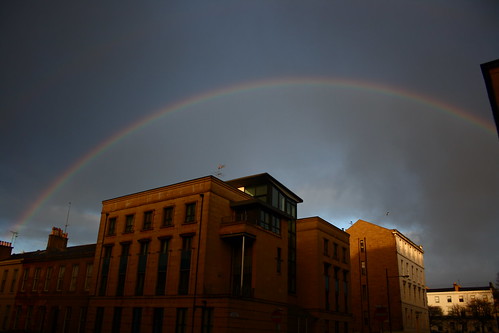
Perhaps a strange thing, to place the words of an ancient Jerusalem scholar on the side of a whitewashed Presbyterian church. But I think the wisdom of Rabbi Hillel is transcendent enough to work, and the imagery of a plain and practical church, with its churchyard full of the past, speaks to the generations behind and before us who knew:

Nothing is a given.
What a world, in which we have a chance to make something of ourselves...


Poetry Friday is at Laura's place. And don't miss her fabulous picture of the dungeon at Urquhart Castle, and the "15 Words or More" poems which came from that prompt. Some pretty intense observations.

January 22, 2009

A Simple Spinner, A Tangled Web

This book is a 2008 Cybils Finalist for Fantasy and Science Fiction.
All Charlotte Miller needs is a break -- just one little break which will allow her to get ahead, to put the mistakes of her dreamy father behind her. He's run the mill into the ground, with his wild inventions and inattention to the day to day business of wool buying and spinning, and it's up to the last of his line -- his two daughters, Charlotte and Rosellen -- to see that the village still has its mill, the millwrights still have their jobs, and that they can keep their land, their lives and their livelihood intact.

All Charlotte and Rosie need is a little break... and Jack Spinner gives them one. He's just there... so helpful. So handy with a little piece of straw. But what does he really want, in return for all of that gold thread? Surely not just Charlotte's ring?

It's not just Jack who's willing to help the Miller girls, however. Mr. Mordant, the dyeman, has words of advice -- silly, superstitious stuff -- that he's always dispensing. Biddy Tom, the wise woman, makes terse comments that make Charlotte roll her eyes. Even the banker who came to collect on her loan turned out to be helpful -- a lovely man with lovely eyes who finds he loves Charlotte and wants to help her forever.

So, how come things at Miller & Sons are still so... horrible? Signs fall from posts and smack people in the head, the mill wheel freezes and the axle snaps, workmen fall from ladders, and someone ruins a dye lot, then burns down the wool shed. Is the mill really cursed? And if so, what can anybody do?

Readers who love fairytale re-tellings will be pleased with the author's ability to sketch sinister shadows and create mystery out of a familiar story. If you've ever wondered "what if" or "why" about this particular fairytale, this book might provide answers.

At times the reader may wish that Charlotte would listen to her instincts, take advice or, at the very least, confide in her husband or her sister or the village wise-woman, all of whom make themselves available to her. However, the much-described Miller pride prevents her. Still, as the familiar story also ends with a "happily ever after," once Charlotte is dragged backwards through many a painful and unnecessary place, peace is restored to her life as well.

The gorgeous cover, designed by Alison Klapthor, is the perfect fairytale touch.

Buy A Curse As Dark As Gold from an independent bookstore near you!

January 21, 2009

So THAT'S How It Works.

Just cruising by with a quick video from MacMillanUSA (props to Simon Dyda for the link). Who knew that gigantic faceless publishing houses had a sense of humor? (Just kidding, faceless publishing houses! Just kidding.) Anyway, writers, here's the story of your novel, from the moment of conception to its inevitable chucking out into the wider world.


The Mad Libs Great Gatsby gets me every time...

Bribes

Theodosia is sitting on the windowsill, waiting for me...

To finish my novel.

Sigh.

Some of us bribe ourselves with chocolate.
Some of us need shoes.

But an author must always bribe herself with books.

Head down and back to work...


(Psst. If you missed our great interview with author R.L. LaFevers, revisit the SBBT here!

January 20, 2009

Sunshine at Noon

It's a beautiful morning, ahhh.
       Think I'll go outside for awhile,
And just smile...
Happy Inauguration Day.

Andi at a wrung sponge has an interesting project for the 44th inaugural ceremony commemoration -- a picture and a post -- forty-four words long. Hers is -- painful. But hopeful. The posts will be rounded up at the Peapods blog.

January 19, 2009

Putting Books into Kids' Hands, and Taking Them Out Again

If you're a member of SCBWI, take a gander at your latest issue of the Bulletin--not only is there a great article from our fabulous interviewee, Elizabeth Wein, but there's also a thought-provoking piece by our blog bud C.K. entitled "What Is YA and Where Should We Put It?" The piece talks about how YA books and movies, especially those which can be considered "crossover," are marketed in stores--and asks the question of whether older teen books should also be stocked in the adult section, or at the very least be placed at a distance from the children's books.

This brought to mind something I noticed in my local B&N--at some point in the past few years, they DID move the teen section to its own area, still near the kids' section but also near some of the biographies and new fiction, and on shelves that made it look like a part of the main store as opposed to an offshoot of the semi-enclosed kids' area. I wonder if sales of teen books have improved as a result?

This is part of a larger discussion, too, of what constitutes YA, and to what extent having a separate label benefits or, conversely, weighs down books. I also think that it does benefit teens to have books that are marketed as adult books--like perhaps The Curious Incident of the Dog in the Night-Time, which C.K. mentions in her article--filed in the teen section in addition to being filed in the adult section. My local library does this to some extent--mostly with "classics."

Anyway. I think another part of the quandary centers on how to get more books into teens' hands, and what role marketing and physical placement play in appealing specifically to older teens. What do you all think, especially those of you who are librarians/booksellers?

On the other side of things, there's still a battle to keep books IN kids' hands--a blogging friend of mine tweeted me with a link to a rather disturbing news story about the soon-to-go-into-effect federal Consumer Product Safety Improvement Act. Among other things, the law is meant to protect children from lead in their toys--AND their books. Yes, books. Evidently, it's the ink. According to the article, "The law goes into effect on Feb. 10. After that day, all products for children under 12, including books, games, toys and even clothing, must be tested for lead."

This has the potential of causing countless books to be pulled off shelves, not to mention the expense of testing and the questions about actual feasibility. Let's hope that the Consumer Product Safety Commission is as good as their word, and provides more detailed--and reasonable--guidelines for libraries and bookstores. Here's the ALA's page on the subject, which doesn't make me feel very reassured...


A couple of brief announcements: Our own LW is in the world premiere of the musical Pope Joan! Congrats, Little Willow! And, if you're a teen, you've still got time to nominate a book for the Children's Book Council's 2009 Teen Choice Book Award.

Kill. Or, Be Killed. Reality TV...

This book is a 2008 Cybils Finalist for Fantasy and Science Fiction.

I have to admit that this book whacked me upside the head. The premise isn't really original, but the writing is excellent, the characterization is deft, and the action is non-stop.

The story is straightforward: The Capitol runs the Districts, 1-12. Previously, there was a District 13, but they rebelled, and were utterly destroyed. The Hunger Games are... more punishment for that rebellion, and a reminder that the Capitol sees all, knows all, and could destroy everything and everyone at any time. The creepy panopticon feel really works.

From each district are chosen two children -- one boy, one girl -- as tribute to the Capitol.

They're put into an arena -- maybe in the desert, maybe in the woods, maybe in the snow... and made to fight for their lives. No rules. No mercy.
It's TELEVISED, and viewing is REQUIRED.
Last one standing is the winner of the Hunger Games.

And a murderer, of course.


In District 12, the people are coal miners. Katniss is 16, and from Panem, which is in the Seam -- the lowest, poorest and most desperate area of any district. Katniss' little sister, Prim, and her mother area all she has left. She is the hunter she became when her father was killed in a mine explosion when she was eleven, and her mother had a nervous breakdown and ...mentally abandoned them for a time. Katniss is a survivor. She goes outside the electric fence which rings the district and hunts for game and roots to keep the family alive. She trusts very few and smiles for no one but her precious woodlands and her friend Gale, who is his family's provider as well.

It's just another reaping, which is the name for the annual selection of children for the Hunger Games, but when Prim is chosen -- Prim who is tiny and only twelve -- Katniss jumps in. She volunteers to go in her sister's place.

The boy from her district she's never spoken to, but there's a problem already:
Katniss cannot kill him. She owes him too much. Her very life.

But there can be only one winner.
And the Capitol is watching...

The creepy feel of always being watched, the physical stress of the arena -- comes through to the reader clearly. The UK paperback version allows you to fold the cover so that your favorite character appears on the front. The end of the novel isn't really the end -- be warned! Read slowly and savor the book so you'll be ready for the sequel!

Buy THE HUNGER GAMES from an independent bookstore near you!

You So Mighty

It's an amusing mispronunciation of "Yosemite," and it's the name of the climbing shop where Jordan, 17, spends all of his time when he's not schlepping through a school day or outside doing what he really loves -- climbing. Jordan IS climbing, and he has the perfect, scrawny/muscular body type to help him haul himself up vertical rock faces. He's been doing it since he was a tiny kid, and it's his whole world.

If only everything he needs could be found on the face of a rock!

But, it can't -- and Jordan needs things like an education, an idea of what he wants to do for the rest of his life, and protection from the bullies at his school. For awhile, everything in his life seems perfectly balanced -- he even meets an amazingly athletic climber-GIRL -- but then, one rock tilts --

-- and triggers and avalanche that undoes his whole life.


They say gravity always wins.
How does a guy recover when the world falls apart?

Climbers and athletic types will really enjoy this book. The writing is terse and easy to follow. While the pacing is somewhat uneven, I think that won't matter to climbing enthusiasts and people after a good fast read with tension and drama.

Buy this book in April from an independent bookstore near you!

January 18, 2009

The Magister, the Henchman, the Gutterboy & the Thief

This book is a 2008 Cybils Finalist for Fantasy and Science Fiction.

Oooh, fun, fun, fun. First-time author Sarah Prineas has created a fabulous novel that you can swallow down in one glorious afternoon (and then wish vainly for the sequel! Aaargh!), full of adventure, tension, and a very lovable hero.

Conn is cold. And hungry. And tired of being either one of them. He's a thief -- and a lock-picker, and he's very, very good, but when the Underlord's people have a contract out on you, even stealing what you need to get by is hard -- but Conn's so hungry, he has to try. His light, swift fingers lift the wrong thing from the wrong man -- and it just about costs him his life. The Wizard Nevery finds his locus has been picked from his pocket, but instead of it killing the little thief outright, it attacks him -- yet lets him live.

The Magister Nevery has been exiled from Wellfleet for twenty years -- twenty! And though his brother wizard desperately needs him back to help with the present crisis, Nevery was hurt by being exiled. He's proud and cautious and haughty. He's sure the "crisis" Magister Brumbee has written about is nothing more than the natural fluctuations of magic -- and since he's the greatest wizard in the world, and the rest are bumbling fools, he'll have to fix everything.

Having his pocket picked by a thief was not in the plans.
Having to take him on as a servant -- also not in the plans. And as an apprentice?! NEVER.

But there's something weird about this kid. The Magic Thief doesn't know anything -- how to read or write, how to wear decent clothes. He doesn't even know his age. But what he does know is that being a wizard is his destiny.

Now it's just a matter of convincing everyone else.


Fill your longing for the sequel to this book by playing the runes game online. And don't forget: Buy this FIRST book, The Magic Thief, from an independent bookstore near you!